Architects, manufacturers and nonprofits back state permit‑ready plan library to speed housing approvals
Loading...
Summary
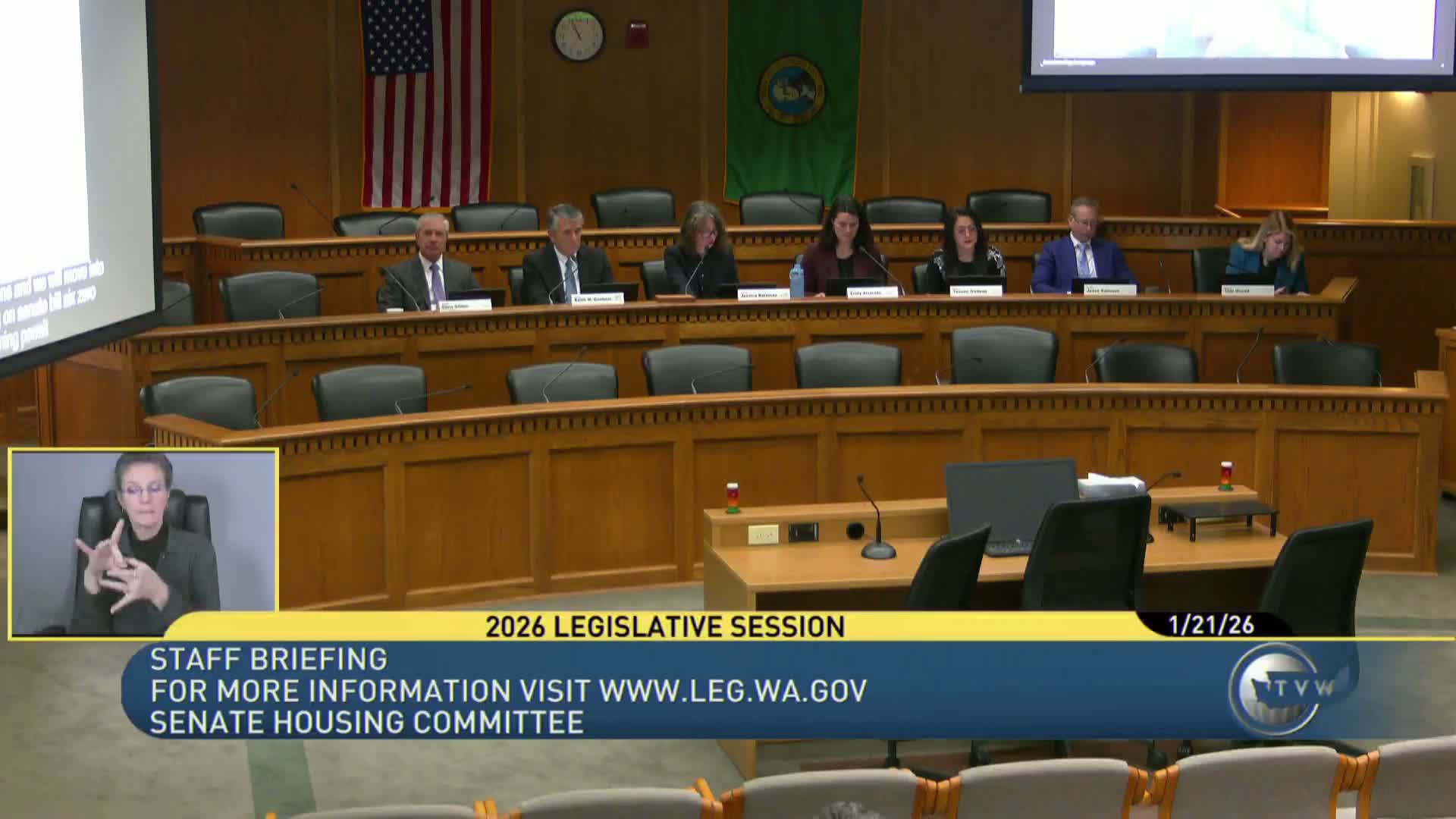
SB 6,015 would direct Labor & Industries, with Commerce and the State Building Code Council, to establish and publish permit‑ready plans for factory and certain site‑built housing to speed approvals statewide; builders, Habitat affiliates and modular manufacturers testified strongly in support while L&I and counties asked for clarifications on scope and local coordination.
Senate Bill 6,015 would require the Department of Labor & Industries (L&I), with input from the Department of Commerce and the State Building Code Council, to establish a process to solicit, approve, and publish permit‑ready residential building plans (including factory‑built housing and certain attached housing types). Staff said published plans must meet applicable building and energy codes, include the applicable code version, and allow a 30‑day local review period prior to publication; beginning 01/01/2027 jurisdictions using published plans must approve land use applications that use them on specified lot types.
Builders, architects, Habitat for Humanity affiliates, and modular manufacturers testified in support. Deborah Flagan (Hayden Homes) and Jeff Anderson (AIA Washington) said preapproved plans can speed production, especially in rural jurisdictions with limited permitting staff. Joshua Shoff (Kraft Contracting) and Dan Berdlet (Sightline) said the program would reduce duplicate local reviews, provide market certainty for manufacturers and factories to scale, and help lower costs. Several witnesses urged including both factory modular and stick‑built preapproved routes, and raised questions about compensation and intellectual property for plan authors and liability safeguards.
Tammy Phelan (L&I) said L&I supports the concept but sought clarity on scope: L&I inspects factory‑built housing and affixes an insignia indicating code compliance but does not normally review stick‑built plans for local jurisdictions; further detail is needed on whether L&I would assume expanded responsibilities. County representatives suggested a pilot approach and urged careful coordination to avoid duplicating or undermining existing local preapproved plan programs.
A fiscal note cited estimated costs (staffing, website and program support) of approximately $938,000 in the current biennium and $1.9 million in a four‑year outlook. The committee closed public testimony after multiple panels and questions for staff and L&I.