
Local tourism groups urge end to sunset on lodging charge; some citizens oppose more fees
Get AI-powered insights, summaries, and transcripts
Sign Up Free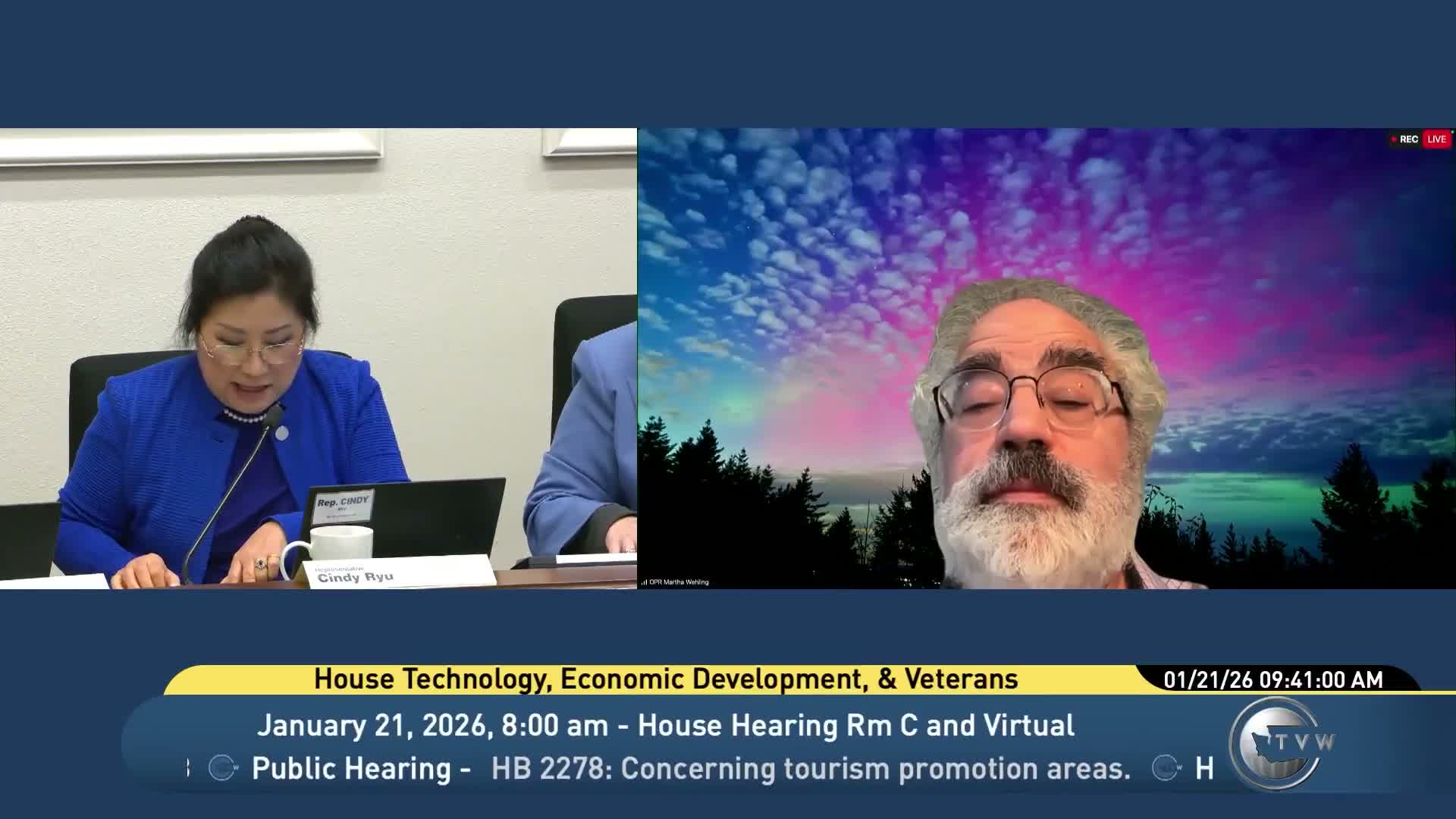
Summary
Supporters of HB 2,278 told the committee removing the 2027 sunset on a $3 per-room lodging charge would allow local tourism promotion areas (TPAs) to plan long term and continue successful programs that have generated millions in local economic impact; opponents said it adds costs to tourists and businesses.
The committee heard House Bill 2,278 on Jan. 21, a measure to remove the July 1, 2027, expiration of a supplemental $3-per-room lodging charge that cities and towns may impose as part of an industry-driven tourism promotion area (TPA).
Staff explained TPAs allow local jurisdictions to collect an additional lodging charge (up to $3 per room per night) that is deposited into a local tourism promotion account and used for destination marketing and related activities. The bill would make the supplemental charge permanent for jurisdictions that choose to adopt it.
Becky Bogard, representing Destination Marketing Organizations, said TPAs are industry-initiated and locally governed, and that eight TPAs have collectively raised about $16 million for local marketing. Kevin Lewis of Visit Tri-Cities testified that his region used TPA funds to attract events — citing Ironman 70.3 as bringing "$7,000,000 in economic impact" — and argued that removing the sunset is necessary for planning and contract negotiations.
Opposition testimony from Washington Citizens Against Unfair Taxes argued additional lodging charges make the state less competitive for visitors and burden businesses. The bill hearing concluded with committee members noting local control elements and asking questions about economic impacts and workforce effects.
The committee closed the hearing; no vote was taken during the session.