
Bill to ban surveillance-based grocery pricing prompts split testimony from workers, advocates and retailers
Get AI-powered insights, summaries, and transcripts
Subscribe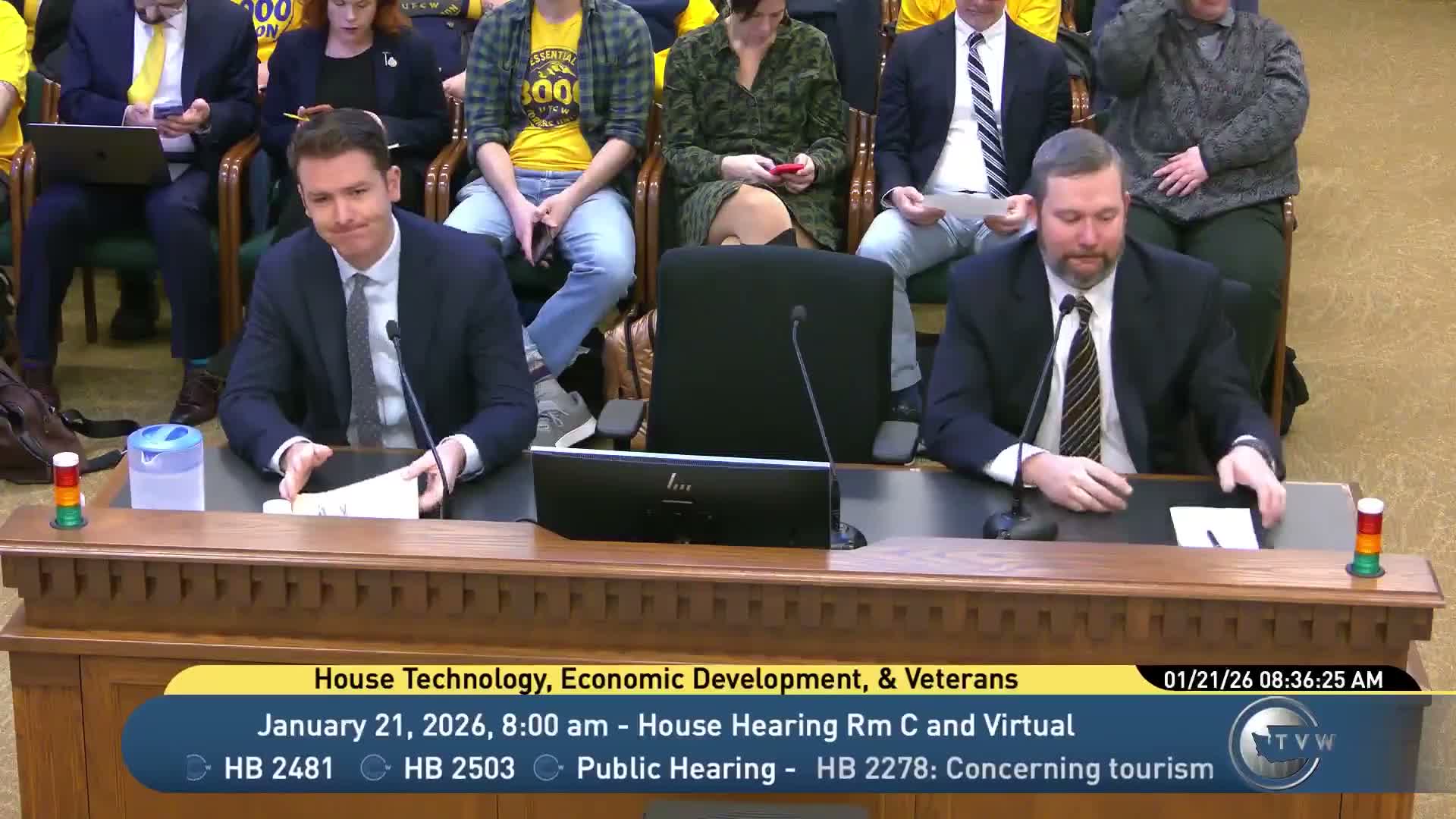
Summary
Supporters said HB 2,481 would stop AI-driven individualized and surge pricing and protect grocery workers; retailers and ESL manufacturers called for narrower definitions, and Consumer Reports presented testing that found differing prices for identical online baskets.
The Technology, Economic Development and Veterans Committee took testimony Jan. 21 on House Bill 2,481, which would ban surveillance-based individualized pricing and surge pricing for certain retail goods, require clear posted prices, and pause the use of electronic shelf labels (ESLs) in large grocery stores until 2030 while the Department of Commerce studies their impacts.
Prime sponsor Representative Mary Fosse told the committee a core principle should be simple: “a customer that is in the same store buying the same item should pay the same price as their neighbor,” and said the bill targets opaque, data-driven price discrimination that could use facial recognition or internet search histories. Staff described four restrictions, exclusions for loyalty programs and businesses with fewer than 50 employees, and a Commerce study due June 30, 2029.
Worker and labor witnesses strongly supported the bill. John Marshall (UFCW 3000) said surveillance pricing shifts the burden of opaque pricing onto store workers and argued the technology is designed to “determine the highest price each consumer will pay.” Grocery workers testified individualized or rapidly changing prices create customer confusion, frustration and safety risks on the sales floor.
Consumer Reports’ Derek Kravitz described an Instacart investigation that found identical baskets priced differently online (example ranges cited of $114 to $124), estimating such variation could mean roughly $1,200 annually for a household of four.
Retailers, trade associations and ESL manufacturers urged the committee to narrow definitions and carve out legitimate uses. Jessica Vittorio (Vision Group) said many ESLs on the market lack cameras or shopper-tracking capability and are intended to reduce errors and labor; Washington Retail Association and Washington Food Industry Association warned a broad moratorium or broad Consumer Protection Act enforcement could inadvertently curb loyalty discounts, inventory markdowns and other pro-consumer practices. Both sides signaled willingness to work on amendments.
The committee closed the hearing and requested amendment language from sponsors and stakeholders.