Industry-led tourism assessment bill draws broad industry support, limited opposition at committee hearing
Loading...
Summary
Supporters told the Technology, Economic Development and Veterans Committee HB 2,325 would enable industry-funded statewide tourism marketing and could generate roughly $25 million annually; opponents warned it could burden small businesses and create unelected taxing authorities.
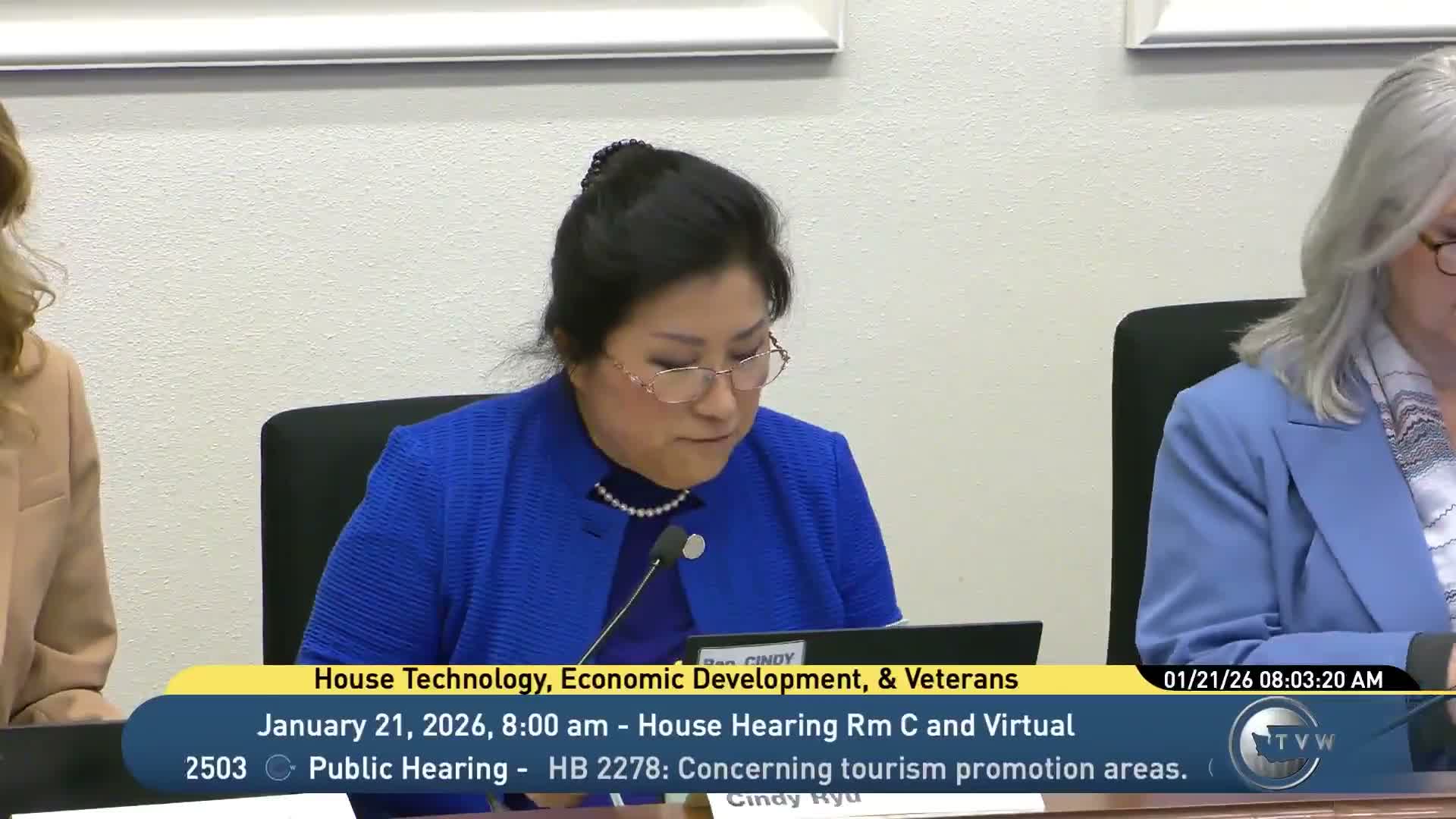
The Technology, Economic Development and Veterans Committee heard testimony Jan. 21 on House Bill 2,325, which would authorize an industry-created, state-backed tourism assessment program to fund statewide tourism promotion.
Representative Paul, the bill’s prime sponsor, told the committee the proposal gives the tourism sector “the opportunity to assess itself” and would not tax residents. Martha Whaling, staff to the committee, said the bill directs the Washington Tourism Marketing Authority to develop the program, requires a ratepayer oversight board made up of businesses subject to assessments, and requires a referendum among affected businesses before any assessments are collected.
Industry groups and regional tourism organizations spoke in strong support. Dave Blanford, CEO of State of Washington Tourism, said the model follows proven self-assessment programs and “can yield $25,000,000 or more in annual program funding that is sustainable, predictable, and…competitive with other states.” Representatives from the Washington Hospitality Association, Washington Wine Institute and Washington Brewers Guild said the funds would help hotels, restaurants, wineries and breweries market destinations, attract visitors and support local jobs.
Speakers described safeguards in the bill: businesses would vote in a referendum to approve assessments, allocation decisions would be overseen by a ratepayer board, and the authority would collect funds and place them in a non-state account managed under the program design described in the bill analysis.
Opponents included a representative of Washington Citizens Against Unfair Taxes, who argued the assessment functions like a new tax on already stressed businesses and expressed concern about unelected authorities having taxing power. Committee members asked about sector eligibility, the mechanics of the weighted-referendum vote, and how the program would balance geographic representation; sponsors signaled they will offer clarifying amendments.
The committee closed the hearing and requested follow-up on amendment language and remaining questions about program design and accountability.