Get Full Government Meeting Transcripts, Videos, & Alerts Forever!
Get email alerts on the Youth Development Fund topic
No spam. Unsubscribe anytime.
Senate committee hears wide support for new Youth Development Fund to expand after‑school programs
Summary
Lawmakers and dozens of students, nonprofits and tribal representatives urged passage of SB 59‑92 to create a non‑appropriated Youth Development Fund to collect gifts, grants and future appropriations and distribute grants—via OSPI—to expand out‑of‑school youth programs statewide.
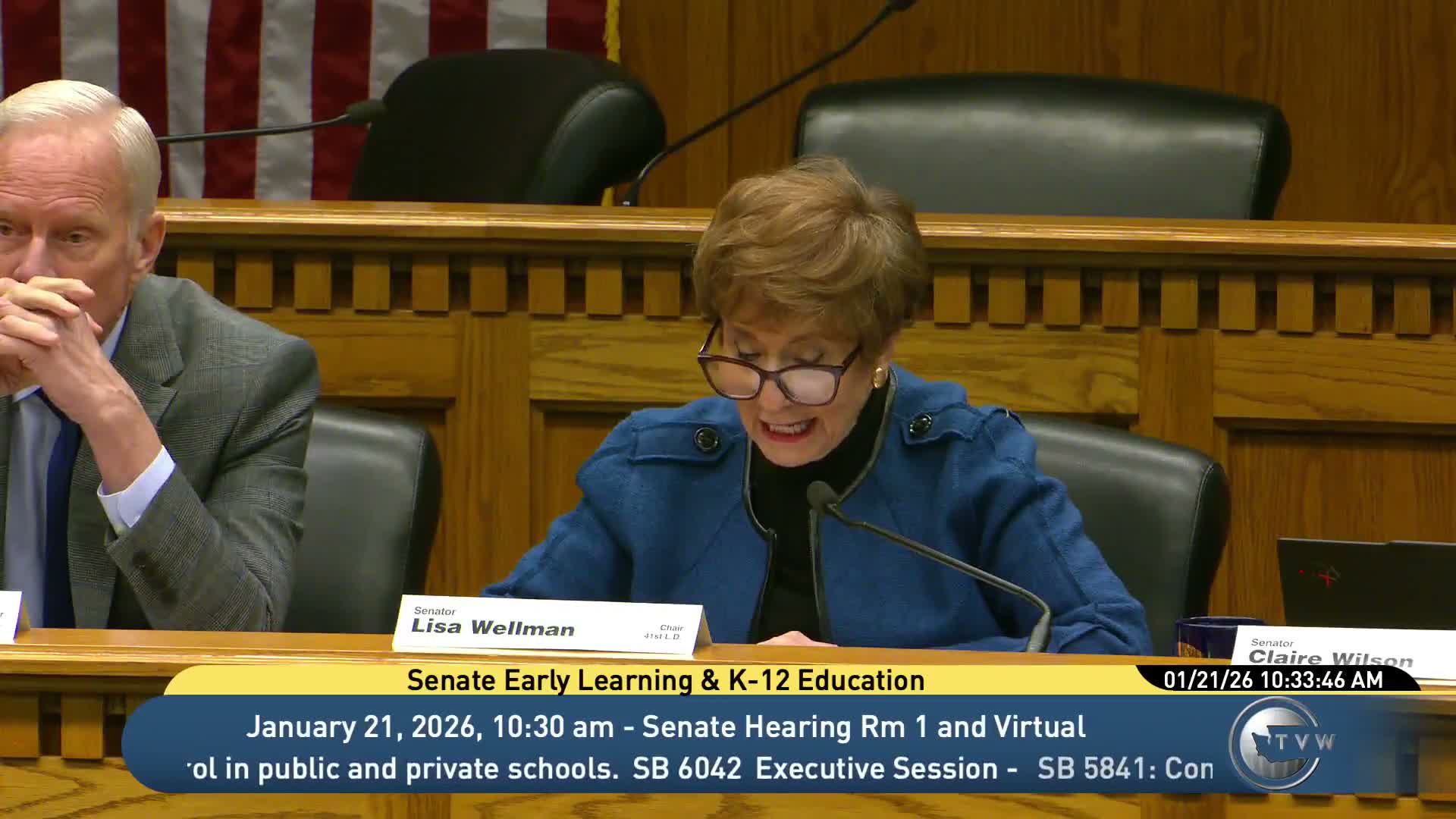
Senators heard more than an hour of testimony on SB 59‑92 on Jan. 21 as students, youth‑service providers and tribal representatives argued the bill would centralize funding and expand access to mentoring, expanded learning, after‑school and summer programs.
Committee staff Eileen Cotto told members SB 59‑92 would create a non‑appropriated Youth Development Fund account that retains its own interest and accepts receipts from gifts, grants, endowments, federal funds and any appropriations made for the purpose. Only the Superintendent of Public Instruction may authorize expenditures from the account for grant awards, Cotto said. The bill defines eligible programs as those serving youth ages 5–24 and complementing school‑day academics; eligible grantees include nonprofits, tribes, parks and recreation entities and some school districts when partnering with community organizations. A fiscal note was requested but not available at the staff presentation.
Sponsor Sen. Deb Christiana Dawson framed the bill as a response to youth mental‑health challenges and long‑term prevention needs, saying early connections to “consistent and caring adults” and expanded learning can improve outcomes. “This bill creates that meaningful pathway for communities to invest in our youth,” she said.
Testimony came from a broad coalition. Coalition and provider representatives said the fund would improve fiscal transparency and allow philanthropic dollars to be pooled and tracked. Students who spoke described personal benefits from after‑school programs: Elise Roe, a Lake Washington High School senior, credited an after‑school program with socialization opportunities while Noah Middleman, a swim instructor, said lessons reduced drowning risk and provided structure outside school. Nonprofit leaders, including Girls on the Run and Arts Corps, and tribal counsel supported the bill and urged culturally grounded approaches and reservation of funding for tribal use.
Several witnesses emphasized the bill is intended to leverage private philanthropy initially, not to obligate current general‑fund dollars. Megan Francis, speaking for the Confederated Tribes of the Colville Reservation, asked that OSPI consult government‑to‑government with tribes, reserve a meaningful portion of funds for tribal use and respect tribal data sovereignty in reporting.
The testimony closed with agency and provider officials saying youth development programs reduce absenteeism, juvenile‑justice involvement and support working families; they urged the committee to pass the bill out of committee.
The committee recessed the hearing to take up several other bills and did not take a committee vote on SB 59‑92 during the Jan. 21 session. The next procedural step will be committee consideration and, if approved, movement to the full Senate calendar for further action.