Get Full Government Meeting Transcripts, Videos, & Alerts Forever!
Get email alerts on the Collective Bargaining Trigger topic
No spam. Unsubscribe anytime.
Long hearing on bill to create state collective-bargaining system if federal protections collapse
Summary
House Bill 2471 would trigger a state-level collective-bargaining regime using the Public Employment Relations Commission (PERC) if federal National Labor Relations Board jurisdiction were to lapse; labor groups supported a state safety net while agricultural employers and small-business groups warned the measure could harm perishable-crop farmers and small employers and raised concerns about card-check and fiscal impacts.
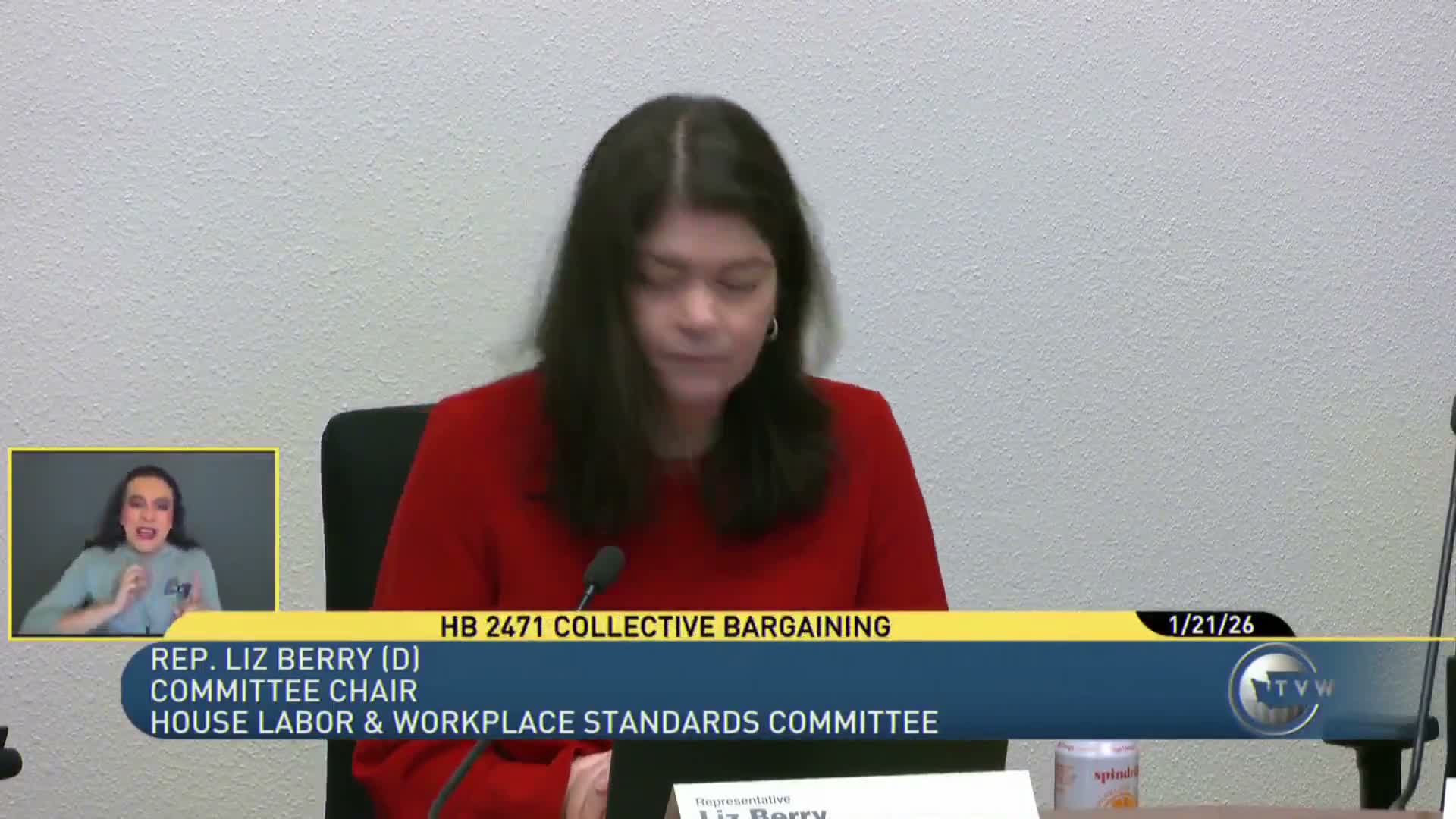
House Bill 2471, described at length to the Labor and Workplace Standards Committee on Jan. 21, is trigger legislation designed to create state-level collective-bargaining procedures for private-sector employees if the National Labor Relations Board (NLRB) were to be dissolved or federal preemption otherwise ended.
Representative Scott (vice chair), who presented the bill, said it would use the Public Employment Relations Commission and existing state frameworks to protect organizing rights and provide dispute resolution if federal enforcement disappeared. "This is trigger legislation that establishes collective bargaining protections for private sector employees in the event that the National Labor Relations Board is defanged beyond its ability to function," Scott said.
Labor organizations and union representatives strongly supported the bill. Brandon Anderson of SPEA, Brenda Weese of the Teamsters and Joe Kendo of the Washington State Labor Council said a state fallback is a prudent insurance policy given recent federal-level litigation and staffing concerns at the NLRB. Testimony included accounts of delayed unfair-labor-practice processing and a local organizing campaign that, witnesses said, suffered when federal adjudication stalled.
Opponents were numerous and included the Washington Growers League, orchardists and other agricultural stakeholders, NFIB and small-business representatives. They argued the bill does not sufficiently account for the seasonal, perishable nature of agricultural work, which critics said could make short harvest windows vulnerable to disruptive labor actions; farmers warned the bill could raise costs, accelerate consolidation and threaten family farms. Kevin Knight, Mark Hamilton and other growers stressed the limited windows for harvest and the irreversibility of lost perishable crops.
Several witnesses flagged provisions allowing card-check or cross-check certification and the potential application to small businesses with low revenues; NFIB raised concerns that the bill as drafted could sweep in small retailers and other employers not typically subject to NLRA rules and that PERC may lack resources to absorb broad jurisdiction. Labor witnesses responded that the bill is narrowly targeted to take effect only if federal jurisdiction recedes and that PERC engagement has been part of drafting conversations.
Committee members asked technical and constitutional questions, including whether PERC had been consulted and how fiscal impacts would be managed. The hearing included numerous personal accounts from workers and employers. The committee closed the public hearing on HB 2471 at the end of the Jan. 21 session; no committee action or vote was recorded during the hearing.