Panel weighs bill giving L&I discretion to investigate wage complaints and assess penalties
Loading...
Summary
House Bill 2478 would allow the Department of Labor and Industries discretion to initiate investigations of wage complaints rather than requiring investigation of every filed complaint, and would permit L&I to assess civil penalties on investigations it initiates; the department said the change would let it pursue employer-wide problems efficiently.
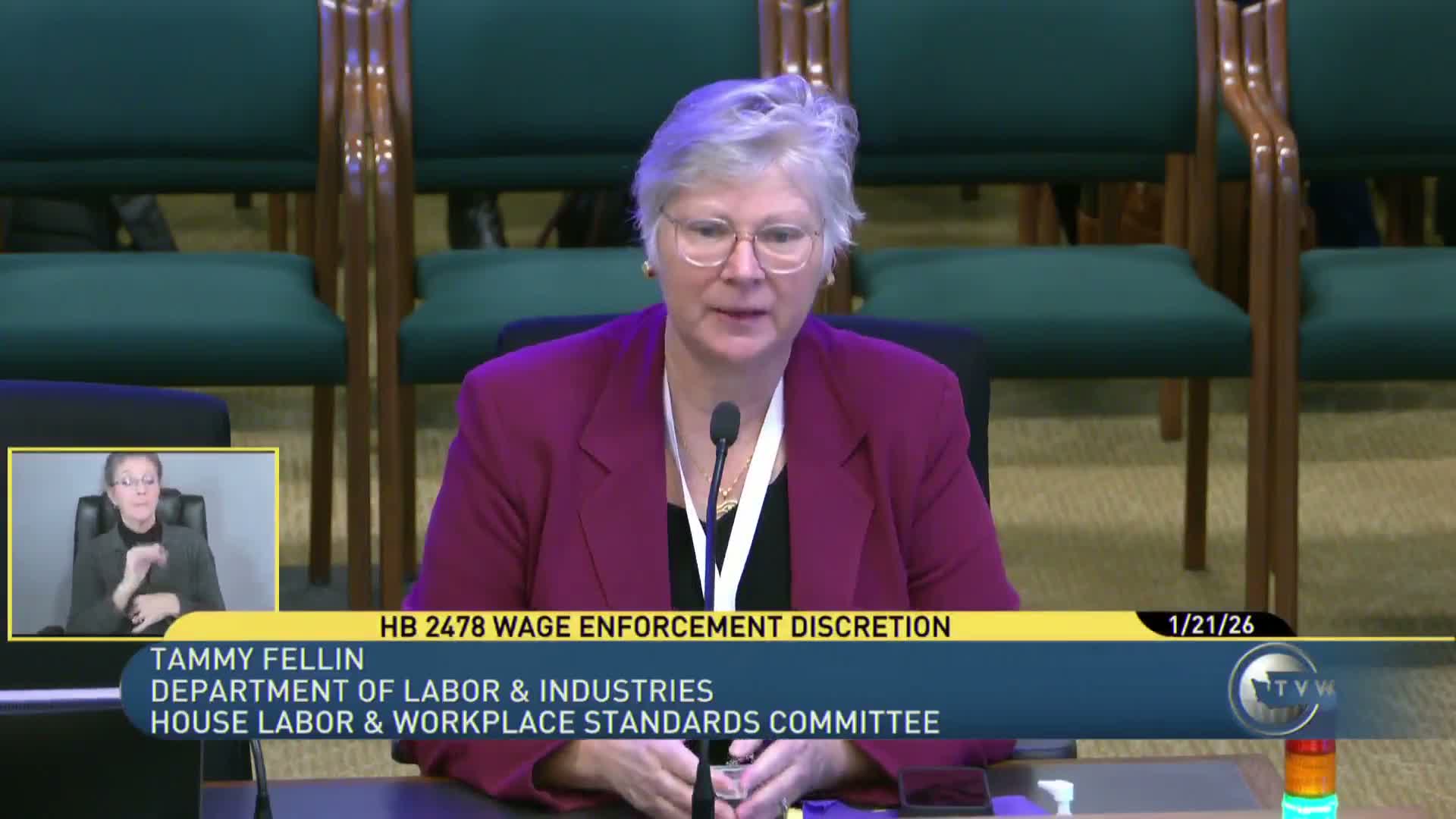
House Bill 2478, presented Jan. 21 to the Labor and Workplace Standards Committee, would change current law that requires the Department of Labor and Industries to investigate every wage complaint filed under the Wage Payment Act. The bill would instead give L&I discretion to investigate complaints and, when the department initiates an investigation, allow it to assess civil penalties for willful violations.
Tammy Fallon of the Department testified the change would let L&I use its investigative resources more strategically — for example, by investigating an entire workplace where multiple complaints indicate systemic pay problems rather than opening separate investigations for each complaint. Fallon noted the department receives more than 6,000 wage complaints per year and said the proposal aims to make enforcement more effective while continuing to pursue wage recovery for workers.
Representative McIntyre asked whether individual complainants would still receive status updates; Fallon said the department would gather information from affected workers as part of investigations and continue to seek wage recovery, including notices of assessment and determinations. Fallon also emphasized workers retain private rights of action.
The committee received no indication of an immediate vote during the Jan. 21 hearing; the department and sponsor characterized the bill as a tool to address workplace-level wage violations more efficiently rather than to deny individual workers redress.