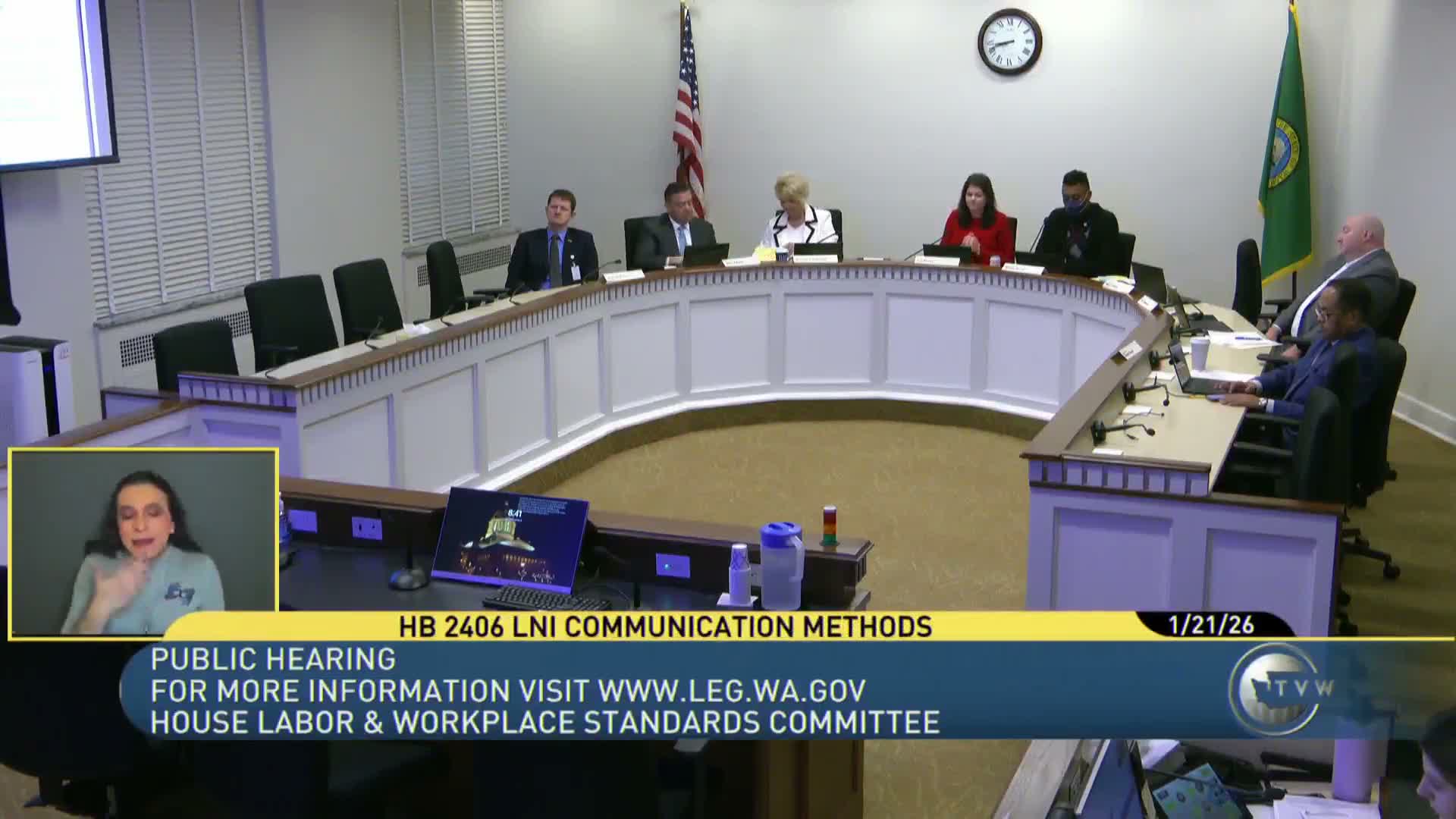
Committee hears bill to expand electronic notices and modify timelines at L&I
Loading...
Summary
House Bill 2406 would allow the Department of Labor and Industries to deliver certain notices electronically (with opt-in/opt-out protections) and change timing rules for electronic workers-comp orders and WISHA redeterminations; worker advocates warned about defaulting injured workers to email without clear opt-out and urged protections for vulnerable populations.
House Bill 2406 was presented to the committee on Jan. 21 as permissive modernization allowing the Department of Labor and Industries to send many statutory notices electronically while preserving the recipient's option to receive paper mail.
Staff outlined specific changes: recipients could opt into electronic notices (or choose to remain on paper); an electronically delivered workers' compensation order would become final in 65 days rather than 60 days for mailed orders; redetermination timelines under WISHA would be consolidated to a single 75-day period in certain appeals; and rulemaking notice to newspapers would be reduced from 30 to 20 days.
Representative Schmidt said the bill is intended to reduce administrative burden and modernize communications while keeping safeguards and consent in place. Tammy Fallon of L&I testified the bill is permissive and retains verification where the law currently requires proof of receipt or specific timing protections.
Opponents and some worker advocates urged stronger protections for injured workers and other vulnerable groups, arguing the bill could effectively shift to email-by-default for legal orders that affect benefits and appeal rights. Rachel Hammer, representing injured-worker interests, testified the existing RCW 51 provisions let workers choose secure electronic means and that the proposed language could make it difficult for workers without reliable internet or those who are elderly, unhoused or low income to receive crucial legal notices and meet deadlines. The Washington State Labor Council asked the department to preserve active, informed choice for workers.
Committee discussion centered on opt-in versus default settings, verifying receipt, and whether RCW 51 (the workers' compensation chapter) should be excluded or clarified. The committee closed the hearing after testimony; no formal amendments or votes were recorded at the session.