
Committee hears bill to create institutional welfare account and require incarcerated-person feedback on spending
Get AI-powered insights, summaries, and transcripts
Subscribe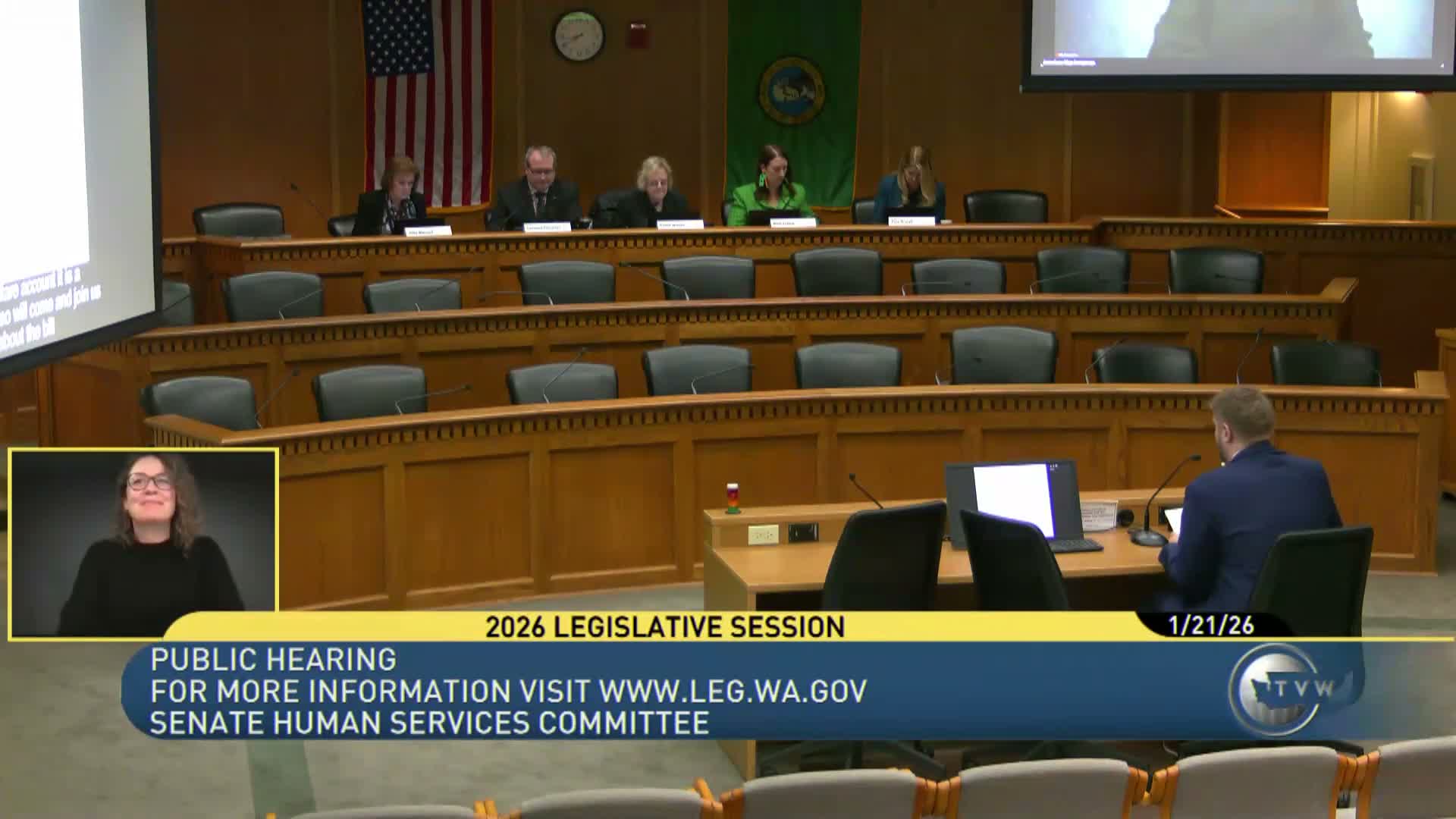
Summary
SB 6,085 would move the incarcerated individual betterment fund into a new Institutional Welfare Account, require 25% of receipts go to crime victims compensation, allow specified expenditures (family visits, recreation, subscriptions), and mandate annual public reporting and incarcerated-person feedback; supporters said it improves accountability, while some asked for clarifications on law-library funding and appropriation mechanics.
Committee staff described SB 6,085 as a reorganization of the incarcerated individual betterment fund into a state treasury Institutional Welfare Account, with specific rules for permitted expenditures and a requirement that 25% of money go to the Department of Labor & Industries for crime victims compensation.
The bill would allow receipts from legislative appropriations, donations, gifts and grants to be deposited into the account and requires the Department of Corrections to develop a process for approving expenditures that is informed by incarcerated individuals and their families, plus an annual public report beginning Dec. 31, 2026.
Sponsor (Chair Wilson) said the goal is to ensure that funds generated by incarcerated individuals'contributions are used with input from those individuals and to support family visiting rooms, recreation and other betterment activities that promote successful reentry. "One of the most important things is that we continue to have a feedback loop in a way that we're informing the dollars and the use of those dollars managed by DOC," the sponsor said.
The Washington State Reentry Council (Jim Chambers) supported the concept but asked the committee to clarify whether funds should be subject to legislative appropriation and argued funds collected from families should not be used for general reentry services that families are effectively funding. Megan Perry of DOC, a person with lived experience, said she supported the bill's intent but had concerns about removing law-library funding from the account without providing an appropriation elsewhere because incarcerated people retain the right to access law libraries.
Staff confirmed 25% of account money is intended to go to crime victims compensation (consistent with the prior Betterment Fund allocation). The committee closed the hearing and requested staff follow-up on law-library requirements and any constitutional or statutory obligations to ensure access to legal materials.