Get Full Government Meeting Transcripts, Videos, & Alerts Forever!
Get email alerts on the Transportation Recovery topic
No spam. Unsubscribe anytime.
WSDOT outlines emergency repairs, contracts and preliminary damage estimate after December storms
Summary
WSDOT described statewide emergency activations, 107 impacted sites, multiple emergency contracts and a preliminary damage estimate of $40–$50 million; the agency emphasized emergency contracting and subsequent permanent repairs and permitting steps.
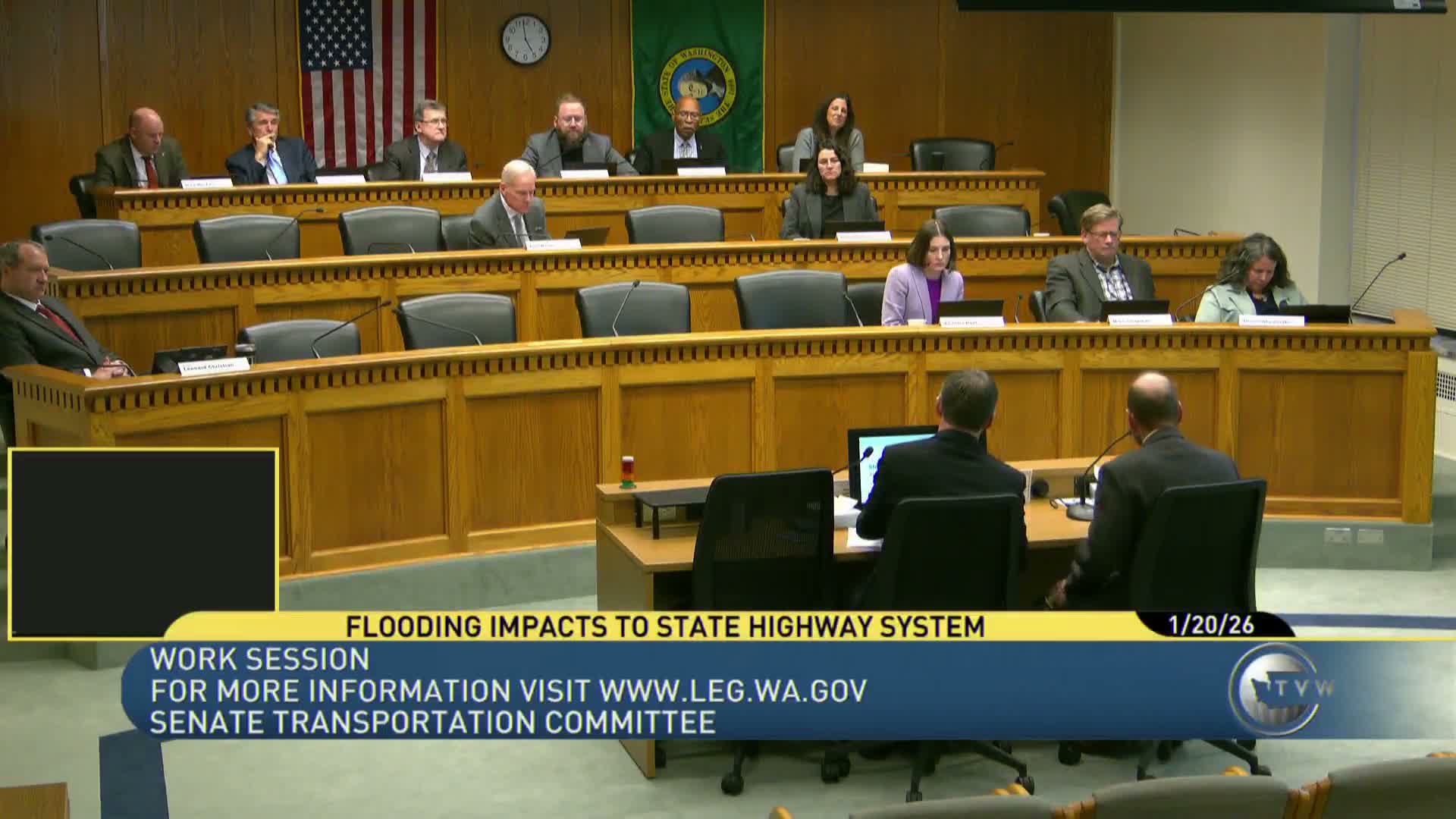
John Himel, emergency manager for the Washington State Department of Transportation (WSDOT), told the Senate Transportation Committee that the agency activated multiple regional emergency operations centers and the state EOC after the December storms and flooding. Himel said WSDOT used WebEOC to track infrastructure damage across more than 107 impacted sites and activated ESF‑1 responsibilities to coordinate response and recovery.
Himel explained federal funding pathways: FEMA Public Assistance and Federal Highway Administration (FHWA) emergency repair programs, including 100% funding for emergency repairs in some FHWA categories and pro rata shares for permanent restoration. He said the statewide damage threshold for Federal Aid system roadways is a minimum statewide figure before eligibility and that WSDOT compiles site‑level documentation to support federal applications.
Steve Verkalipa, regional administrator, walked committee members through emergency steps — maintenance crews as first responders, site assessments by geotechnical, hydraulic and bridge engineers, declaration of emergencies to expand force‑account work and expedite contracting (up to 30 working days), and the use of emergency contracts to reopen corridors quickly.
Verkalipa gave examples of emergency contracts after December storms: US‑2 near Skykomish (emergency contract Dec. 19, road reopened Jan. 1, temporary repairs to be followed by permanent work in summer), I‑90 east of North Bend (emergency contract Dec. 18, reopened Jan. 7), SR‑12/Naches and SR‑410 (emergency contracting completed with subsequent stabilization) and sections of SR‑542 and US‑101 that require longer geotechnical investigations and traditional ad/award contracts. He said WSDOT had identified roughly 16–20 emergency contracts (50 work orders tracked) and completed four to date.
On costs, Verkalipa described a preliminary damage estimate of $40–$50 million but emphasized the number is an early estimate while the agency continues to compile and invoice costs for federal reimbursement. He also said historical state share estimates for permanent repairs have typically been around 20% of eligible costs.
Why this matters: The storms caused extensive damage across the state transportation network; WSDOT emphasized that emergency contracting and force account work permitted rapid reopenings but that permanent repairs and environmental permitting (NEPA and ESA reviews) will be required before finishing restoration.
Next steps: WSDOT will continue emergency repairs, complete environmental permitting for permanent work, and pursue federal funding where eligible. The agency and legislators discussed whether emergency procurement processes contain lessons that could speed routine projects.