Renewable fuels and a 33% regional production goal proposed to shore up aviation fuel resilience
Loading...
Summary
Cascadia SAF Accelerator representatives told the Legislature sustainable aviation fuel and regional renewable fuels production could reduce single‑point failures, proposing a 33% regional production goal (≈366.6 million gallons/year) and investment in mid‑scale renewable refineries and alternative delivery routes.
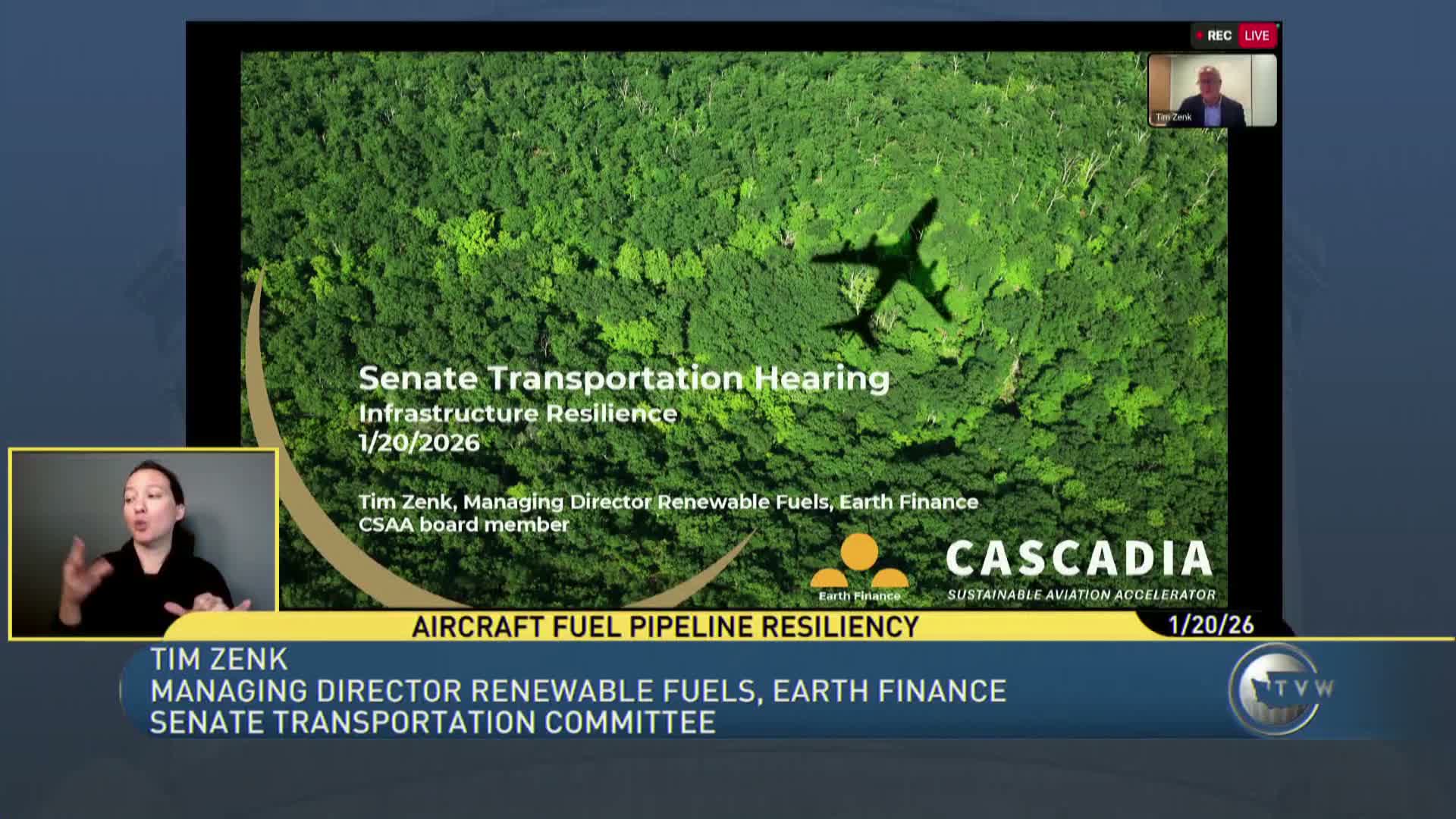
Tim Zenk, managing director of renewable fuels at Cascadia, told the Senate Transportation Committee that Washington's geographic isolation from continental crude and fuel supply chains creates single points of failure and that regional renewable fuel production would improve resilience.
"Resilience really equals investments in infrastructure plus a regionally produced renewable fuels infrastructure," Zenk said, arguing that local production reduces dependence on distant refineries and pipeline corridors. He proposed a regional goal of producing at least 33% of the region's aviation and related transportation fuels — a target he quantified as roughly 366,600,000 gallons per year.
Zenk said the 33% target would require a mix of mid‑scale renewable fuels refineries, new storage proximate to SEA, and alternative delivery systems. He noted renewable fuels are not just a climate policy but also an energy‑security measure that shortens supply chains and provides local feedstock and jobs.
Why this matters: the testimony positioned sustainable aviation fuel (SAF) policy as both a climate and resilience strategy, connecting infrastructure investments to industry goals and regional economic development.
Next steps: Zenk and Cascadia said they will support an updated SAF infrastructure study for the region and work with ports, refineries and airlines to identify projects and feedstock pathways.