Get Full Government Meeting Transcripts, Videos, & Alerts Forever!
Get email alerts on the Airport Fuel Resilience topic
No spam. Unsubscribe anytime.
Port and airlines detail temporary trucking response after Olympic pipeline outage
Summary
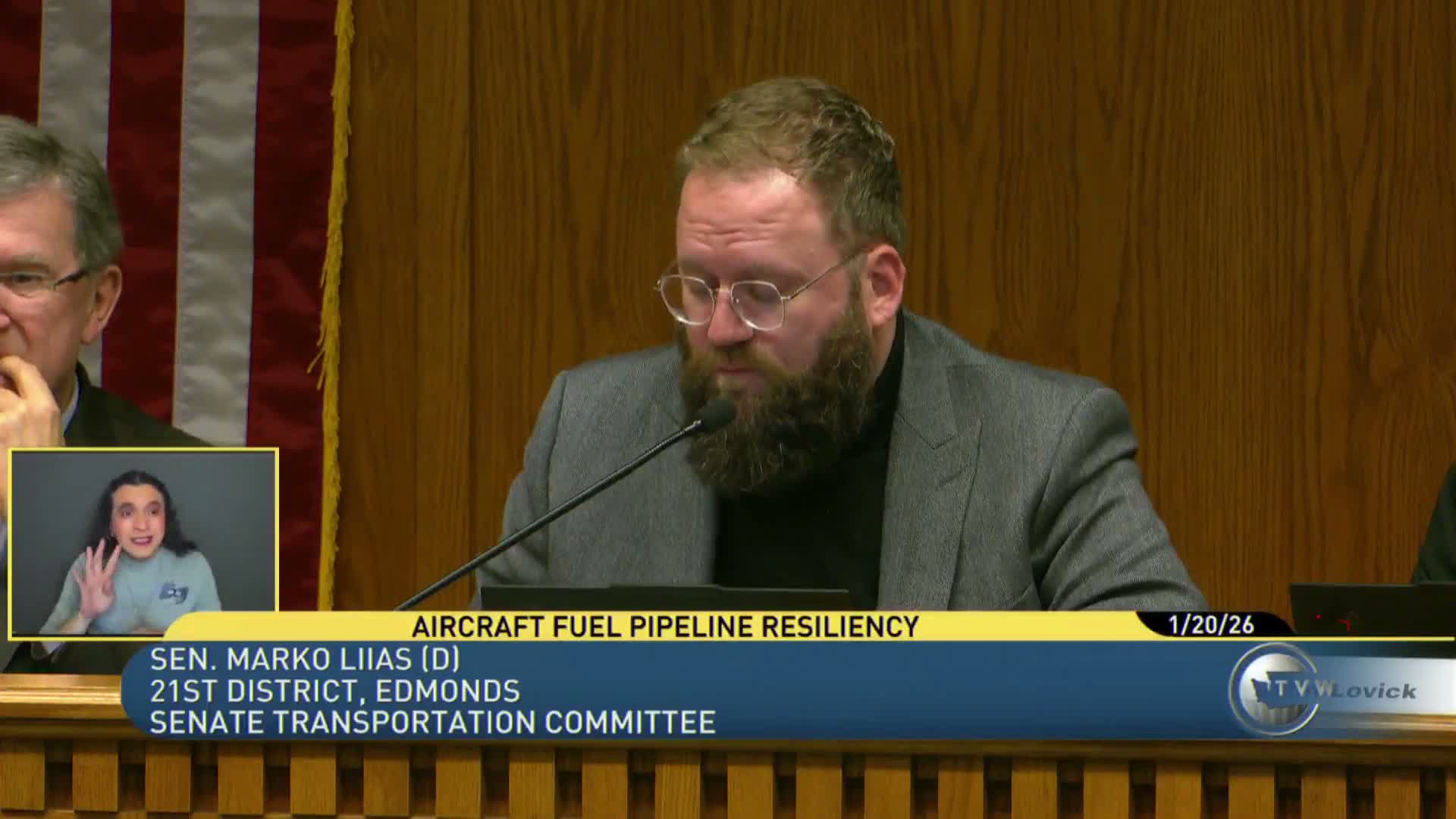
Port of Seattle, airline consortium and BP described emergency measures that kept SeaTac operating during the Olympic Pipeline outage: port reconfiguration, extra offloads, coordinated alerts and trucking that averaged 560,000 gallons/day and peaked with dozens of daily truckloads, while an estimated 104 flights were diverted.
The Port of Seattle and airline operators told the Senate Transportation Committee that coordinated emergency action and a nationwide trucking surge prevented broader flight cancellations after the Olympic Pipeline outage.
Wendy Bridal, Managing Director of Aviation at Seattle‑Tacoma International Airport (SEA), described rapid port adaptations, including reconfiguring parts of the fuel farm to accept more trucked fuel, expanding on‑site safety and spill‑prevention practices with port fire and police, and working under the governor's emergency proclamation to enable additional trucking. Bridal said the port increased receiving capacity but remained limited by space and safety constraints — "we were still limited to offloading 4 trucks at 1 time with each truck taking around 30 minutes to offload." She told the committee that port staff estimated 104 flights were diverted due to the outage.
Mark Sileta, director of fuel at Alaska Airlines and chair of the SEA fuel consortium, described the airlines' operational response. He said the consortium's facility can store about 24,000,000 gallons of jet fuel and that SEA consumes roughly 2,000,000 gallons per day. During the outage, coordinated communication and reduced uplifts cut usage by about 35%, and trucking supplied an average of roughly 560,000 gallons per day — about 45% of daily use during the event. "We did see a peak where we got up to 77 trucks in 1 day," Sileta said.
Sileta and Bridal emphasized the limitations of trucking as a long‑term substitute: offload throughput, space constraints at the fuel farm, safety and environmental requirements, and the scale of truck capacity that would be required to replace pipeline deliveries entirely. Both recommended studying alternative delivery routes and increased proximate storage to build resilience.
Why this matters: SeaTac's normal fuel supply is heavily dependent on the Olympic Pipeline. While temporary trucking and operational changes averted a larger disruption, port and airline officials said the region lacks redundancy to handle a prolonged pipeline outage without broader operational impacts.
Next steps: Port and airline representatives said they will continue emergency‑planning exercises and pursue studies of storage, alternative delivery routes and resilience planning, including a forthcoming update to a regional SAF (sustainable aviation fuel) infrastructure study.