
Spokane officials push bill to delay Climate Commitment costs for waste‑to‑energy plant; environmental groups object
Get AI-powered insights, summaries, and transcripts
Subscribe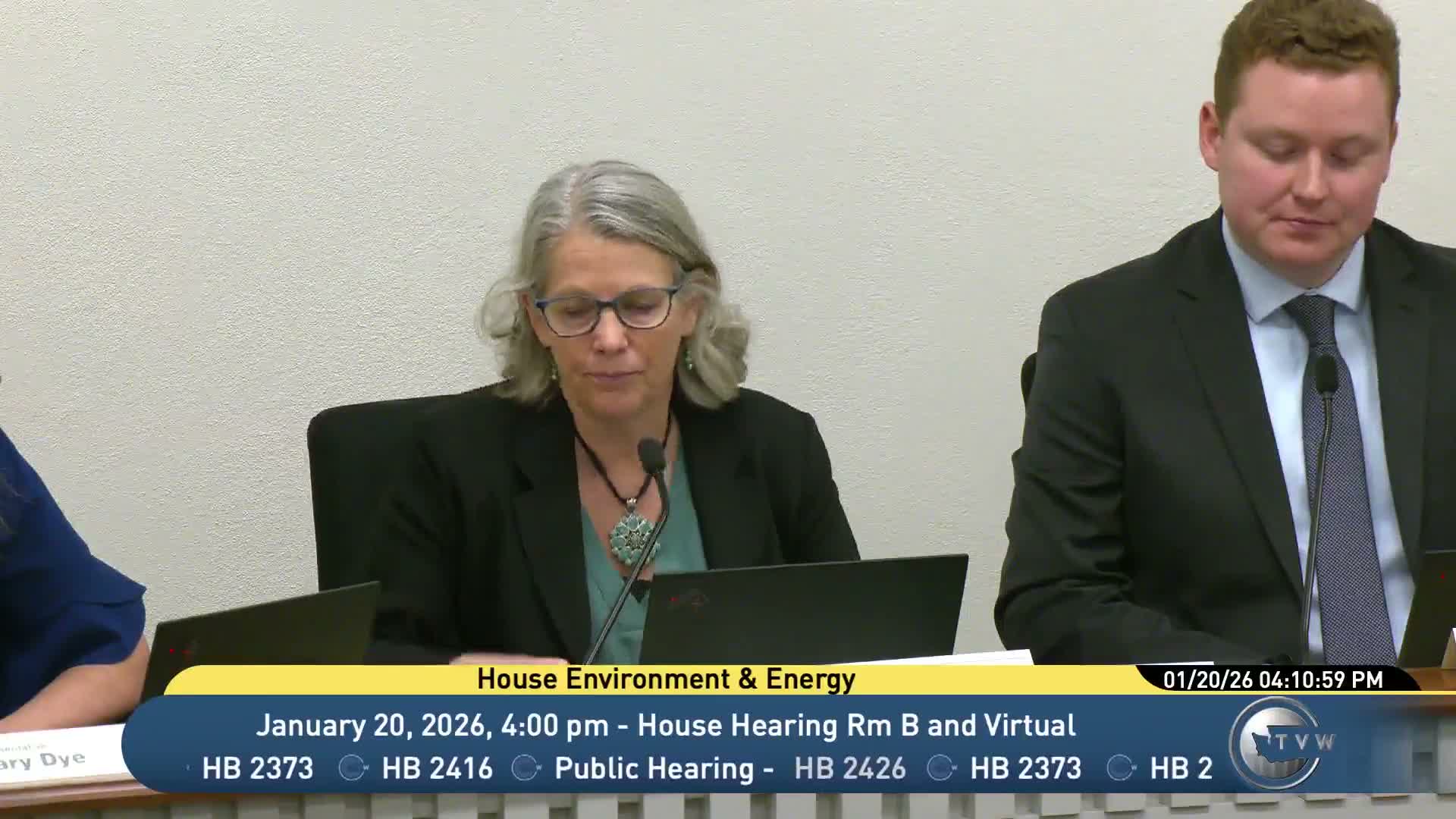
Summary
Supporters including Spokane’s mayor and county officials urged time and allowances for the city’s waste‑to‑energy plant to avoid sharp rate increases and preserve 75 jobs. Ecology and conservation groups said the bill would give preferential free allowances without guaranteed emissions reductions under the Climate Commitment Act.
Representative Tiffani Hill introduced HB 24 16 on behalf of Spokane interests, saying ratepayers cannot shoulder immediate compliance costs under the Climate Commitment Act and that the bill would provide time to craft long‑term solutions including possible carbon capture technology. “The primary reason we need this bill is our rate payers simply can't afford the cost at this time,” Hill said.
Mayor Lisa Brown told the committee Spokane’s waste‑to‑energy facility was built in the early 1990s with $60,000,000 in state support to protect a sole‑source aquifer and provides disposal and special‑handling services for the county and region. She said losing the facility could force the city to pay allowances or face penalties estimated at “$4,000,000 to $8,000,000,” and that the plant produces energy to about “13,000 homes.” “We want to create … a path to compliance,” Brown said, asking the committee to “keep the bill moving.”
Supporters from the city, county and labor stressed local economic and service impacts. James Teagan of AFSCME Council 2 warned that closure could eliminate about “75 jobs,” and Spokane County Commissioner Chris Jordan said the county sends roughly half its solid waste volume to the plant and would face large hauling costs if the facility closed.
Opponents — including Zero Waste Washington, Washington Conservation Action and Climate Solutions — urged caution. Heather Trim said the facility is the last of its kind on the West Coast and noted similar facilities in California and Oregon closed in December 2024 amid concerns about toxic emissions and aging infrastructure. Darcy Nottemacher said, “This bill gives the Spokane incinerator preferential treatment under the Climate Commitment Act and sets a harmful precedent,” arguing the bill would allocate no‑cost allowances based on total emissions without guarantees of future reductions.
Joel Creswell of the Department of Ecology testified that HB 24 16’s emissions‑reduction pathway is inconsistent with the state’s net‑zero by 2050 targets. “Under this bill … in 2050, the facility could continue to emit at 85% of its current level at no cost,” Creswell said, and urged that any glide path include enforceable decarbonization milestones and regulatory requirements.
Some testimony proposed compromise amendments: community advocates asked for alternative compliance pathways tied to verified emissions declines and investments in waste‑reduction and material recovery, while city and labor witnesses urged time and flexibility to preserve local services and jobs.
The committee held questions and a broad public testimony record with no formal vote; the hearing was closed without a decision and may return for follow‑up on technical amendments and fiscal implications.