Get Full Government Meeting Transcripts, Videos, & Alerts Forever!
Get email alerts on the Retail Theft topic
No spam. Unsubscribe anytime.
House committee hears wide support and sharp opposition to sentencing increases for large-scale retail theft
Summary
Supporters told the House Community Safety Committee that HB 2209 would hold repeat, organized retail thieves and fencing operations accountable by adding 12- or 24-month sentencing enhancements tied to loss thresholds; defense and legal-aid groups said enhancements are unnecessary, ineffective and risk racial disparities.
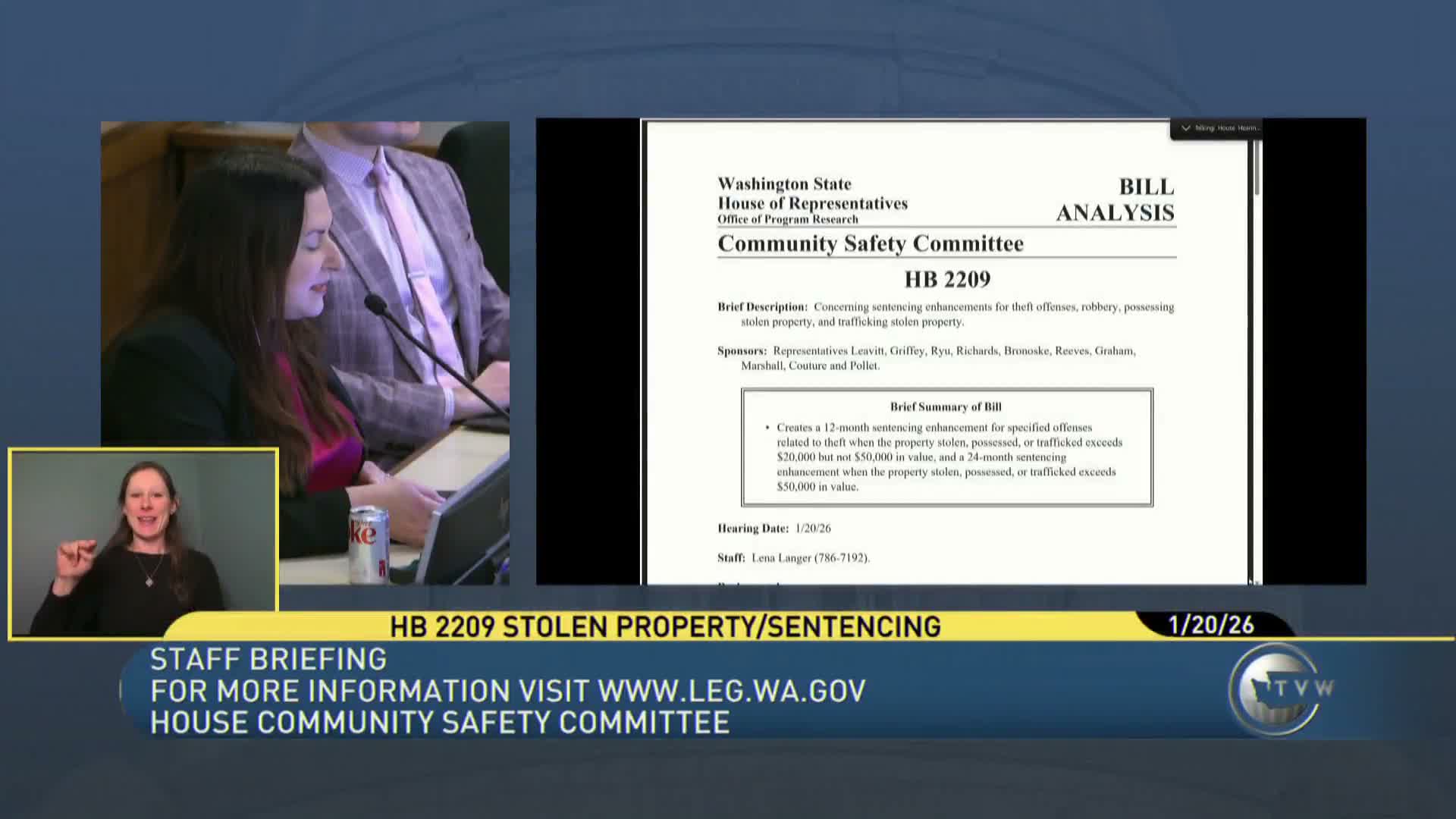
The Washington House Community Safety Committee on Jan. 20 heard competing testimony on House Bill 2209, which would add 12-month and 24-month sentencing enhancements for specified theft-related offenses when the stolen or trafficked property exceeds $20,000 and $50,000 respectively.
Supporters — including prosecutors, retail associations and municipal representatives — urged the committee to target high-volume, organized theft rings that they say drive violence, push employees out of work and shift costs to consumers. Russell Brown of the Washington Association of Prosecuting Attorneys testified that the bill “focuses accountability on the repeat organized offenders” and helps direct scarce enforcement resources at the most prolific actors. Brandon Huskeeper of the Northwest Grocery Retail Association and Crystal Leatherman of the Washington Retail Association emphasized underreporting and the economic effects on small community stores.
Prosecutors and investigators described examples where alleged fencing operations coordinated thefts across jurisdictions. Matt Thomas, a deputy prosecuting attorney in Pierce County, said a single fencing storefront generated about $2 million in annual revenue and that shutting it down led to an immediate drop in theft at nearby stores.
Opponents urged caution. David Treweiler of the Washington Association of Criminal Defense Lawyers said thefts have trended downward and argued longer sentences are not proven to reduce crime. Antonio Giannata of Columbia Legal Services warned the committee that incremental sentencing enhancements can contribute to higher incarceration rates and exacerbate racial disparities.
The committee limited public testimony and noted that most witnesses spoke in favor with a smaller but vocal opposition. Chair Goodman left the hearing record open for additional comments; no formal vote occurred at the Jan. 20 hearing.
What’s next: The committee will weigh testimony and may consider amendments before any floor action.