Get Full Government Meeting Transcripts, Videos, & Alerts Forever!
Get email alerts on the Voting Access topic
No spam. Unsubscribe anytime.
Panel debates electronic ballot portal and tribal outreach requirements in SB 6035
Summary
SB 6035 would require regular county‑tribe outreach and authorize a secure electronic ballot return portal for certain voters; advocates for accessibility and tribal outreach supported the bill while the Secretary of State and security experts urged pilots and stronger cybersecurity safeguards before broad implementation.
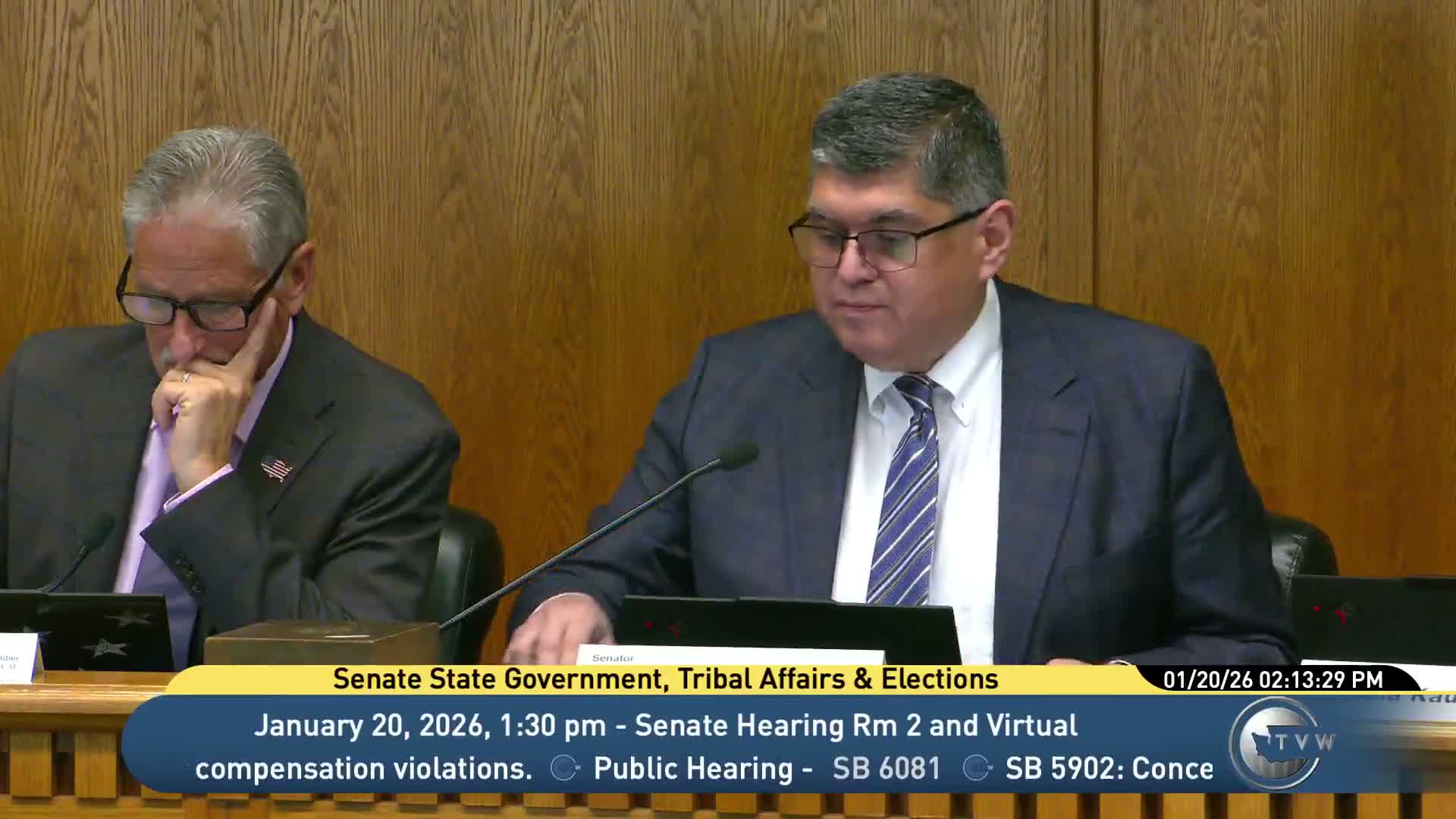
Committee members heard competing arguments Jan. 20 over Senate Bill 6035, a proposed substitute that pairs a tribal‑outreach requirement with authorization for a secure electronic ballot return portal.
Staff described the bill’s key elements: county auditors must schedule meetings with federally recognized tribes in their counties in odd‑numbered years to discuss voting centers, ballot drop boxes and election operations; the Secretary of State must conduct biennial meetings with tribes; and the Secretary is authorized to approve an electronic ballot return portal for service, overseas, disabled voters and electors living on tribal reservations, with rulemaking and an implementation target of Jan. 1, 2029. A fiscal note estimated implementation costs for the Secretary’s office at about $239,000 for the 2027 biennium and smaller ongoing costs.
Sponsor Sen. Claudia Kaufman said the bill strengthens democracy by improving coordination with tribes and expanding access. Supporters — including Julie Wise (King County director of elections) and disability advocates such as Marcy Carpenter of the National Federation of the Blind of Washington — backed tribal meetings and a portal as accessibility improvements. Wise noted current electronic returns often rely on email or fax and argued a vetted portal would enhance security.
Secretary of State Steve Hobbs raised cybersecurity objections to the portal provisions, recommending a pilot (for example, limited to federal employees with CAC cards) and rigorous testing before any broader rollout. Civil‑society cybersecurity witnesses echoed concerns and asked the committee to narrow or remove the portal language, while tribal and disability proponents said remaining access gaps justify pursuing secure electronic options and clearer outreach requirements.
Committee members and staff clarified that some language in section 3 is permissive ('may') and that pilot approaches and additional guardrails are possible. The hearing closed after testimony and no committee vote was recorded.