Get Full Government Meeting Transcripts, Videos, & Alerts Forever!
Get email alerts on the Privacy Transgender topic
No spam. Unsubscribe anytime.
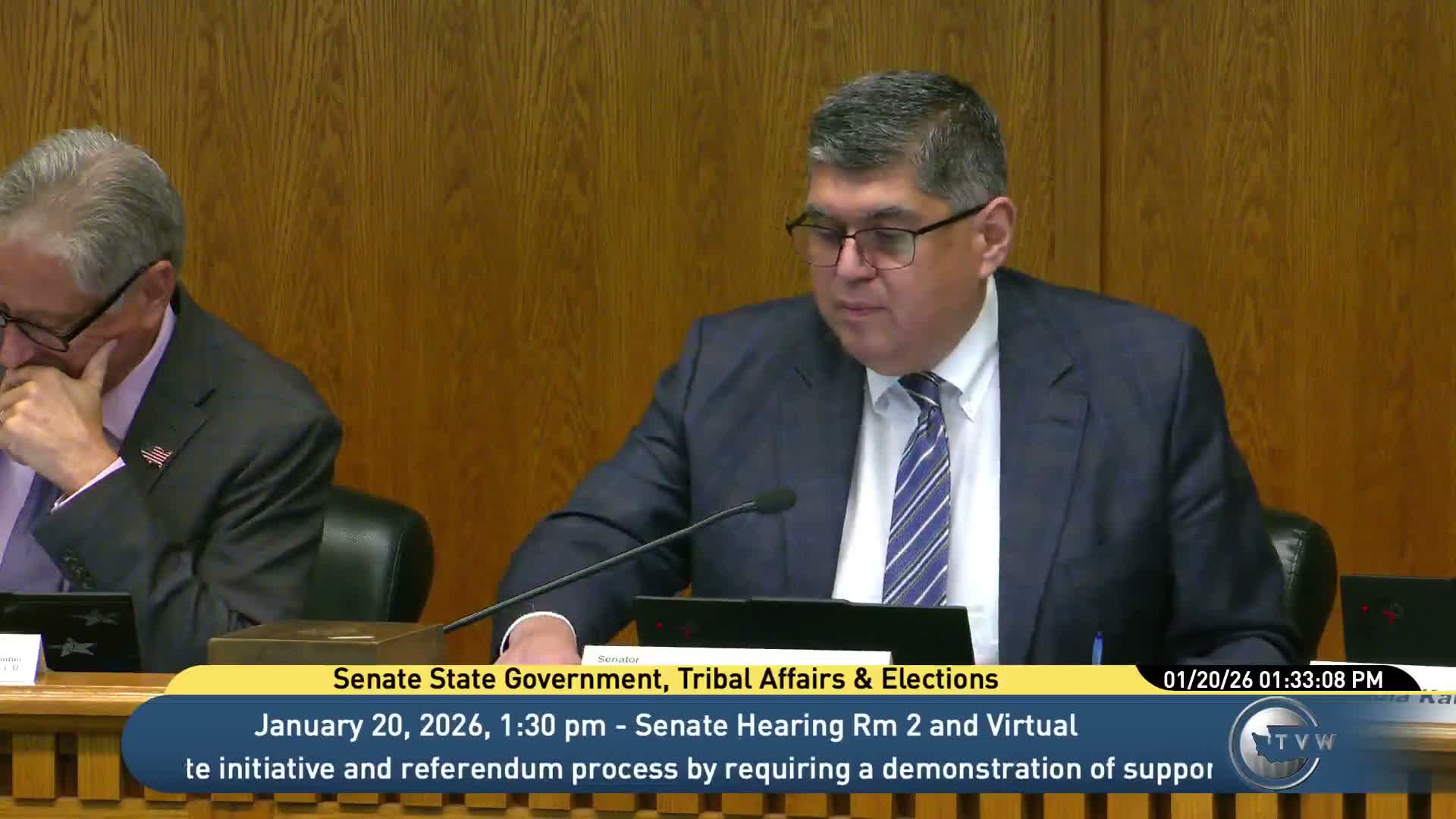
Hearing: Washington bill would shield historic gender‑marker changes from public records
Summary
Supporters told a State Senate committee SB 6081 would protect transgender Washingtonians from doxxing and cross‑state targeting by exempting historic gender‑marker change records from public disclosure; opponents warned of law‑enforcement and competitive-sport concerns. No vote was taken.
Senators heard hours of testimony Jan. 20 on Senate Bill 6081, which would exempt records that show a person’s historic gender‑marker designation — including prior markers on driver licenses and supporting vital‑records documentation — from public disclosure unless the person consents or a court orders otherwise.
Sponsor Sen. Jamie Petersen (43rd Legislative District) told the Government, Tribal Affairs and Elections Committee the bill “protects transgender Washingtonians” at a time when many face harassment and violent threats. Committee staff summarized the measure as restricting display or transmission of any record that alone or in combination would reveal a person’s historic designation and treating supporting Department of Health vital‑records data as confidential under the bill’s terms.
Advocates described personal harm they say the bill would prevent. Jay Conrad, a co‑author and Ph.D. student studying data privacy, said, “Right now, at this very moment, I am exposed. I have no mechanism to seal documentation of my designation change.” Dana Savage, representing the Association of Washington Assistant Attorneys General and also a co‑author, said she had been doxed and received harassing messages after a newspaper published her name: “My name appeared in an article and folks found me at work and sent harassing messages.” Other proponents recounted threats, vandalism and assaults they linked to public disclosure of historic designation information.
Opponents challenged the bill’s public‑safety and transparency implications. Pastor Eric Lundberg argued exemptions for driver‑license and vital‑records information could impede law enforcement and create opportunities for deception in athletics, while Sharon Gamoff said birth certificates and other state records should ‘‘reflect truth and reality.’’ Supporters countered that the bill preserves law‑enforcement access and is narrowly tailored to limit only public disclosure, not investigative uses.
Committee staff noted the bill maintains access for courts, law‑enforcement and government agencies acting for legitimate functions and pointed to analogous protections for medical and juvenile records. The hearing featured a high turnout of community witnesses; the chair closed public testimony without a committee vote.
The next procedural step — amendments, executive session or a vote — was not recorded during the hearing.