Get Full Government Meeting Transcripts, Videos, & Alerts Forever!
Get email alerts on the Health Workforce topic
No spam. Unsubscribe anytime.
Committee hears bill to allow MA‑EMTs to serve as physician substitutes at plasma donation centers
Summary
House Bill 18,28 would authorize medical assistant‑EMTs to perform duties of a physician substitute in FDA‑regulated plasma source donation centers under medical director oversight, aligning state law with federal practice and addressing workforce needs for expanding plasma collection.
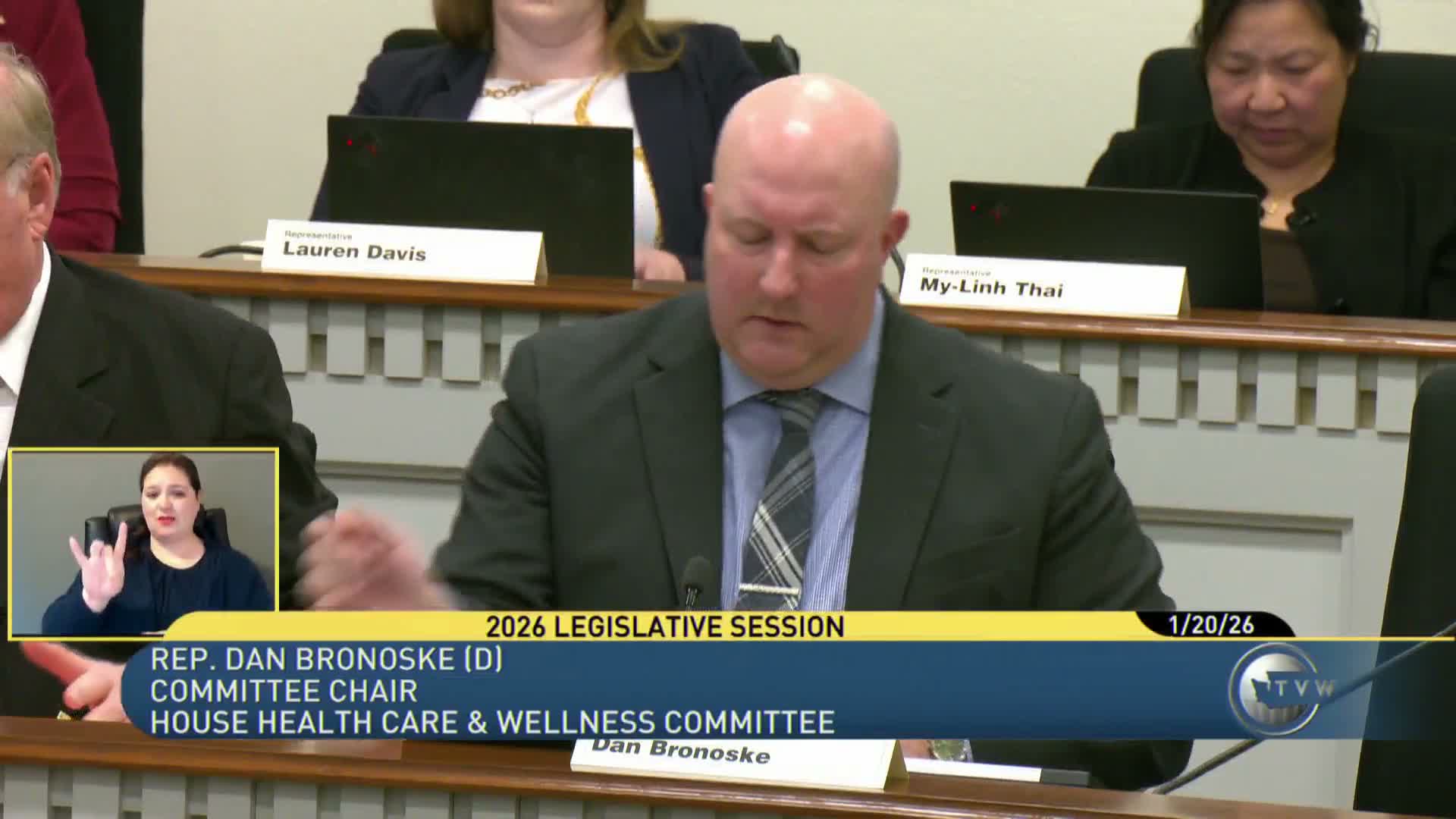
House Bill 18,28 was presented to the House Health Care and Wellness Committee on Jan. 20. The measure would authorize medical assistant‑EMTs (MA‑EMTs) to perform the duties of a physician substitute in plasma source donation centers when acting under a responsible physician’s delegation and within federal FDA rules.
Staff explained that federal rules define a physician substitute and that donor screening, vital‑sign monitoring, venipuncture and certain procedural tasks may be delegated to trained nonphysician personnel under a responsible physician and medical oversight. The bill would explicitly allow MA‑EMTs to perform those delegated duties in plasma centers in Washington when state law permits.
Sponsor Representative Edwin Obraz said the bill aligns state law with federal standards, helps address workforce shortages and supports increasing plasma collection to supply plasma‑derived therapies used for immunodeficiency, bleeding disorders and other rare conditions. Crystal Phillips (Plasma Protein Therapeutics Association) and other industry witnesses testified in support, saying plasma centers are highly regulated by FDA, use standardized protocols, and that EMT training fits the screening and monitoring duties required in donation centers. They cited other western states that allow EMTs as physician substitutes and said no safety issues have emerged.
Supporters argued that limiting some screening duties to nurses diverts them from higher‑acuity nursing work, impeding plasma collection and the supply of therapies. Staff and proponents said federal oversight and medical‑director protocols remain central safety controls.
What’s next: Testimony was supportive and emphasized regulatory alignment with federal standards; the committee closed public testimony and adjourned.