Get Full Government Meeting Transcripts, Videos, & Alerts Forever!
Get email alerts on the Extraordinary Medical Placement topic
No spam. Unsubscribe anytime.
Committee advances substitute for extraordinary medical placements after rejecting several tightening amendments
Summary
Senate Human Services moved a proposed substitute for SB 5,895 — expanding extraordinary medical placement eligibility and procedures — to Ways & Means after debate and rejection of amendments about physician qualifications, in-state placement and reporting requirements. DOC projected costs above $50,000.
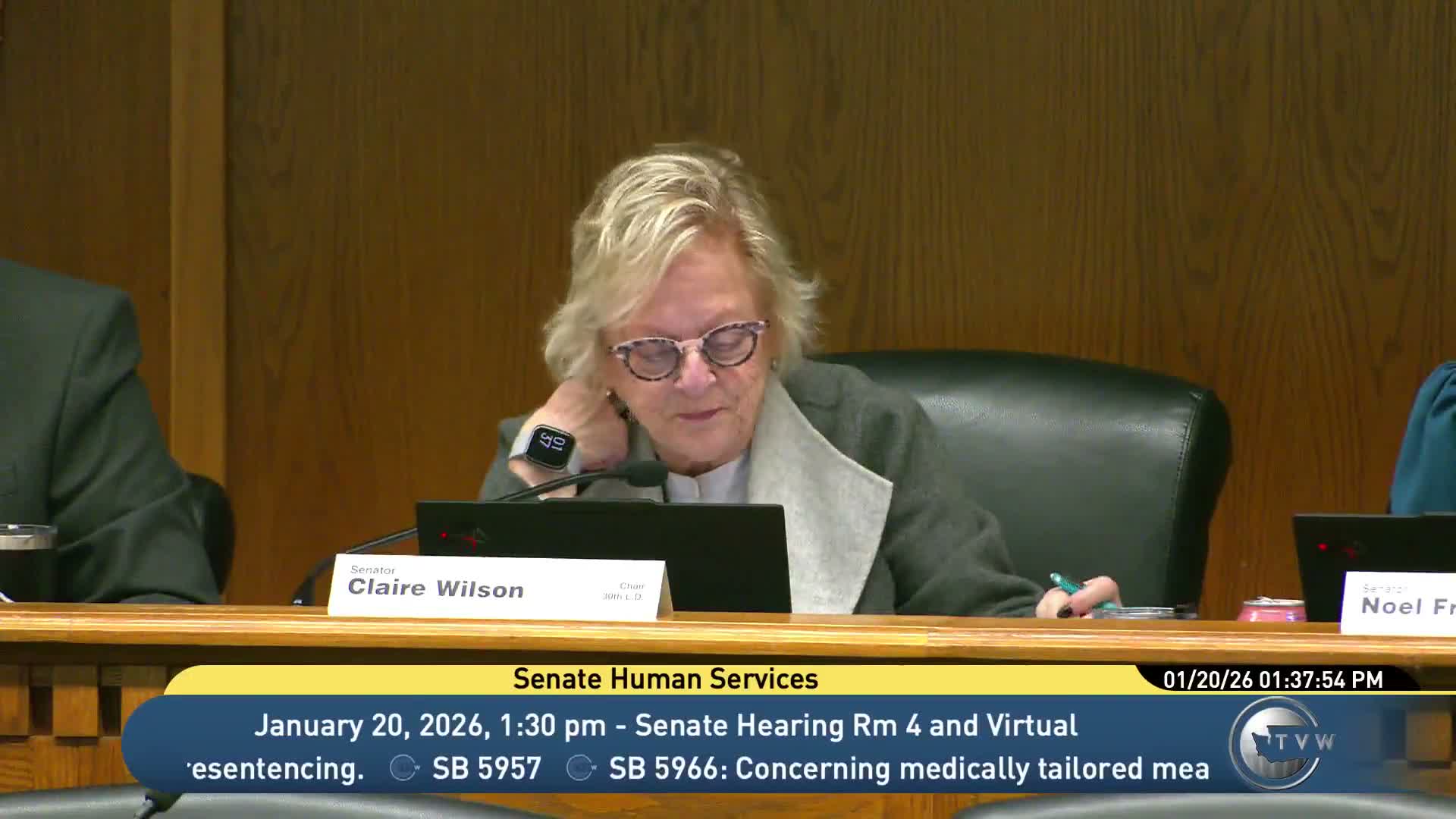
The Senate Human Services Committee recommended a proposed substitute and referral to Ways & Means for Senate Bill 5,895 on Jan. 20 after extended debate over eligibility and oversight for extraordinary medical placements for incarcerated individuals.
In committee briefing, staff described the bill as expanding eligibility to people with serious medical conditions whose needs cannot be met in custody and clarified that physicians would diagnose and DOC would assess risk. The proposed substitute adds language about "serious and chronic" conditions and lengthens the expected terminal prognosis window to 18 months in one draft. The Department of Corrections provided a fiscal note estimating costs greater than $50,000, driven by personnel needs for community follow-up and care coordination.
Senator Christian offered a sequence of amendments (B1–B7) to narrow eligibility (e.g., prohibit placements for those with recent serious infractions), require physician specialty qualifications, require participation in rehabilitative programming, mandate annual reporting of cost savings, limit placements to Washington State, and involve the original sentencing court in reviews. Many of these amendments failed on voice votes after proponents and opponents exchanged concerns about access for end-of-life patients versus safeguards for public safety and fiscal oversight.
Senator Orwell asked whether DOC facilities already employ physicians with the specialties B2 would require; staff indicated that information was not immediately available and offered to follow up. Supporters of the bill emphasized the target population is often end-of-life or near end-of-life cases, while opponents sought stricter procedural checks.
The committee moved the proposed substitute to a due-pass recommendation and referred the bill to Ways & Means for further consideration.
Next steps: referral to Ways & Means, further fiscal review and any required amendments before floor consideration.
Provenance: committee briefing and debate occurred in the transcript between the bill’s introduction and the committee’s motion to send the substitute to Ways & Means.