Get Full Government Meeting Transcripts, Videos, & Alerts Forever!
Get email alerts on the Toxic Chemicals 6ppd topic
No spam. Unsubscribe anytime.
Legislators debate phasing out 6PPD in tires, citing salmon deaths and industry concerns
Summary
SB 6119 would ban tires containing the additive 6PPD by 2035, impose a mitigation fee and prioritize monitoring and removal of illegally dumped tires; scientists and conservation groups backed the bill citing acute salmon mortality, while manufacturers and dealers warned about safety, costs, and timing for validated alternatives.
The committee heard Senate Bill 6119, which would phase out the tire additive 6PPD that researchers say transforms into a compound (6PPD-quinone) that is acutely lethal to salmon at extremely low concentrations. The measure would prohibit sale and distribution of tires containing 6PPD beginning in 2035, establish a mitigation fee on tires ($3 for low-load tires, $6 for higher-load tires, rising 10% annually), and direct the Department of Ecology to develop rules addressing regrettable substitutes and allowable uses for mitigation revenue.
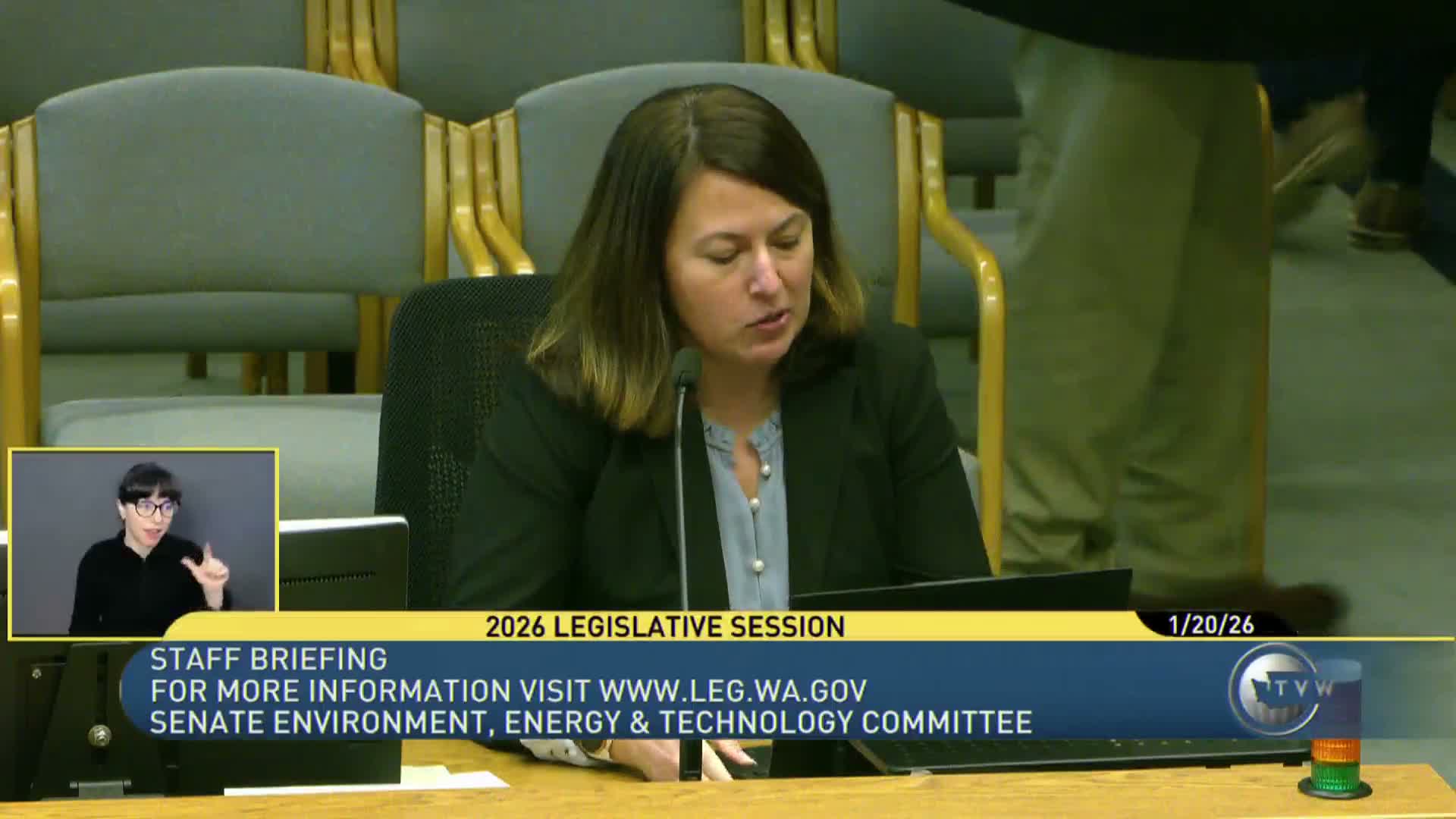
Alicia Kinney briefed members that the Safer Products for Washington program previously prioritized vehicle tires containing 6PPD; the bill would add a statutory timeline and a mitigation account to fund monitoring, sampling, surveying of salmonid water bodies and waste-tire removal. Dr. Jennifer McIntyre (Washington State University) described the science behind the concern: her lab and collaborators identified 6PPD-quinone and found it causes coho salmon to die within hours in surface waters receiving roadway runoff. Dr. McIntyre said green stormwater infrastructure can remove 6PPD-quinone but that available infrastructure is insufficient to prevent lethal exposures statewide.
Supporters including Puget Sound Partnership, Seattle Public Utilities, Trout Unlimited and Long Live the Kings urged a phase-out and mitigation fee to accelerate safer alternatives and pay for localized monitoring and cleanup. Lehi Kalamikidis of Trout Unlimited highlighted the compound’s potency, saying “1.5 or 4 grains of rice of this chemical is a lethal concentration in Olympic sized swimming pool.” Local governments and conservation groups said mitigation revenue should help locate hotspots and fund targeted stormwater treatment and tire removal projects.
Opponents — including tire manufacturers, Les Schwab, trucking associations and dealer groups — urged caution. They said no commercially validated alternatives have been fully vetted for tire performance and safety, warned that an early ban could jeopardize motorist safety, and objected to additional fees on top of recent tire fees. Industry witnesses described an active alternatives-assessment process in California involving many manufacturers and urged reliance on that regulatory pathway rather than a premature statutory ban.
Committee discussion focused on timelines, fee design and whether mitigation revenue should fund capital stormwater projects; witnesses said the bill’s revenue is intended primarily for monitoring, sampling and waste-tire removal rather than large capital stormwater projects. The hearing concluded with the committee receiving a large volume of sign-ins (571) and no immediate vote announced.