Get Full Government Meeting Transcripts, Videos, & Alerts Forever!
Get email alerts on the 340b Contract Pharmacies topic
No spam. Unsubscribe anytime.
Heated testimony as House panel weighs bill to limit manufacturer restrictions on 340B contract pharmacies
Summary
House Bill 2,145 would bar manufacturers and distributors from restricting acquisition or delivery of 340B drugs or conditioning access on claims data; testimony highlighted sharp divides between safety‑net providers and hospitals citing patient‑services reliance versus industry and employer groups warning of higher costs and lack of transparency.
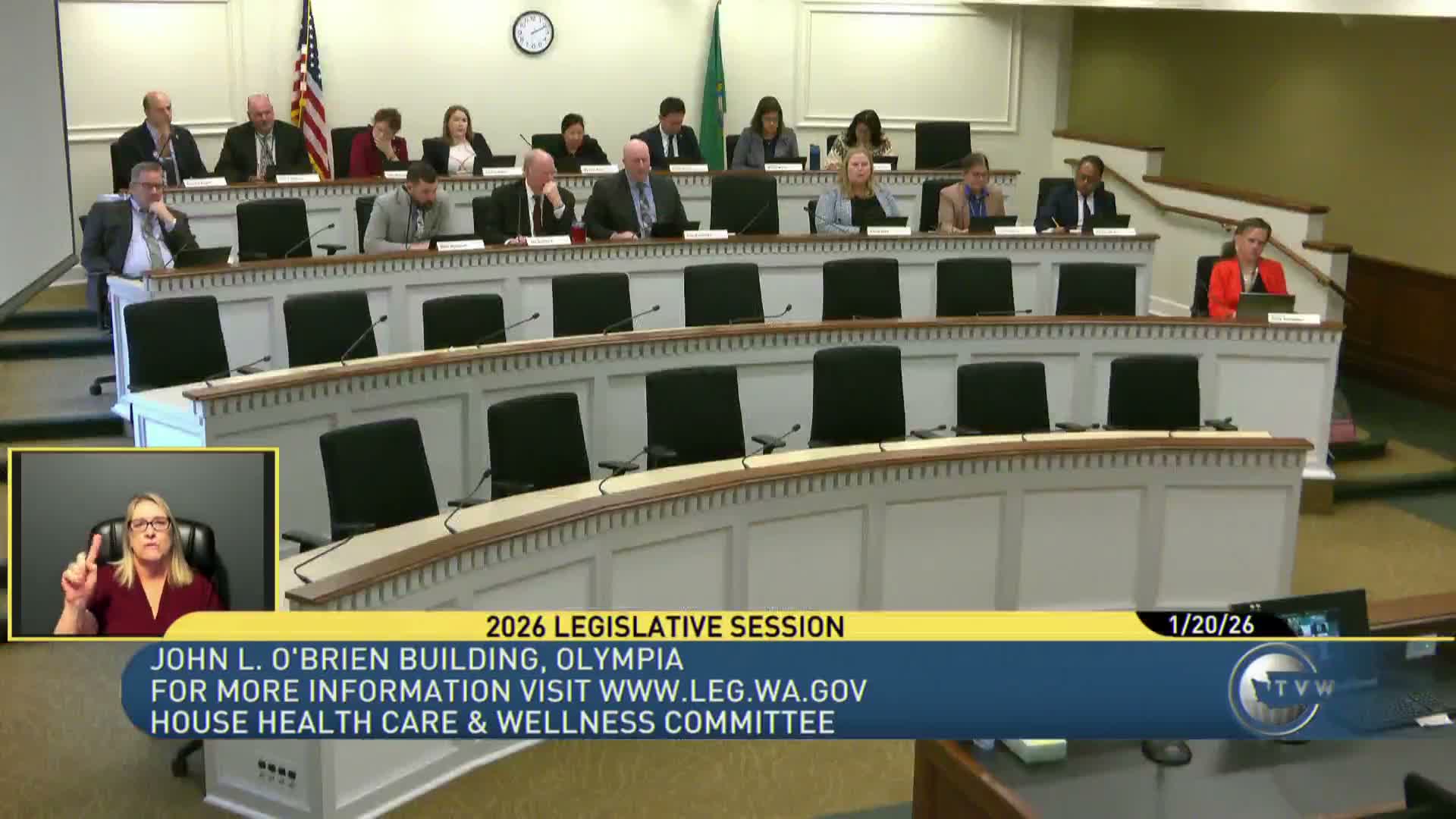
Lawmakers in the House Health Care and Wellness Committee debated House Bill 2,145 on Jan. 20, a proposal to prevent manufacturers, distributors or third‑party logistics providers from denying, restricting, or conditioning access to drugs sold at 340B prices to covered entities or their contract pharmacies. The bill would also bar manufacturers from requiring claims, utilization, purchasing or other data as a condition of selling 340B drugs and would create civil remedies including possible daily penalties and enforcement by the attorney general under the Consumer Protection Act.
Staff counsel Emily Poole opened the discussion with a technical summary: 340B is a federal program (HRSA/HHS) that lets eligible safety‑net providers buy outpatient drugs at capped prices; federal law prohibits duplicate discounts and drug diversion and authorizes HRSA audits. Poole said the bill’s two core prohibitions are (1) barring manufacturers/distributors/3PLs from denying or restricting acquisition or delivery of 340B drugs to covered entities or contract pharmacies unless federal law prohibits it, and (2) banning manufacturers from conditioning access on submission of claims or other data. The bill would allow civil actions and penalties (up to $5,000 per day per violation) and permit attorney‑general enforcement under consumer‑protection law.
Sponsor Rep. Milin Tai framed HB 2,145 as narrowly focused on preventing manufacturers from unilaterally restricting contract pharmacies and said she was working with stakeholders on transparency language. "What data do we need from both covered entities and drug manufacturers," she asked the committee, and "what purpose are these data for?" She emphasized the bill does not attempt to rewrite federal law.
Public testimony revealed a deep split.
In support, representatives of community health centers and rural hospitals said 340B revenues pay for patient navigators, sliding‑fee programs, mobile dental clinics and other services not covered by payers. Lisa Nelson (Unity Care Northwest), Eric Ross (New Health), and Mike Glenn (Jefferson Healthcare) described 340B as a safety‑net financing tool and said manufacturer restrictions on contract pharmacies implemented since 2020 had reduced access to drugs at many community pharmacies. Patient testimony from Victor Velasquez, a long‑term HIV patient and clinic board member, put a human face on the claims: he said 340B funding supports wraparound services (care navigators, nutritionists, behavioral health) that keep him healthy and warned those services would be lost without statutory protections.
Opponents included industry and employer groups: NFIB, the Building Industry Association of Washington, Association of Washington Business, BIopharma trade associations and manufacturers such as GSK and Bristol Myers Squibb. Opponents argued the 340B program has expanded beyond its original intent, that discounts displace rebates to employers and Medicaid (raising costs for businesses and taxpayers), and that prohibiting manufacturers from seeking claims‑level data would undermine transparency and invite legal risk. They cited large, aggregate program figures (testimony referenced HRSA/CBO data in the tens of billions of dollars) and studies estimating state employer/taft‑hartley impacts; witnesses urged pursuing reporting and transparency reforms rather than state‑level prohibitions that could conflict with federal law.
Several witnesses — including former state officials and health‑policy experts — acknowledged both sides could be right: covered entities use 340B savings to fund vital services, while purchasers and some researchers say the program’s growth and current structure can increase overall health‑system costs and drive consolidation.
Committee discussion touched on the litigation landscape: staff and NCSL referenced federal cases finding limits on HRSA’s authority to enforce certain distribution interpretations and noted a federal pilot on rebate models had been put on hold. Tribal testimony argued that mandatory claims data or rebate models must be imposed and overseen by Congress/HRSA, not manufacturers, and that state law should protect tribal cash flows and patient safety.
What’s next: The hearing generated heavy stakeholder input and flagged a series of trade‑offs — patient services funded by 340B revenues versus broader market impacts and transparency gaps. Committee members were offered follow‑up materials and the sponsor indicated willingness to negotiate targeted transparency amendments.