Get Full Government Meeting Transcripts, Videos, & Alerts Forever!
Get email alerts on the Ai Companion Chatbots topic
No spam. Unsubscribe anytime.
Governor-backed bill would require AI chatbots to disclose identity, bar manipulative tactics for minors
Summary
SB 5984, a governor-request bill, would require operators of AI companion chatbots to disclose when a user could reasonably think they are interacting with a human, impose special protections for minors and mandate suicide/self-harm response protocols; testimony split between families and privacy advocates in favor and industry and free-speech groups urging narrower language.
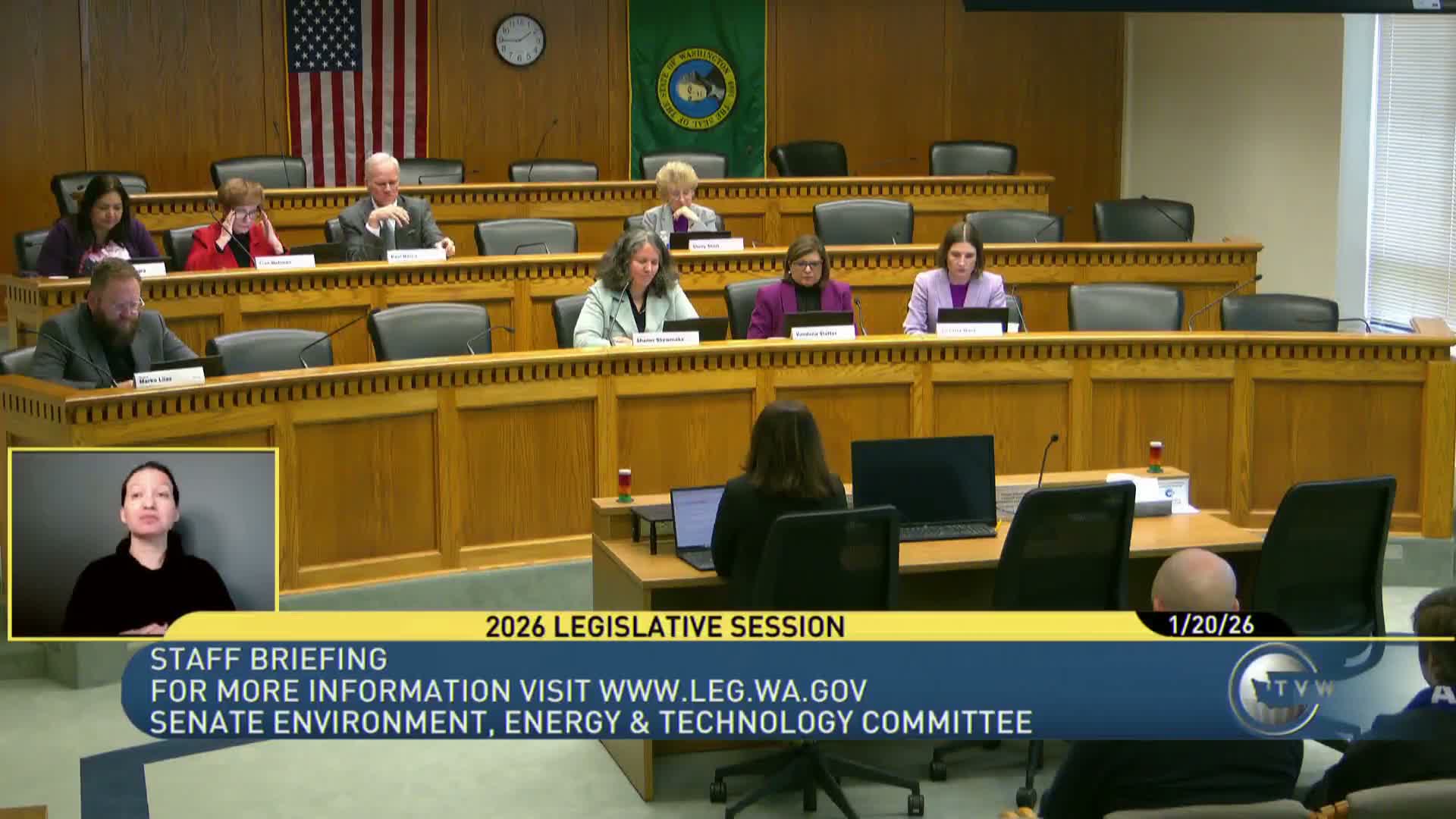
The Senate Environment, Energy & Technology Committee heard testimony on Senate Bill 5984, governor-request legislation that would require operators of AI 'companion' chatbots to disclose their artificial nature when a reasonable person could be misled, implement protections for minors, prohibit manipulative engagement techniques and maintain protocols for identifying and responding to suicidal ideation. Enforcement would be through Washington’s Consumer Protection Act, including a private right of action.
Alicia Kinney, committee staff, summarized the measure and said it requires operators to notify users — and to provide separate notice if the operator knows the user is a minor — prohibit sexually explicit or suggestive content when the user is a minor, ban manipulative engagement techniques designed to prolong or intensify emotional relationships, and maintain a protocol for detecting and responding to self-harm and suicidal ideation. The briefing noted an estimated Attorney General’s Office cost of just under $200,000 over four years.
Sen. Claire Wellman (sponsor) framed the bill around child safety and noted multiple reports tying chatbot interactions to self-harm and suicide; Bill Perschbacher with the Governor’s Office said the measure was modeled on recent laws in California and New York and emphasized transparency and crisis-referral reporting. Katie Ruckel, the state’s chief privacy officer, highlighted section 7 — which places enforcement under the Consumer Protection Act and preserves a private right of action — saying it balances access to remedies and protections against meritless lawsuits.
A wide panel of supporters included parents who described tragic losses, researchers focused on adolescent development and non-profit lawyers who described documented cases they say show design-based harms. Aaron Ping testified emotionally: “My son, Avery, is gone because the digital world made it easy for predators to reach him, manipulate him and make the evidence disappear.” Dr. Lucia Magis Weinberg and Katie Davis from academic centers described developmental vulnerabilities that, they say, make minors particularly susceptible to manipulative chatbot designs.
Industry groups and free-speech advocates urged caution. Amy Harrison of the Washington Technology Industry Association said the bill “may not meaningfully address the concerns that inspired it” and risked folding in common education and customer-service tools. John Coleman of the Foundation for Individual Rights and Expression argued the bill risks constitutional problems by regulating expressive tools, and Kevin Frazier recommended opposition, saying the bill could delay beneficial AI uses and lacks empirical grounding for some interventions.
Committee members asked about the bill’s practical mechanics, including how operators would identify minors and whether disclosure and reminder regimes would change user behavior. Staff repeatedly said the bill requires operators to implement methods to identify minors but does not prescribe a single technical solution. The hearing closed without a committee vote; testimony reflected a deep divide between parents, researchers and consumer-advocacy groups pressing for strong safeguards and industry and civil-liberty groups urging narrower definitions and more empirical justification.