Get Full Government Meeting Transcripts, Videos, & Alerts Forever!
Get email alerts on the Opioid Treatment Accreditation topic
No spam. Unsubscribe anytime.
House committee hears bill to codify DOH authority to accredit opioid treatment programs
Summary
Lawmakers heard testimony on House Bill 2,437 to place the Department of Health's opioid treatment program accreditation authority into statute, allow the agency to set fees to cover accreditation costs, and permit use of opioid abatement settlement funds to offset fees.
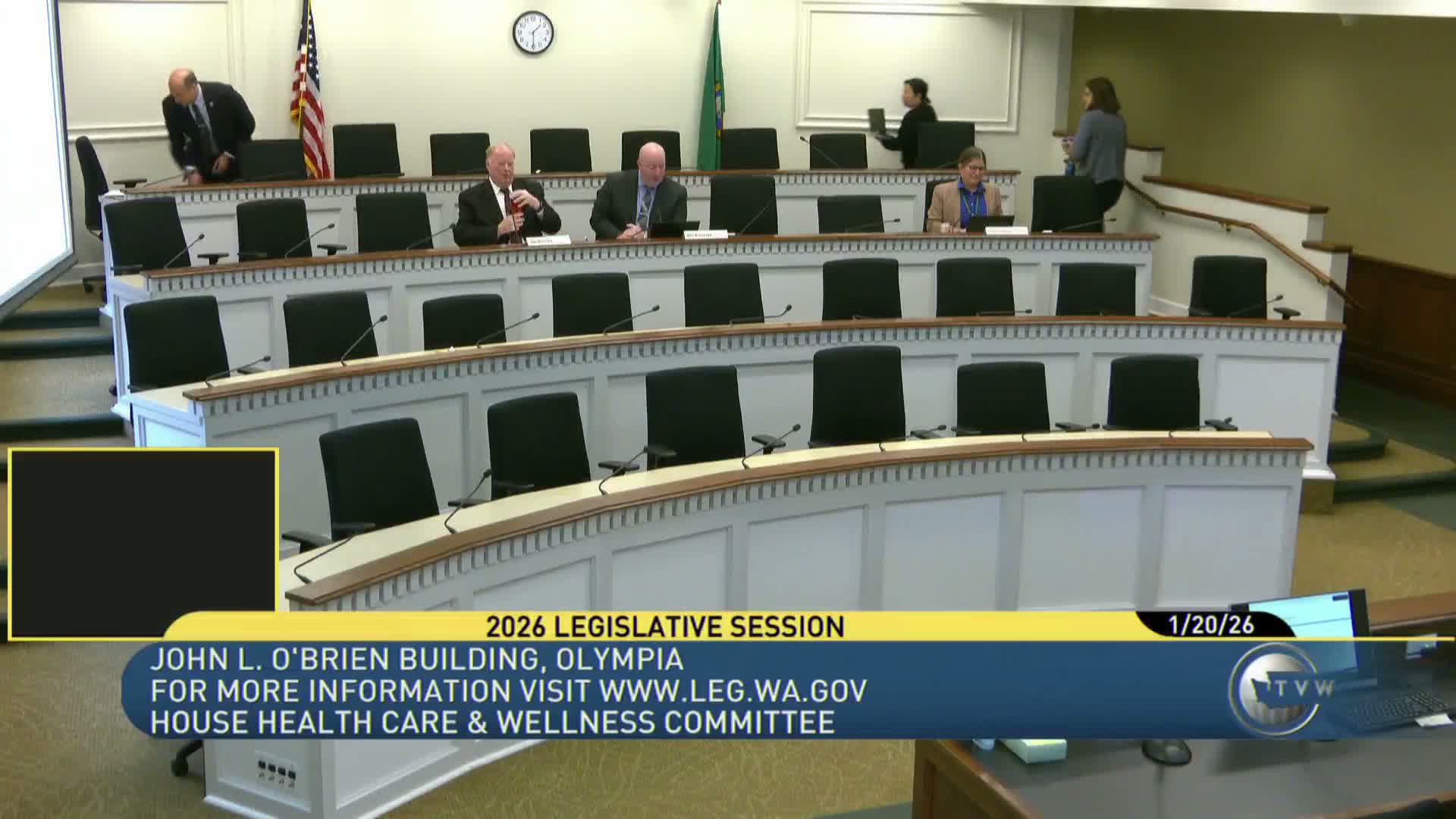
The House Health Care and Wellness Committee heard House Bill 2,437 on Jan. 20, a measure that would codify the Department of Health’s authority to serve as a federally approved accrediting body for opioid treatment programs (OTPs) and let the agency set fees to cover the cost of accreditation services.
Chris Blake, staff to the committee, told lawmakers that DOH has acted as an approved accreditor since 2018 and that the bill would write that authority into state statute and explicitly allow the department to set accreditation fees and use appropriated funds from the opioid abatement settlement account to offset costs.
Vice Chair and bill sponsor Deborah Lekanoff said the proposal is an agency‑request bill that grew out of conversations with tribal and nontribal OTP providers. Lekanoff said there are 38 OTPs in the state, 21 of which she identified as tribally owned, and argued that DOH accreditation keeps requirements aligned with state‑specific needs and avoids imposing what she described as burdensome third‑party standards that can reduce local access to care. She told the committee the average cost for licensing is "about $20,000," and that DOH partnerships with tribal providers have been long standing. The figure she cited for one tribal clinic’s cumulative clients was presented in testimony and has not been independently verified.
Ian Corbridge, director of the Office of Community Health at DOH, described OTPs as a frontline tool in the state’s opioid response and said the department requests fee authority so accreditation services can be self‑sustaining rather than rely on the general fund. Corbridge cited opioid mortality figures for 2024 (testimony referenced "over 2,400" deaths) to underline the public‑health stakes and said removing DOH from accrediting would force programs to seek third‑party accreditors whose requirements could differ from federal and state priorities.
A short exchange with Representative Marshall clarified that DOH currently holds the federal approval (SAMHSA) to accredit OTPs and that the bill’s change is to place that authority and a fee‑setting mechanism into statute.
No vote occurred during the hearing; the committee closed public testimony on HB 2,437 and moved to a scheduled work session on the federal 340B drug pricing program.
What’s next: The committee took testimony and staff presentations; the bill remains at the committee stage for further consideration and any amendments.