Tourism advisory group recommends industry-led assessment, $25M target to boost visitor spending
Loading...
Summary
At a work session, State of Washington Tourism and an industry advisory group recommended an industry‑led assessment program targeting about $25 million in annual revenue, projecting $14.6 billion in additional visitor spending over a decade and stressing governance and geographic equity.
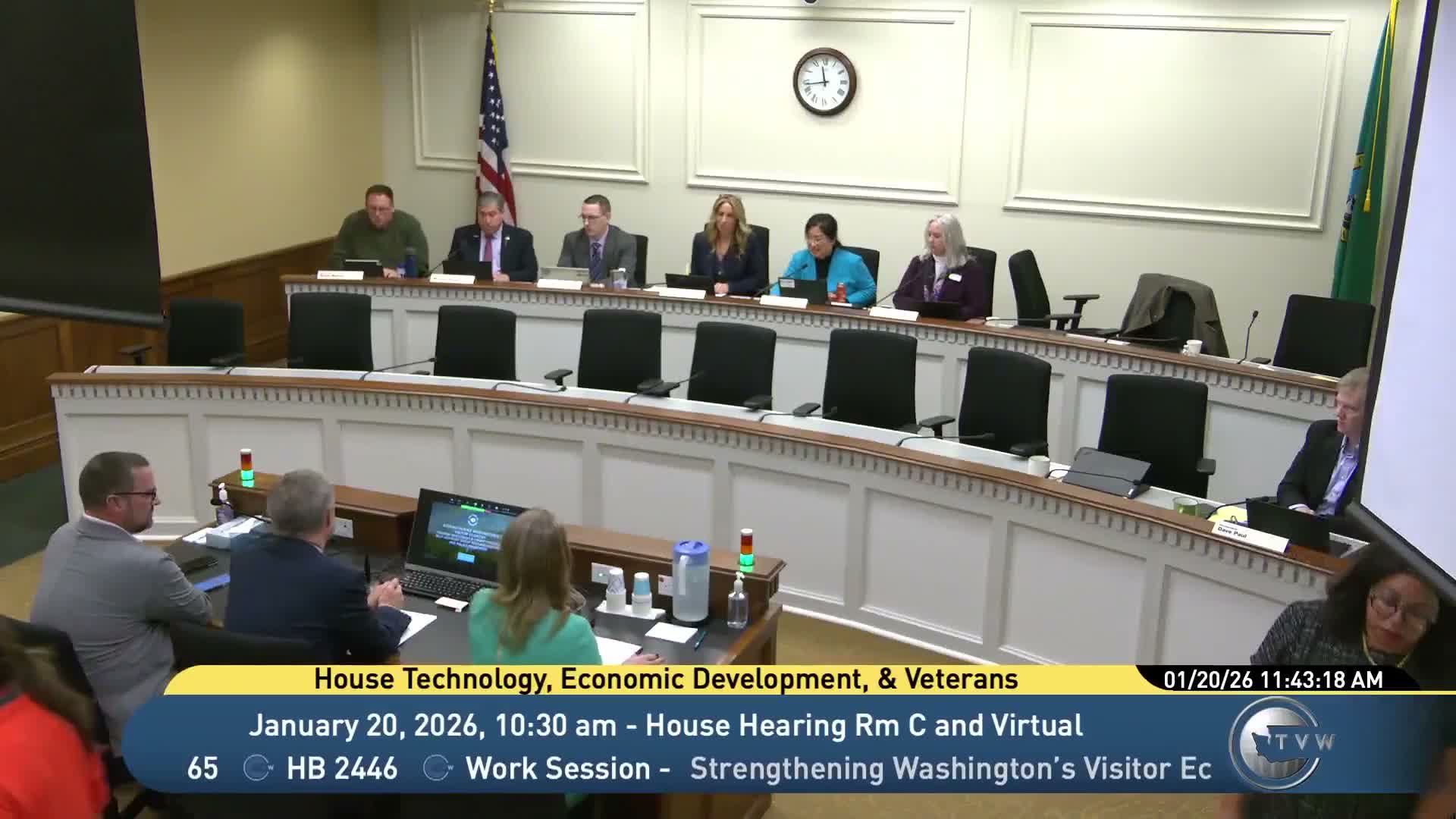
Committee members held a work session on strengthening Washington’s visitor economy and heard an advisory group’s recommendations for a sustainable, industry-led funding model.
David Blanford, CEO of State of Washington Tourism, said Washington is ‘‘underfunded relative to market size’’ compared with peer Western states and cited research showing a projected $14.6 billion in additional visitor spending over the next decade if the state right-sizes its tourism investment. The advisory group recommended an industry assessment model, a target of roughly $25 million in annual program revenue, and industry ratification and renewal authority for any assessment.
Panelists described the assessment model, governance expectations and economic outcomes. Chris Stone (Washington State Wine Commission) presented the wine commission’s 40-year assessment model as an example of industry-led funding that supports research and marketing for the whole sector. Brian Flaherty (Columbia Hospitality) reviewed six advisory recommendations including eligible business segments, gross-revenue-based assessment rates, and six-year terms. Annie McGrath emphasized that a competitively scaled program could generate $1.4 billion in state and local tax revenue and over $100 million in lodging tax collections over the next decade if enacted and properly governed.
Members asked about the link between the $25M target and the $14.6B projection and about geographic balance so benefits reach gateways such as Spokane. Presenters said the model is statewide, industry-led, and intended to work with local communities to avoid duplication of existing local programs.
What’s next. The committee closed the work session early and invited continued collaboration on forthcoming bills and policy refinements.