Get Full Government Meeting Transcripts, Videos, & Alerts Forever!
Get email alerts on the Immigrant Workers topic
No spam. Unsubscribe anytime.
Attorney General backs I‑9 notice bill; business groups warn of burdens and penalties
Summary
SB 58 52 would require employers to notify workers within 72 hours of federal I‑9 inspections and to provide copies of outcomes; the Attorney General's office supports the measure to reduce fear among immigrant workers, while business groups caution about potential conflicts with federal enforcement, translation burdens and high penalties.
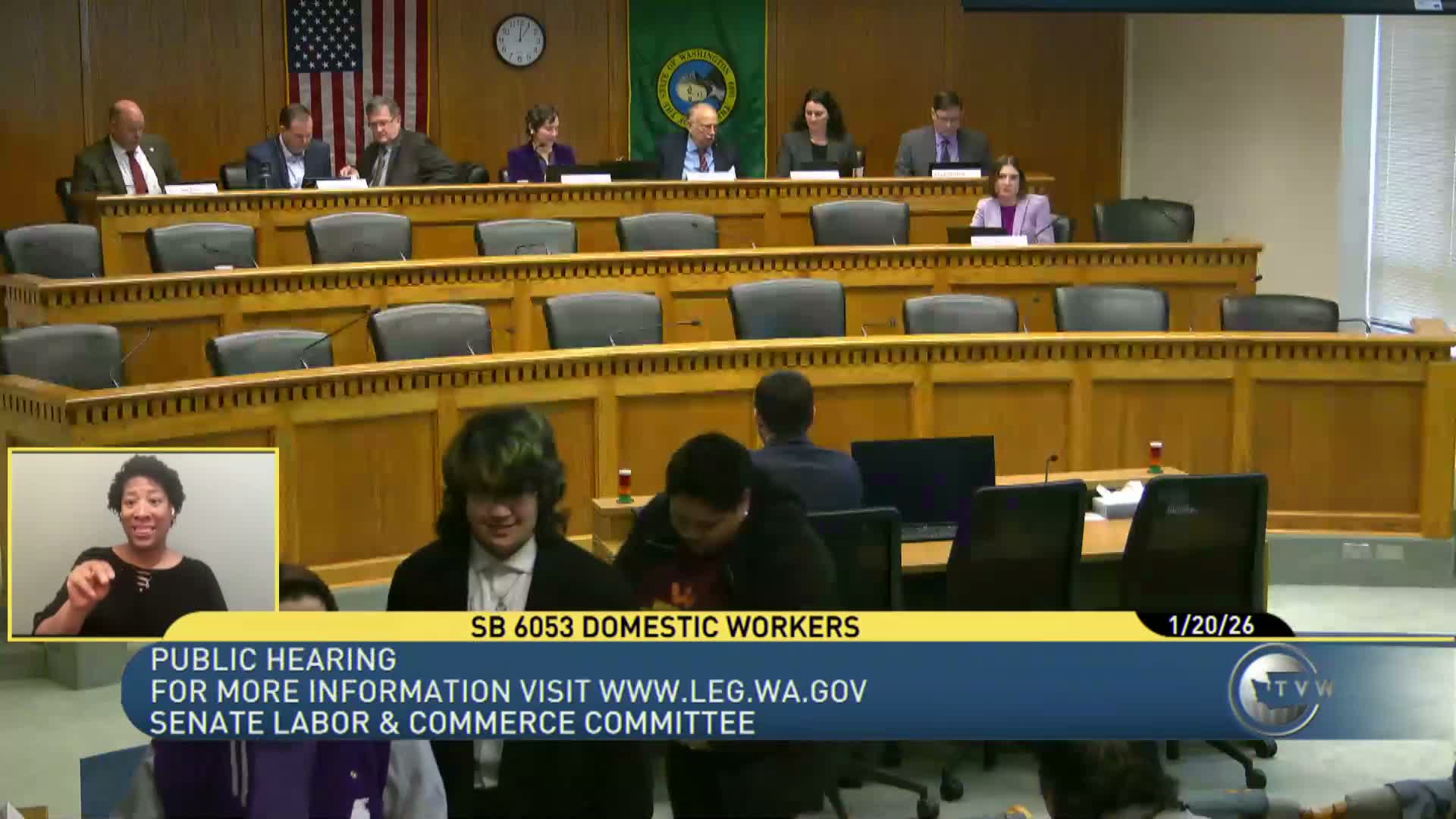
The committee considered SB 58 52, which would require employers to notify workers and authorized representatives within 72 hours after receiving notice of a federal I‑9 inspection, provide written results and deficiency notices to affected workers, prohibit voluntary access to worker records without a subpoena or warrant, and direct the attorney general to issue workplace guidance and enforce the law with civil penalties plus a private right of action.
Marlon Yanez read the bill report; the attorney general’s legislative director Adam Eitman testified in support and said the approach is modeled on California and Illinois laws and is permissible under federal law. Eitman said the aim is to reduce the fear and disruption caused by workplace audits and give employees time to prepare evidence and seek counsel.
Supporters, including Columbia Legal Services and the League of Women Voters, said notice provides due process and prevents workplace raids that spread fear through communities. Several local elected officials and civil‑rights groups urged passage.
Opponents, including the Washington Hospitality Association, National Federation of Independent Business, retailers and small businesses, warned the bill’s 72‑hour notice, translation and documentation requirements create unworkable compliance burdens for many employers and that the proposed penalties and private lawsuits could be excessive. Some employers also said advance notice could enable those ineligible to evade enforcement.
Committee members asked for more data on the prevalence of I‑9 audits that led to immigration enforcement; the attorney general’s office said it was aware of two such audits that precipitated enforcement actions and offered to provide further detail. Senators and stakeholders agreed to continue negotiations on penalty levels, the list of covered agencies and the practicalities of the 72‑hour notice requirement.
No vote was taken; the sponsor and the attorney general said they would continue to refine the bill with stakeholders.