Get Full Government Meeting Transcripts, Videos, & Alerts Forever!
Get email alerts on the Labor Agriculture topic
No spam. Unsubscribe anytime.
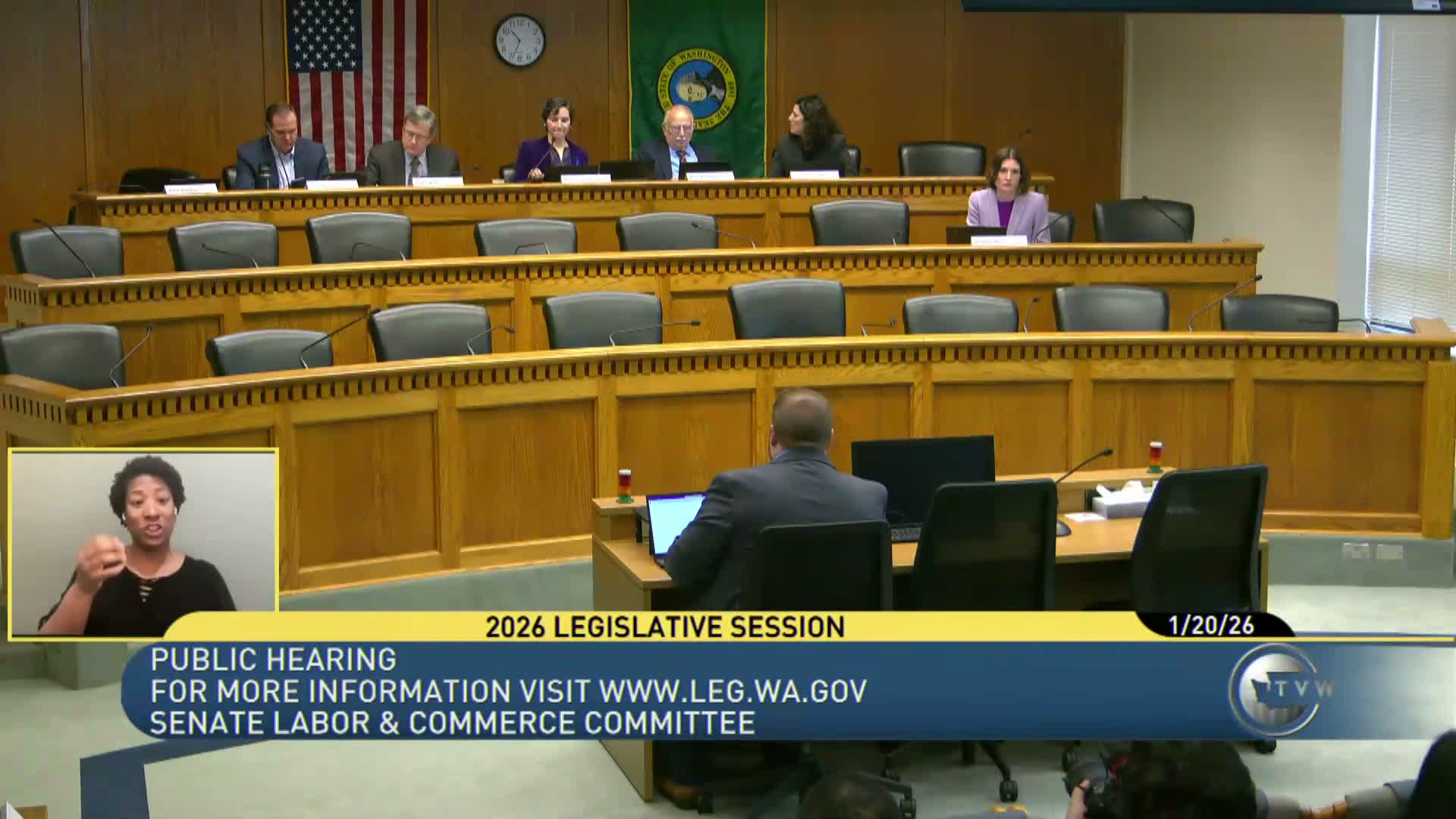
Senate hearing splits as bill would extend collective bargaining rights to farmworkers
Summary
Supporters said SB 60 45 would correct a century‑old exclusion of agricultural workers from collective bargaining; growers warned card‑check certification and mandatory arbitration risk harvest disruptions and could harm farm viability. No vote was taken.
Senate Labor and Commerce Committee members heard hours of testimony on SB 60 45, a bill that would place agricultural employees under the jurisdiction of the Public Employment Relations Commission and create a process for union certification and interest arbitration.
The bill report, read by committee staff Jarrett Sachs, said PERC could certify a bargaining representative either through a cross‑check (card‑check) when an organization submitted federal LM forms within two years and a showing of interest above 50 percent, or otherwise by a secret‑ballot election. Sachs said the bill excludes supervisors, managers, confidential employees, employees covered by the NLRA, cannabis workers and members of an employer’s family, and that a fiscal note estimates costs to PERC of $436,500 for the current biennium and $823,000 ongoing from the general fund.
Supporters told the committee the change would fix an historical injustice. Chelsea Aldania of the Washington State Labor Council said the NLRA historically excluded agricultural work and urged senators to ‘‘seize the opportunity’’ to give farmworkers the rights to organize. Thomas Ramon, vice president of the independent farmworker union Familia (FUJ), said a union contract ‘‘changed my family’s life’’ and asked the committee for a yes vote.
Proponents emphasized workplace safety, pay and dignity. Attorney Andrea Schmidt of Columbia Legal Services said state law lacks a public enforcement mechanism for voluntary concert activity and that a statutory framework would reduce the multi‑year legal battles and costly organizing campaigns she has observed.
Growers and business groups urged caution. Paul Katovich, manager at Highline Grain Growers, said the bill’s language is broad and the card‑check option could produce unintended consequences in grain handling and seasonal operations. Industry witnesses, including Ben Bridal of State Family Farming and Mike Gempler of the Washington Growers League, warned card‑check reduces privacy and could enable coercion; they also raised concerns about the bill’s lack of explicit protections against strikes during short, perishable harvest windows.
Some witnesses described personal harms. One farmworker told the committee he was fired after attempting to organize; other testimonies recounted long hours and alleged mistreatment. Committee members probed fiscal and implementation details: staff confirmed the fiscal estimate and said the bill would take effect 90 days after adjournment.
No formal committee vote was taken at the hearing. Chair Saldanha, the bill’s prime sponsor, closed testimony saying the measure was a starting point and pledged follow‑up meetings with both proponents and opponents as the committee considers changes and potential safeguards.
The committee will accept written testimony and follow up with staff briefings and sponsor conversations as it refines the proposal.