Get Full Government Meeting Transcripts, Videos, & Alerts Forever!
Get email alerts on the Workers Compensation topic
No spam. Unsubscribe anytime.
Committee hears testimony on bill to restore full employer health‑benefit value in time‑loss pay
Summary
House Bill 23‑72 would require time‑loss calculations to include 100% of the employer’s monthly health‑benefit payment when employers stop paying those benefits; labor unions and injured‑worker attorneys supported the change while small‑business groups and some employers raised concerns about alternative mechanisms to maintain continuity of insurance.
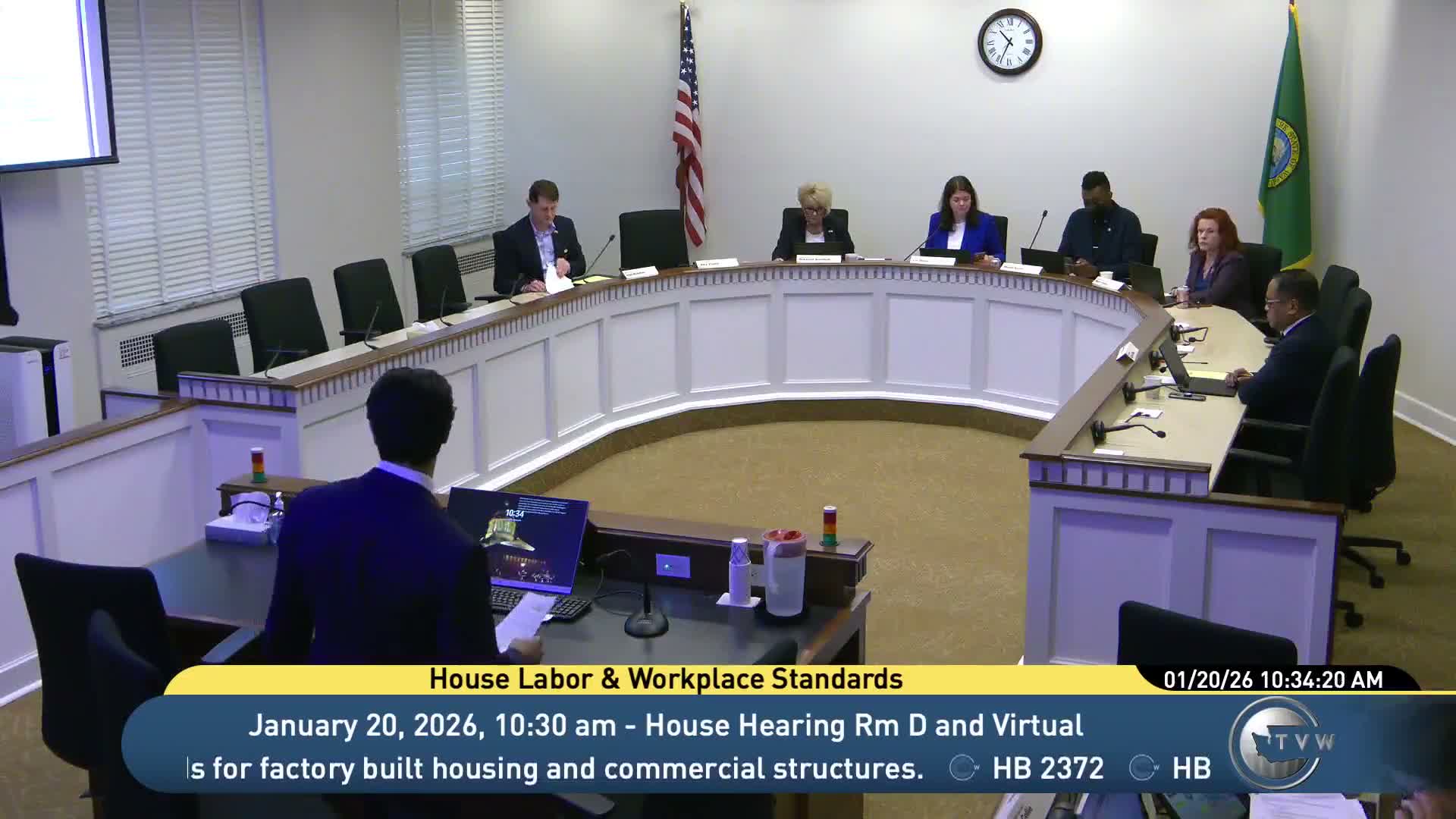
House Bill 23‑72, which would revise the workers’ compensation time‑loss formula to include the full value of an employer’s monthly health‑benefit payment at 100%, was the subject of a broad set of witnesses in committee.
Erin Frazier of the Washington State Building and Construction Trades Council said the bill is a priority for workers and explained that under current practice the health‑benefit portion is only included at 60–75% in the time‑loss calculation. “When a worker is injured on the job and their employer chooses to place them on time loss... this bill ensures the employer's share of their health care coverage is compensated at 100%,” she said.
Union members and injured workers described gaps in coverage and hardship when COBRA costs exceeded time‑loss payments; Danielle Green recounted her injury and said her health benefits had been compensated at 62% while COBRA costs exceeded that amount. Bill Hochberg, an attorney representing injured workers, referenced state court precedent and urged passage to protect workers’ health and survival.
Opponents including Patrick Connor of the National Federation of Independent Business warned the bill could miss the mark if payments go directly to workers instead of insurers; he suggested an alternative where the department pays insurers or employers directly from the medical aid fund to ensure continuity of coverage. Committee members probed whether attorney fee rules (statute allows up to 30% on benefits obtained with attorney assistance) would affect the new benefit portion; staff confirmed the statutory cap applies.
Department staff reiterated implementation concerns and timing: L&I said it would need time and appropriated resources to implement a statutory change that could take effect quickly. The panel discussion concluded without a committee vote and with follow‑up expected on fiscal impacts and implementation details.