Domestic workers bill advances in committee hearing as workers and employers weigh costs and protections
Loading...
Summary
Supporters told the House Labor and Workplace Standards Committee that House Bill 23‑55 would extend minimum‑wage, overtime and anti‑discrimination protections plus a required written agreement to domestic workers statewide; labor advocates and workers said the change is long overdue while state staff flagged technical and funding questions for implementation.
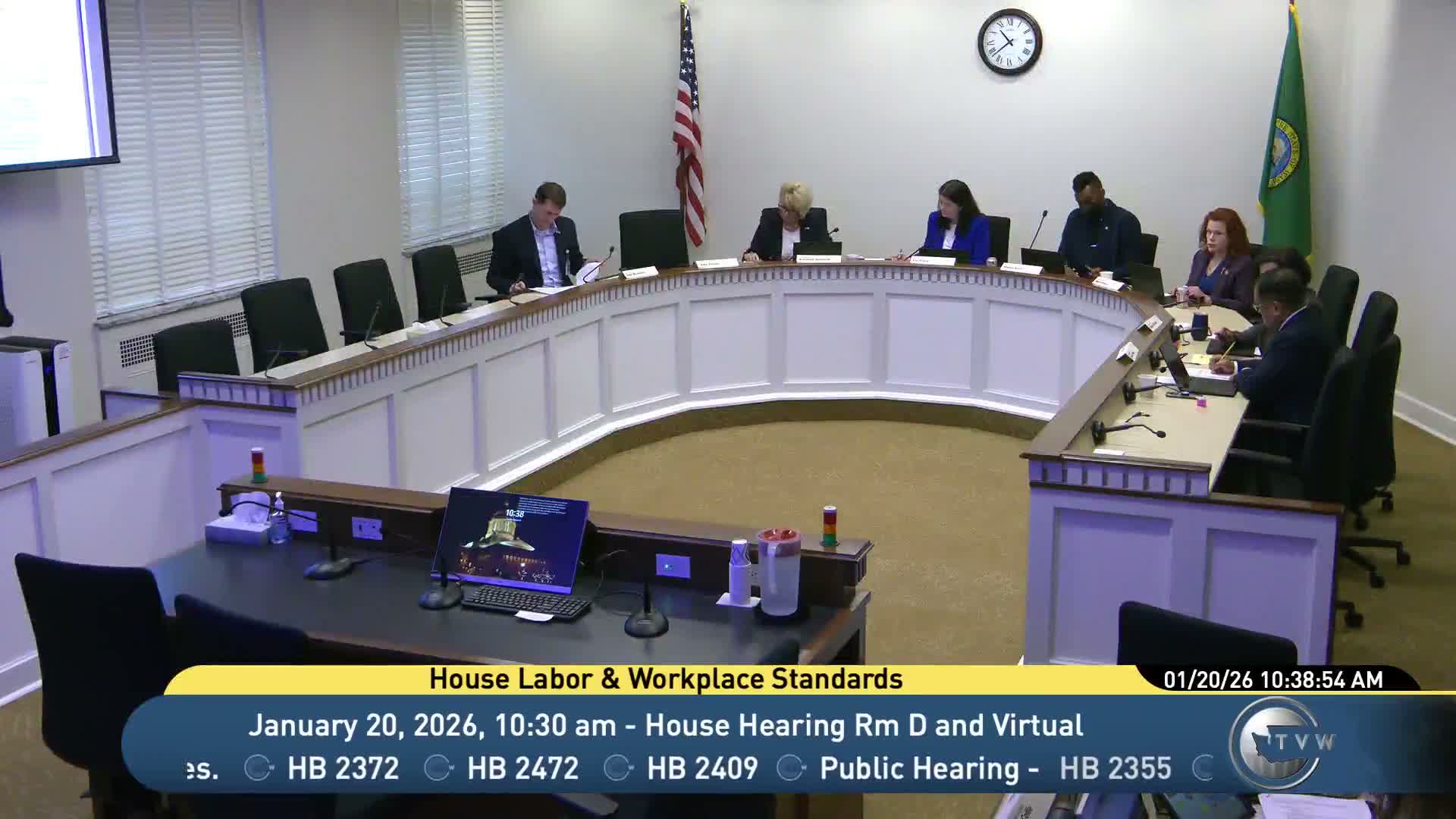
House Bill 23‑55, the state domestic workers bill of rights, drew a steady stream of testimony in the House Labor and Workplace Standards Committee as workers, employers and agency staff outlined the policy’s reach and practical hurdles.
Representative Brianna Thomas, the bill’s prime sponsor, said the measure would close a longstanding gap in Washington labor law. “The workers that are here in this room behind me right now, do not have the basic protections that we lay out in so many of our labor standards for other workers,” she said, urging members to support a simplified, enforceable approach.
Staff described the bill as three linked changes: a standalone set of workplace protections enforceable through the Department of Labor & Industries (L&I) and a private right of action; removal of an exemption in the State Minimum Wage Act so certain live‑in domestic workers would have minimum wage, overtime and paid‑leave protections; and extension of parts of the Washington Law Against Discrimination to domestic workers who are currently excluded.
Domestic workers and allies offered firsthand accounts. Laura Campos, who said she has cleaned houses for 10 years, described abrupt terminations and unpaid weeks of work and urged lawmakers to create predictability and written agreements. Employer Becca Miller Rose — who said she employs domestic workers and runs home‑care teams — said the Seattle domestic‑worker ordinance helped employers “do what’s right” and supported a statewide floor for protections.
City officials and advocates from Seattle told the committee that the city’s Domestic Workers Ordinance (DWO) provided a model for outreach and education. Diana Salazar of the Seattle Office of Labor Standards said the city’s experience shows violations can be high and complaint rates low, and that education and outreach are essential to effective enforcement.
Department of Labor & Industries staff did not take a policy position but asked for time and appropriations to implement the new duties and submitted technical questions on bill language. Tammy Phelan said the department would need additional staff and funding and asked the committee to consider implementation timelines.
Committee members pressed for a fiscal note and for detail on how the law would be administered; staff said a fiscal note was expected. No formal action or vote occurred during the hearing; the committee closed the public testimony and moved the bill forward for further consideration.
The hearing record includes multiple worker testimonies and advocacy statements supporting passage; opponents were not prominent in the oral record. The next procedural step is committee deliberation, possible amendment and receipt of a fiscal note required for final consideration.