Get Full Government Meeting Transcripts, Videos, & Alerts Forever!
Providers urge shorter clawback window; payers say 24‑month federal standard preserves reciprocal rights
Summary
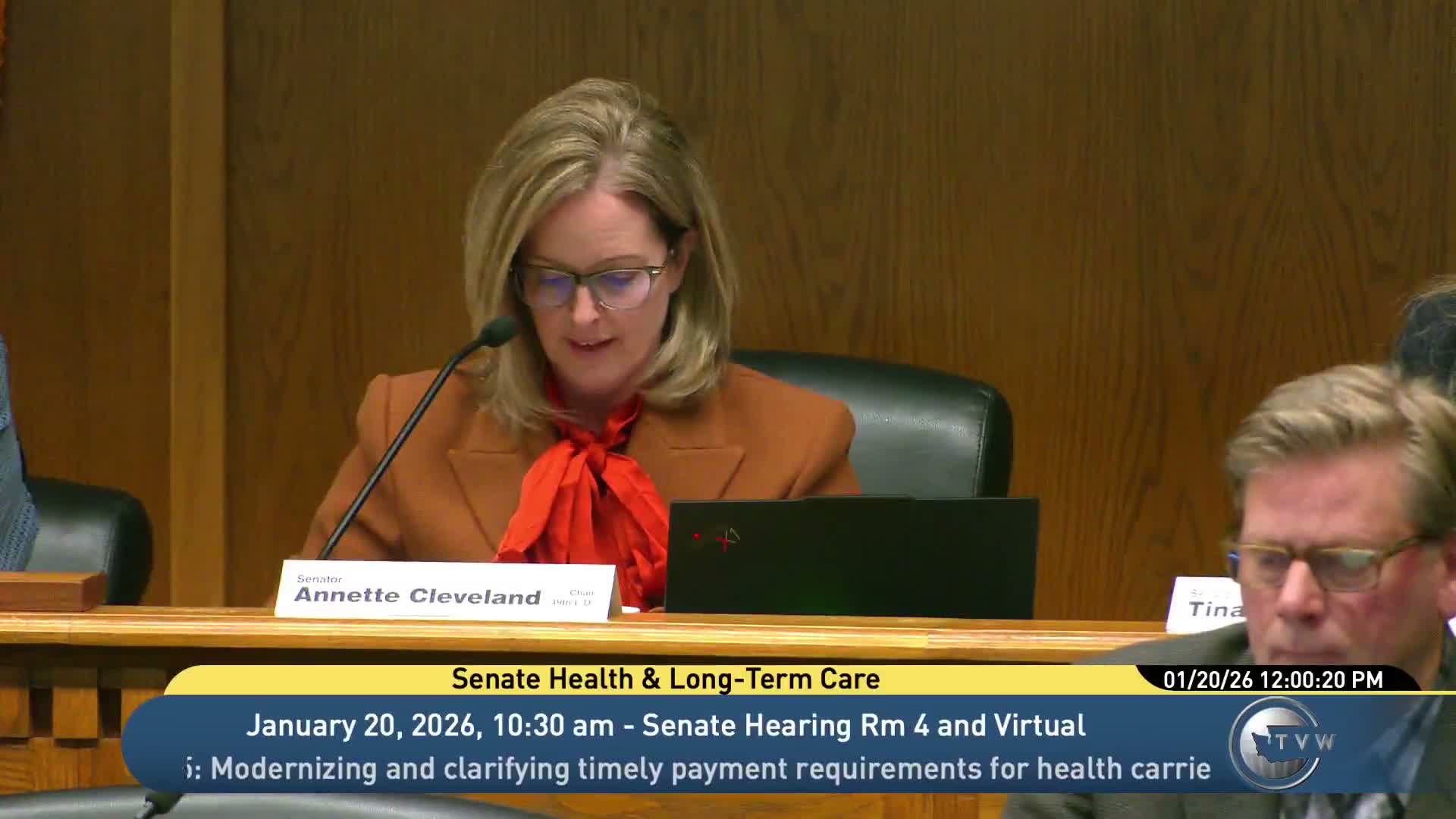
SB 6,071 would shorten insurance overpayment recovery timeframes to six months (nine months for coordination of benefits). Small providers and clinicians testified that long retroactive clawbacks destabilize practices; payers cautioned the change removes reciprocity and could impede legitimate audits.
Senate Bill 6,071 would standardize timelines for insurer overpayment recovery and shorten most refund/request windows to six months (and nine months for coordination of benefits) beginning in 2027. Committee staff summarized current law: carriers generally have 24 months to seek refunds, and last year the legislature shortened the window for mental‑health and substance‑use disorder…
Already have an account? Log in
Subscribe to keep reading
Unlock the rest of this article — and every article on Citizen Portal.
- Unlimited articles
- AI-powered breakdowns of topics, speakers, decisions, and budgets
- Instant alerts when your location has a new meeting
- Follow topics and more locations
- 1,000 AI Insights / month, plus AI Chat