Washington committee hears debate on eliminating court fees that drive post‑sentence debt
Loading...
Summary
Lawmakers and witnesses debated House Bill 2102, which would limit legal financial obligations (LFOs), void certain court-imposed costs and interest, and create administrative pathways to waive uncollectible debt; proponents cited collection failures and equity concerns while cities and collection firms warned of local cost shifts.
State lawmakers on Jan. 20 heard hours of testimony on House Bill 2102, a proposal to restrict court-imposed legal financial obligations and to make certain eliminated debts unenforceable.
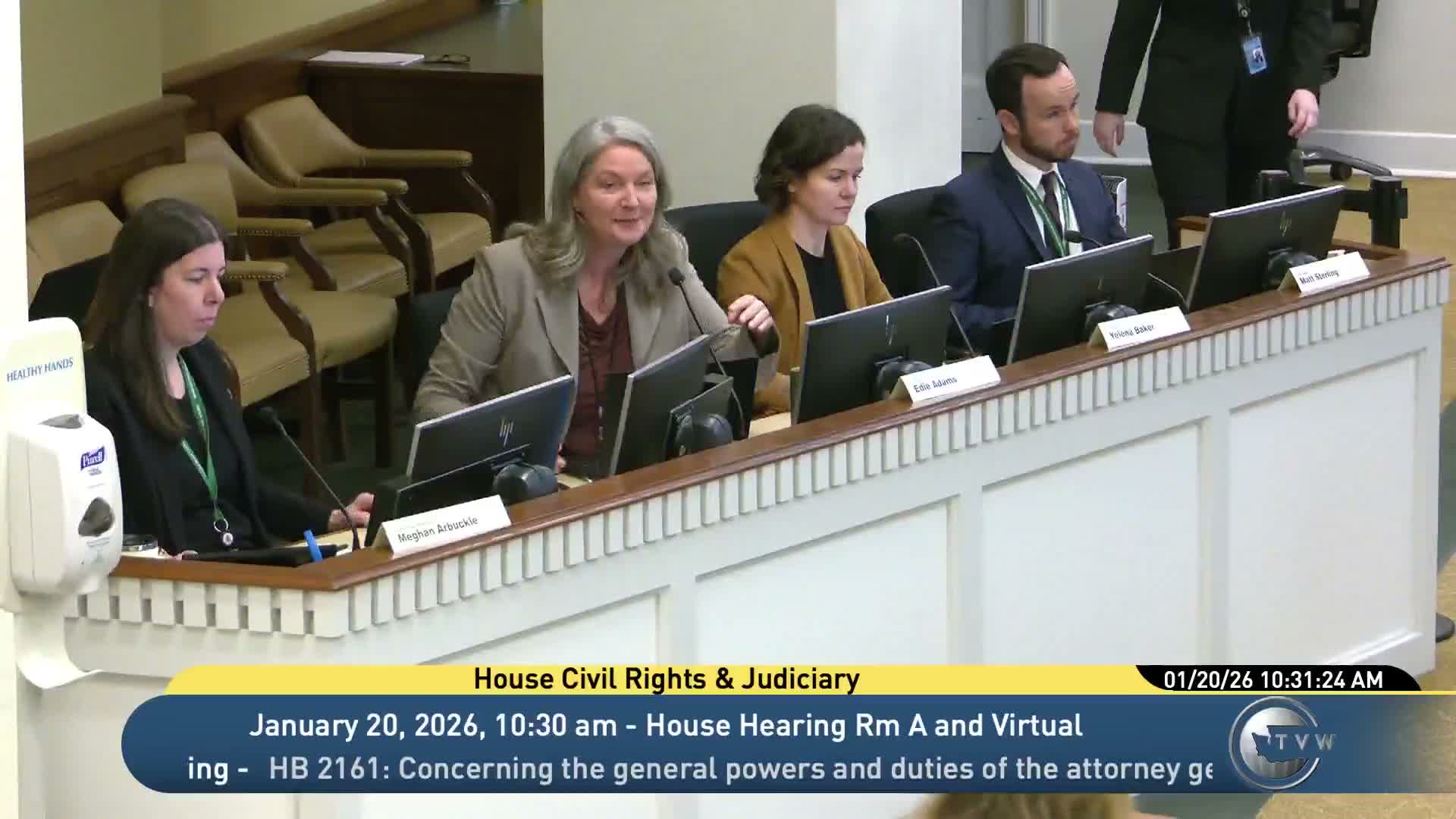
Representative Julia Reed, the bill sponsor, told the House Civil Rights & Judiciary Committee the legislation aims to end what she described as ‘‘poverty fees’’ that follow people long after their cases are closed. "From 2018 to 2021, Washington courts imposed more than $530,000,000 in legal financial obligations," Reed said, arguing that large sums of LFO debt are unpaid and impede reentry.
Supporters — including legal-assistance groups, academic clinics and the Washington State Sentencing Guidelines Commission — said the bill would create consistent relief across jurisdictions and reduce administrative barriers that leave indigent defendants unable to vacate convictions or regain stability. Cassia Hirshanau of Civil Survival said current administrative processes are inconsistent and effectively inaccessible for many people; Mattia Ponton, who has carried LFOs himself, described interest on old debt as a long-term barrier to housing and economic recovery.
Advocates presented data showing collection rates for certain poverty fees have fallen sharply in recent years. "For all of the poverty fees included in this legislation, the collection rate fell steadily from a high near 50% in 2017 to 25% in 2022," testified Gus Patel Tupper of Berkeley Law's Policy Advocacy Clinic on behalf of the No Price on Justice Washington Coalition.
Opponents, including the Association of Washington Cities and collection-industry representatives, warned the bill would shift millions of dollars in costs to local governments and remove tools local courts use to finance supervision or testing programs. Derek Nunley of the Association of Washington Cities said a fiscal analysis of a substantially similar bill estimated a $25,000,000 biennial cost shift to local jurisdictions and warned of potential probation-office closures.
Collection-industry witness Kevin Underwood said some payment-plan options administered by private vendors would be eliminated, and that the state would need to replace local revenue if courts could no longer collect those fees.
Committee members questioned the bill's interaction with judicial discretion and restitution that benefits victims. Staff explained the bill would repeal the statute authorizing accrual of interest on restitution judgments and that some provisions concern restitution owed to insurers or state agencies under the crime victim compensation program.
Several local officials urged technical amendments to ease administrative burdens. A Pierce County representative requested language allowing clerks to extinguish thousands of historic, unenforceable LFO records when migrating case-management systems.
The committee did not take a vote on HB 2102 during the Jan. 20 hearing. Sponsors and stakeholders signaled continued negotiations and amendments would follow.