
Patients and recovery advocates press committee to remove barriers to non‑opioid pain treatments
Get AI-powered insights, summaries, and transcripts
Subscribe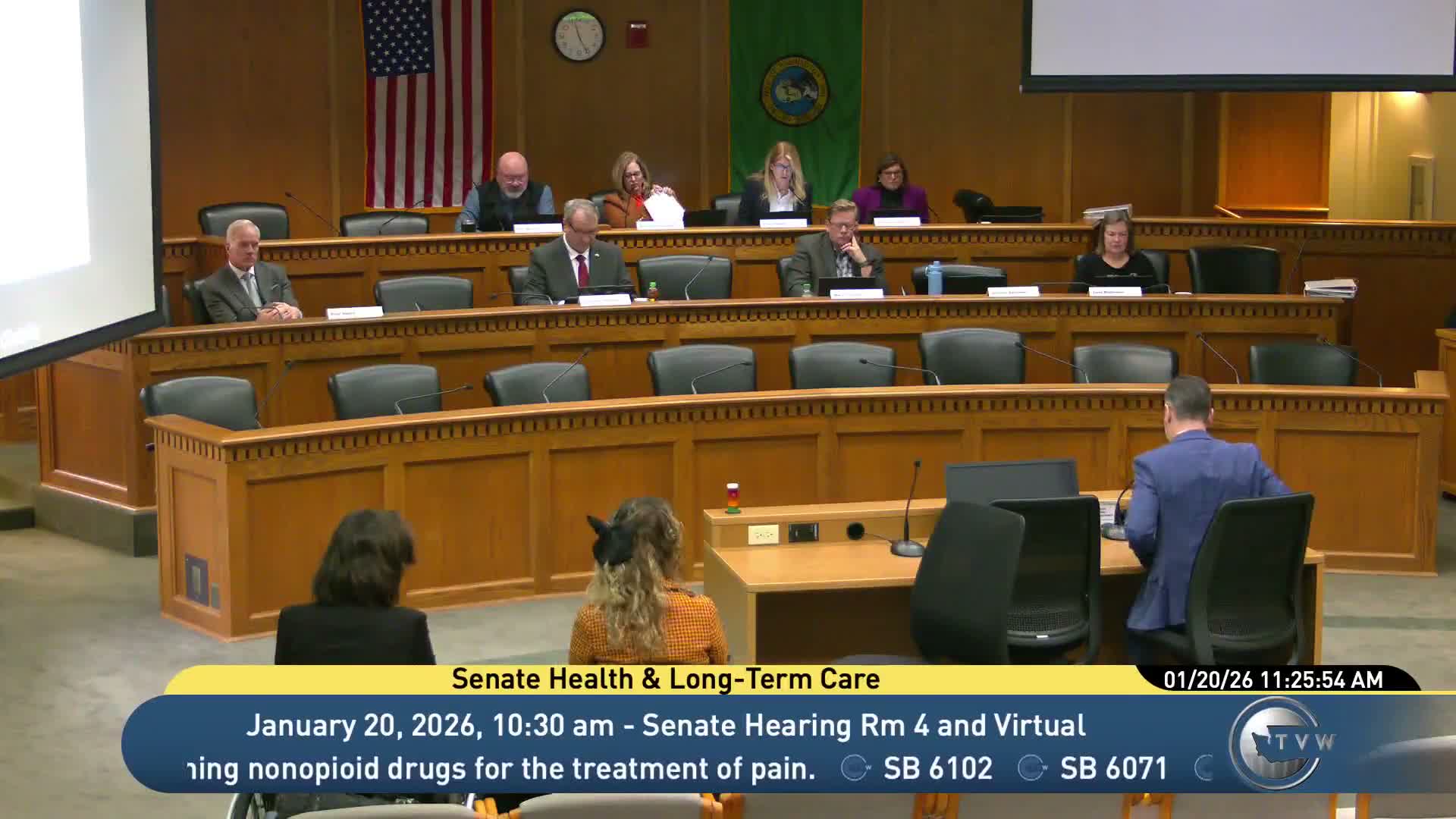
Summary
SB 5,916 would bar prescription policies that disadvantage non‑opioid drugs when opioids are preferred; patient and recovery advocates testified in force, while payers warned of potential cost and managed‑care impacts. Sponsors and agencies acknowledged room for drafting clarity.
Senate Bill 5,916 seeks to prevent insurance drug‑benefit designs from disadvantaging non‑opioid drugs for pain when opioid drugs are designated preferred. Committee staff described a proposal that would prohibit plans from designating a nonopioid as nonpreferred if opioids are preferred within a drug class, require that utilization management not disadvantage nonopioid options, and direct the Department of Health to publish an educational pamphlet on nonopioid alternatives.
Patient advocates and recovery community representatives provided emotionally specific testimony in favor. Sarah Tompkins (rare disease and disability advocate) said better access to non‑opioid therapies such as physical therapy could have materially altered her clinical course. Billy O’Brien and Corine Johnson (Young People in Recovery) said people in long‑term recovery face particular risks when non‑opioid options are harder to access than opioids. Chanel Cordova (Northwest Rare Disease Coalition) described how insurance barriers can force families to rely on opioids when safer alternatives exist.
State programs (the Health Care Authority) signaled conditional support but urged attention to cost‑management tools: Evan Klein acknowledged non‑opioid options are important and described the role of preferred drug lists and prior authorization as cost‑containment and safety mechanisms for Medicaid and public programs. Payers (Association of Washington Healthcare Plans) opposed the bill as drafted, flagging fiscal concerns and citing a prior House fiscal note that estimated potential cost increases; they urged continued negotiation rather than advancing the measure in current form.
Sponsor Senator Paul Harris framed the bill as a matter of options and safety, citing family experience with opioid harms and urging insurers to enable non‑opioid access even if it entails marginal additional cost.
What happens next: The committee recorded mixed testimony; sponsors and some agencies signaled willingness to negotiate drafting to balance access and cost containment. The fiscal implications and precise formulary drafting were flagged for further work.