Get Full Government Meeting Transcripts, Videos, & Alerts Forever!
Get email alerts on the Immigration Enforcement Limits topic
No spam. Unsubscribe anytime.
SAFE Act would require judicial authorization before ICE enters nonpublic areas of schools, hospitals and daycares
Summary
Senate Bill 5,906 would codify and expand model policies that limit immigration enforcement in nonpublic areas of K-12 schools, higher education, hospitals, daycares and election offices, requiring a judicial warrant or order for entry; proponents say it reduces chilling effects, while some stakeholders ask for clearer model policies and technical fixes.
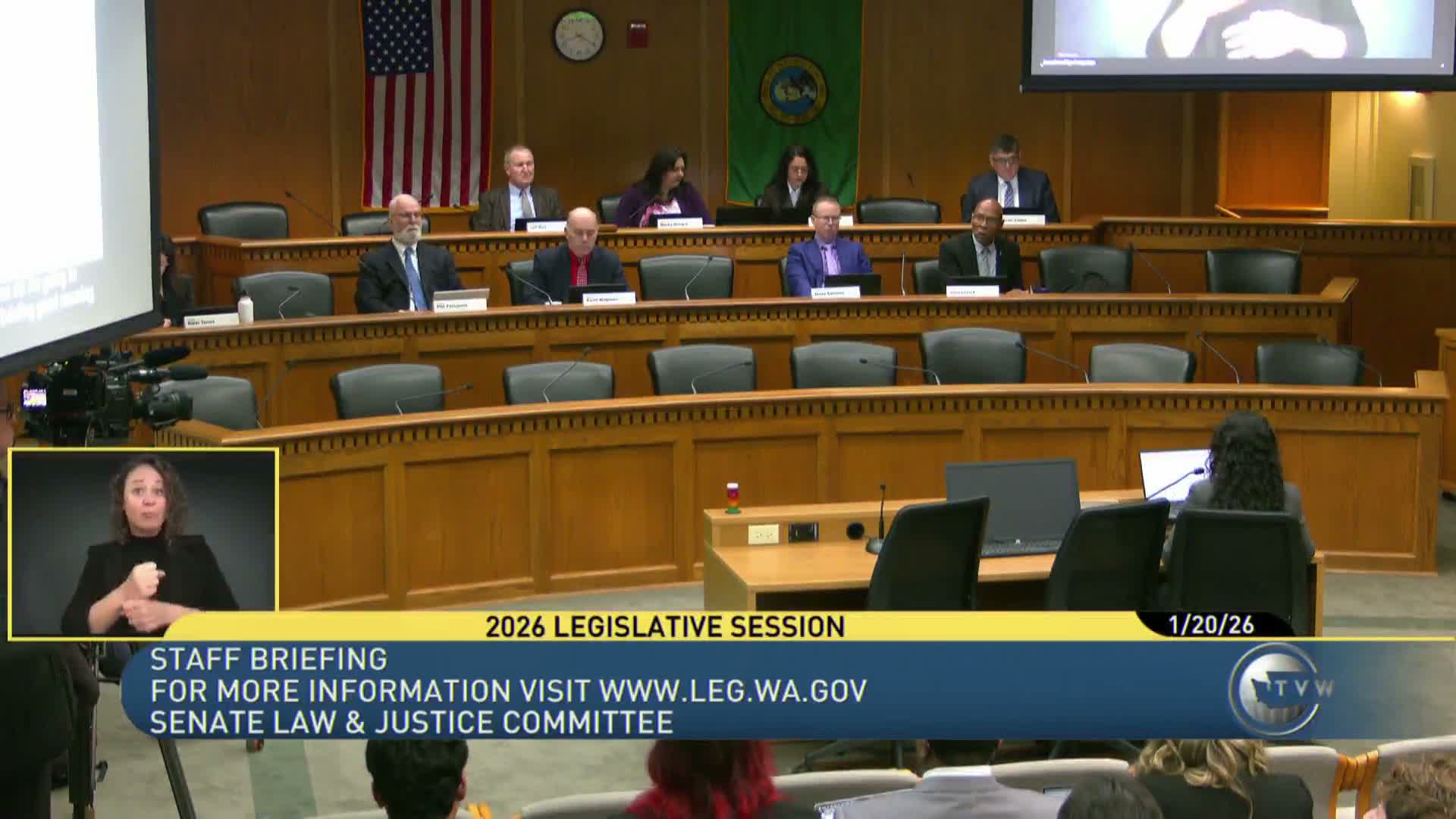
Senate Bill 5,906, the Secure and Accountable Federal Enforcement (SAFE) Act, would require judicial authorization before federal civil immigration enforcement can enter nonpublic areas of public institutions including schools, hospitals and higher-education facilities and would restrict certain data collection related to immigration status.
Prime sponsor Sen. Drew Hansen (23rd Legislative District) said the bill codifies and expands model policies already created under the Keep Washington Working Act and extends protections to places not previously covered, such as private health-care facilities and daycares. "This bill prevents ICE from going into the non public areas of schools, day cares, hospitals, universities, and more without a warrant," Hansen said.
Supporters said the measure would reduce fear among parents, students and patients and protect access to education and health care. Lydia Zapeta of the League of Women Voters said the bill helps ensure "people can go to school, work at a day care or a health care facility, or go to a medical appointment without fear of warrantless and violent immigration operations." Kristen Ang of the Faith Action Network urged the committee to pass the bill as a way to preserve trust in public institutions.
Witnesses asked for technical and implementation improvements. Cindy Liu of OneAmerica supported the bill but recommended directing the Attorney General's Office to promulgate model policies in consultation with the Department of Children, Youth and Families (DCYF) and other stakeholders and stressed funding for training and technical assistance so diverse early-learning providers are not exposed to legal risk. Lisa Thatcher of the Washington State Hospital Association asked the committee to remove duplicative statutory definitions and give hospitals discretion to develop policies that define nonpublic spaces.
Staff counsel described the substitute bill as prohibiting early-learning providers and school districts from collecting immigration-status information about students or their families and directing school districts to adopt or amend policies limiting immigration enforcement by the 2027-28 school year. A fiscal note was requested.
The committee heard thousands of written sign-ins and dozens of live witnesses spanning parent groups, students, health-law advocates, and education representatives. Public testimony closed with the vice chair reading sign-in tallies of pro and con submissions. The committee did not take a final vote at the hearing; stakeholders requested statutory clarifications and implementation guidance before further action.