Get Full Government Meeting Transcripts, Videos, & Alerts Forever!
Get email alerts on the Ev Infrastructure topic
No spam. Unsubscribe anytime.
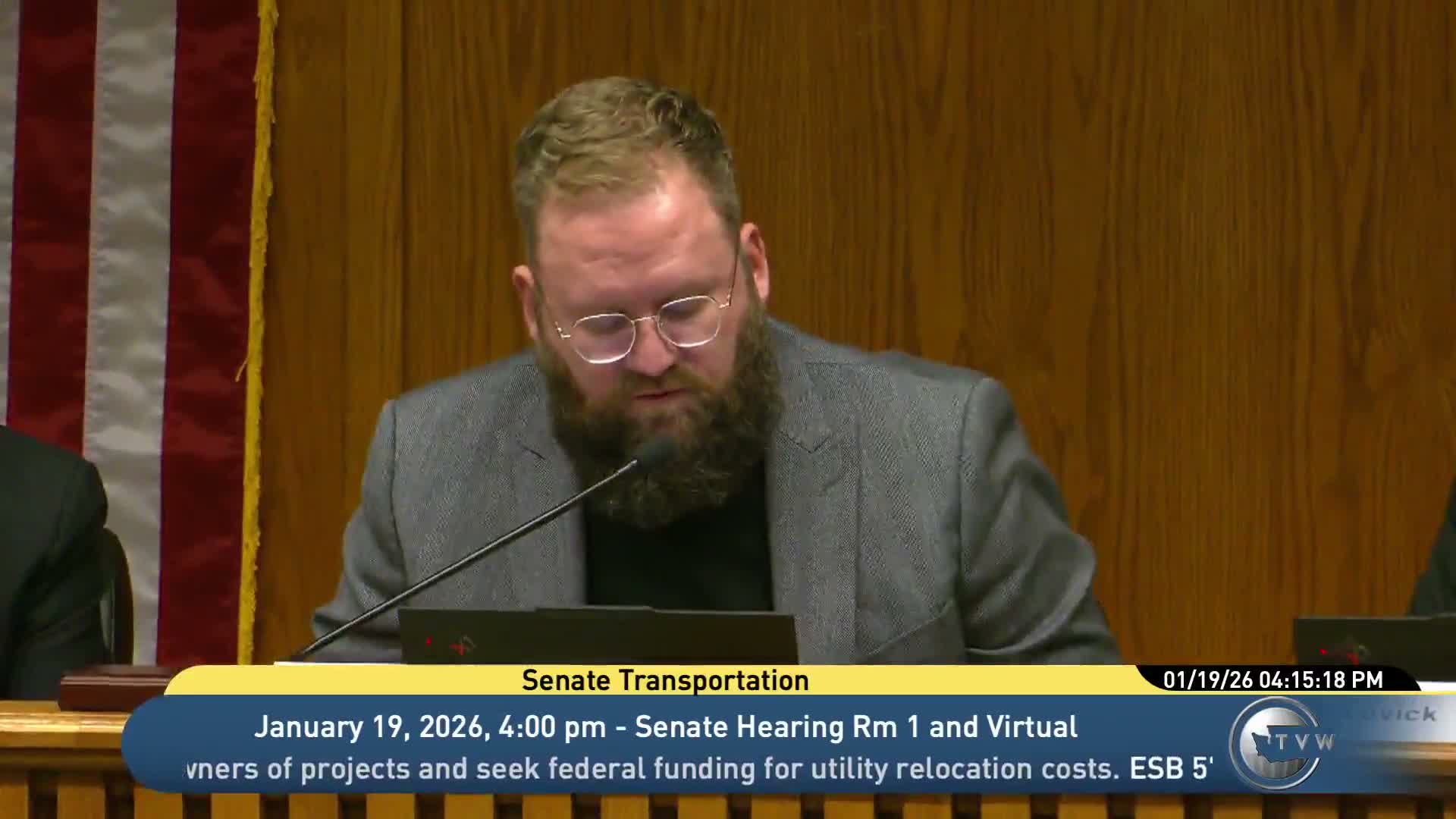
Committee hears bill to task EV coordinating council with addressing charger property crime
Summary
Engrossed SB 5,746 would direct the Interagency Electric Vehicle Coordinating Council to address property crime affecting EV charging infrastructure via an industry advisory or ad hoc committee for two years and report recommendations; staff estimated a $245,000 cost to Commerce.
The Senate Transportation Committee held a public hearing on engrossed Senate Bill 5,746, which would require the Interagency Electric Vehicle Coordinating Council to address EV charger property crime through an industry advisory committee or an ad hoc committee for a two‑year period.
Brandon Popovac, committee staff, said the council—co‑chaired by the departments of Transportation and Commerce—was asked in previous work to consider EV supply equipment reliability and had recommended standards that account for vandalism and physical damage. The proposed substitute is technical and identical in substance to the engrossed bill the Senate passed previously.
The bill would allow committee membership to include the Attorney General’s office, law enforcement, recycled‑materials associations, EV charging industry members, local jurisdictions, utilities and community advocacy groups; it also exempts proprietary information provided by private sector entities for the council’s work. Popovac cited an estimated fiscal impact of $245,000 to Commerce for implementing the bill.
Senator Jeff Wilson, the prime sponsor, said vandalism and cutting of charging cords "cripples users" and argued the industry and government should collaborate on prevention and reliability standards.
Committee members asked no substantive technical questions during the hearing. The committee recorded 70 pro sign‑ins and 1 con sign‑in before closing the public hearing. No action was taken at the conclusion of testimony.