Get Full Government Meeting Transcripts, Videos, & Alerts Forever!
Get email alerts on the Pets In Vehicles topic
No spam. Unsubscribe anytime.
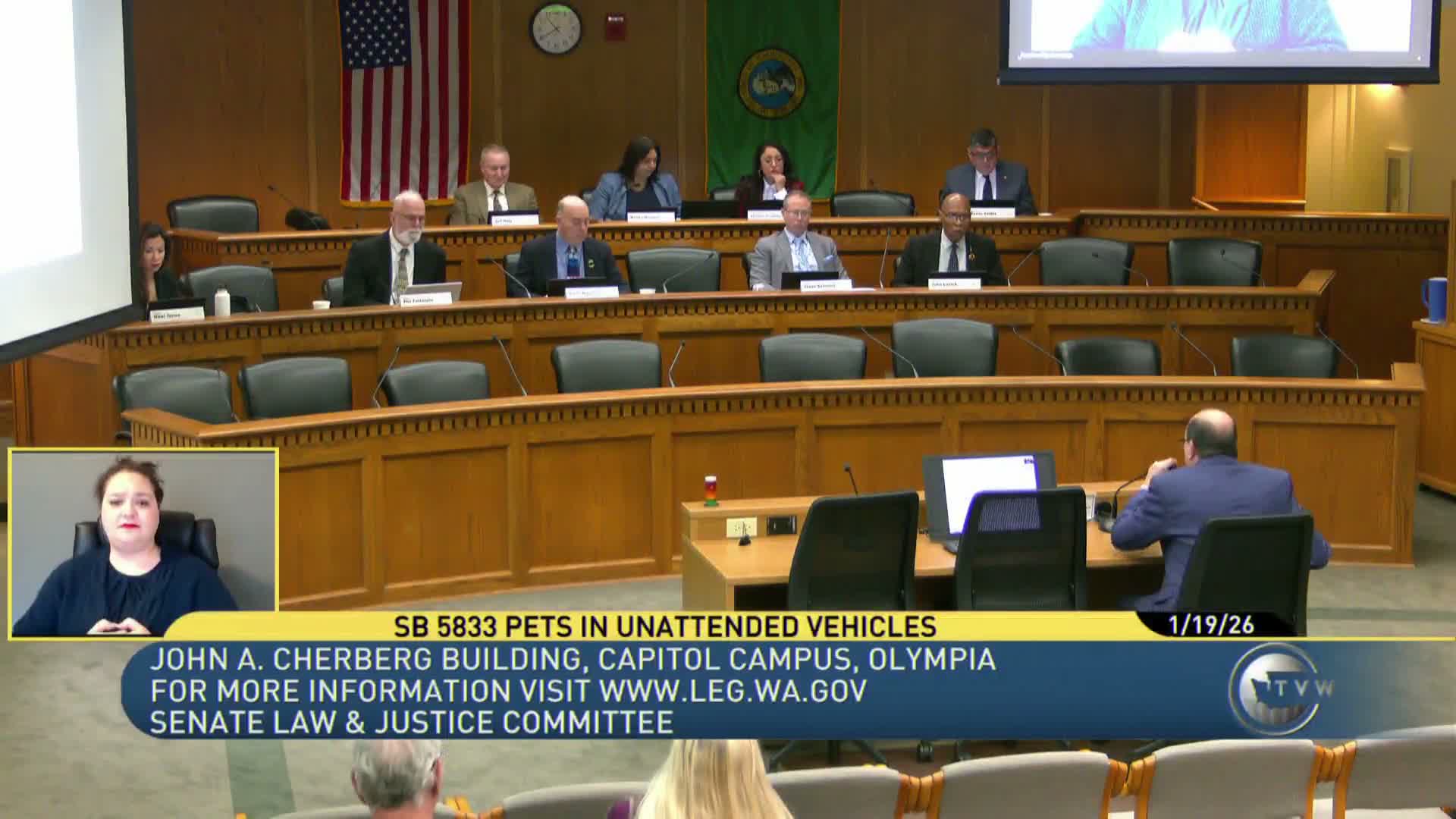
Committee weighs bill to allow engines to run briefly to protect pets
Summary
SB 5833 would allow a vehicle to be left running up to 30 minutes to provide climate control for a pet and create a presumption against civil infraction when owners keep engines running to protect animals; animal-welfare groups and law-enforcement organizations urged changes to liability and enforcement language.
OLYMPIA, Wash. — The Law and Justice Committee on Jan. 19 considered SB 5833, a bill that would make it lawful to leave a vehicle engine running for up to 30 minutes to protect a pet from extreme temperatures while creating a presumption that no civil infraction occurred when the engine is used for climate control.
Tim Ford, staff to the committee, described the measure as carving out an exception to current rules that make it an infraction to leave a motor vehicle unattended if it could harm an animal. The bill would also authorize officers to enter vehicles to remove animals in harms way and sets a framework for liability when property damage results from entry.
Senator Wagner, prime sponsor, said the bill grew out of prior Good Samaritan protections and aimed to balance pet safety with public-safety concerns about unattended running vehicles, but he acknowledged the liability language needed revision and promised an amendment in executive session.
Animal-welfare groups urged retaining an animal-focused enforcement standard. Sarah Hawk, executive director of Joint Animal Services and president of the Washington Federation of Animal Care and Control Agencies, said the bills presumption tied to vehicle-engine status could discourage officers from timely intervention because agencies would face potential liability to rebut owners claims. "A running engine does not guarantee a safe temperature," Hawk said, arguing decisions should remain fact-specific and centered on observable animal condition.
Law-enforcement representatives echoed the need to avoid creating easy targets for theft or situations where officers hesitate to act. James McMahon of the Association of Sheriffs and Police Chiefs flagged concerns about vehicle-theft risks if vehicles are left operable and supported working with the sponsor to refine language.
The public record shows 107 pro and 4 con sign-ins; no committee votes were recorded at the hearing. Sponsor amendments were signaled to address law-enforcement and liability concerns before further committee action.
Next steps: sponsor pledged to bring liability clarifications to the committee if the bill moves to executive session.