Get Full Government Meeting Transcripts, Videos, & Alerts Forever!
Get email alerts on the Workers Compensation Medical Care topic
No spam. Unsubscribe anytime.
Lawmakers Hear Heated Debate Over Workers’ Compensation Medical Reforms in HB 2218
Summary
Supporters including labor groups and medical providers urged HB 2218 to restore provider choice and speed care for injured workers; business groups and the Department of Labor & Industries warned it could weaken evidence-based standards, raise costs and needs further refinement.
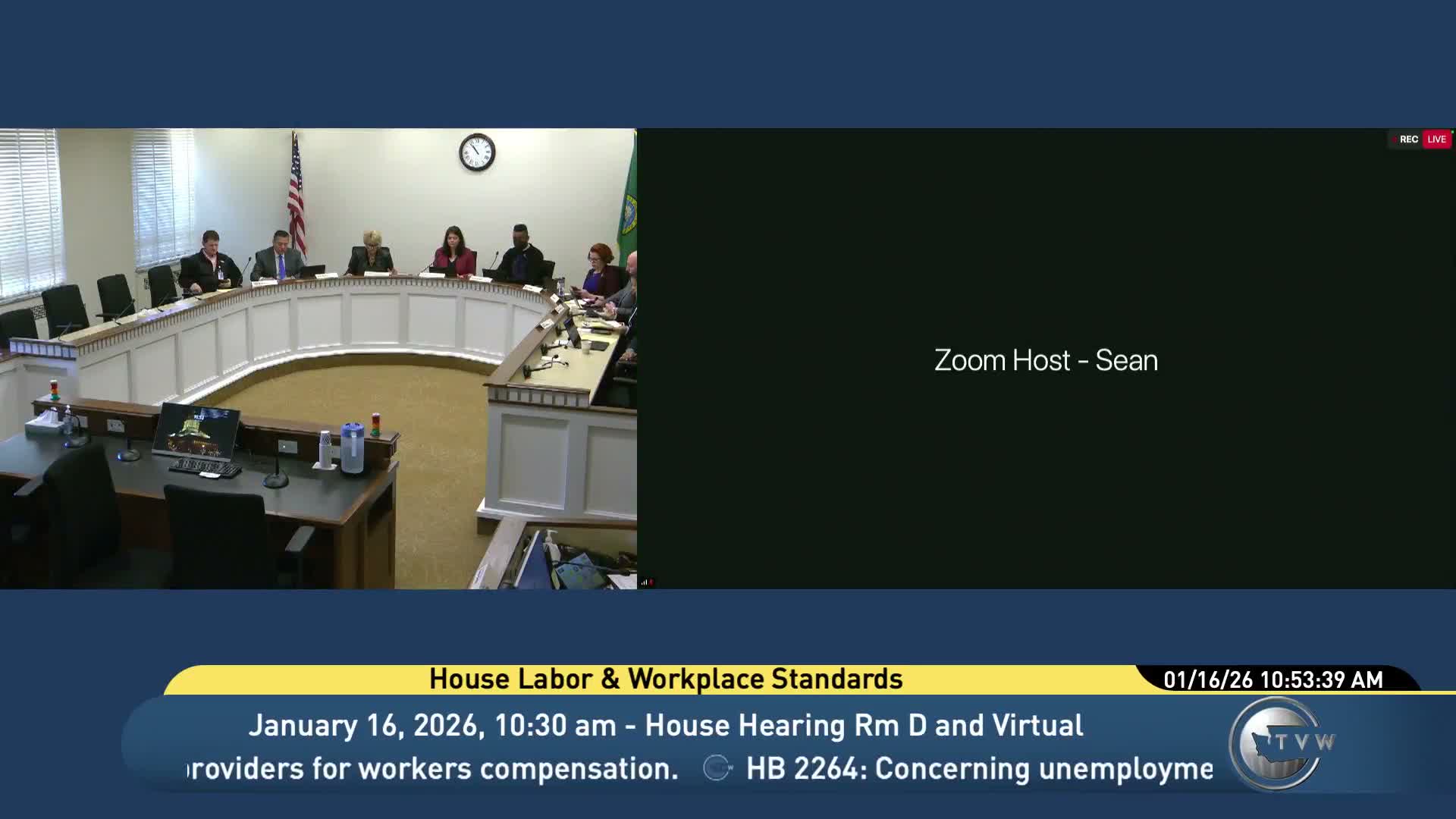
The Labor and Workplace Standards Committee heard extended testimony Jan. 16 on House Bill 2218, a proposal to change workers' compensation medical treatment rules, restore aspects of provider choice, and ease certain constraints of the state's medical provider network.
Sponsor Rep. Lillian Ortiz Self (21st Legislative District) said the bill is bipartisan and urged the committee to address persistent rural access issues and delays in care. She described a constituent who tore a tendon and faced weeks of waiting for appropriate surgery because required steps routed him through physical therapy and utilization review before surgeons could be consulted.
Labor unions and injured-worker advocates — including Teamsters 117, the Washington State Council of Firefighters and experienced workers' compensation attorneys — told the committee that the existing medical provider network and inflexible treatment guidelines often delay needed care and that HB 2218 would give clinicians room to provide individualized, timely treatment.
Medical witnesses stressed real-world consequences. Dr. Alan Thomas, an orthopedic surgeon, testified: "If providers are forced to follow guidelines, at some point providers will also be performing medical malpractice." He recounted a case with a seven-month delay before surgery was authorized.
Business and employer groups — NFIB, Associated Builders and Contractors, the Self Insurers Association and the Association of Washington Businesses — warned the bill could undercut evidence-based guidelines, increase system costs and reduce predictability. Concerns centered on definitions (for example, the prohibition on directing care or "inducing" provider selection) and penalties that some described as vague and potentially career-ending for employers or providers.
Department of Labor & Industries staff said they support improvements to reduce delays and improve access but cautioned that HB 2218 represents a fundamental, untested shift in how medical necessity and coverage decisions are made; L&I recommended research, testing and carefully calibrated guardrails.
Committee members questioned rural access fixes and the bill's 15-mile non-network exception. Staff described a certification process showing the worker could not find a willing in-network provider within 15 miles; if not available the worker could seek a non-network provider willing to accept the department's fee schedule. Witnesses said simplifying utilization review and reducing administrative burden could encourage more providers to participate in the network.
No committee vote was recorded on HB 2218 during this hearing; the committee closed the hearing after receiving testimony from a wide cross-section of labor, medical, business and regulatory stakeholders and indicated follow-up conversations would continue.