Get Full Government Meeting Transcripts, Videos, & Alerts Forever!
Get email alerts on the Ecap Military Families topic
No spam. Unsubscribe anytime.
Bill Would Expand ECAP Eligibility for Military Families; Providers and Veterans Groups Back Measure
Summary
House Bill 20-99 would allow military‑connected children to enroll in ECAP when space is available under adjusted income thresholds and prioritization for deployment and single custodial parents; providers, veteran organizations and regional military partnerships testified in strong support, citing readiness and family stability concerns.
Omera Harrington, committee counsel, briefed members that House Bill 20-99 would expand allowed ECAP enrollment categories to include children with a military parent who meet income thresholds tied to Working Connections Child Care eligibility (60% of state median income initially, rising in later years) and would require the prioritization system to consider military‑specific factors such as anticipated deployment and single custodial status.
Representative Levitt (prime sponsor) framed the bill around military readiness and workforce needs, saying childcare access is one of three major challenges for service members alongside housing and employment. "Our military families face food insecurity just like many other families across our state," Levitt said, citing a staff figure that one in five Washington military families experience food insecurity, and urged support to improve access to ECAP slots for deployed or single custodial military parents.
A broad coalition of supporters testified in favor. Kristen Wiggins of Mission Readiness, a national organization of retired military leaders, argued ECAP improves long‑term outcomes and supports national security goals. Mark Jerry, a disabled Navy veteran and former Head Start parent, described family benefits from Early Head Start and Head Start and said the bill would have helped his family during changes in household income and VA disability status.
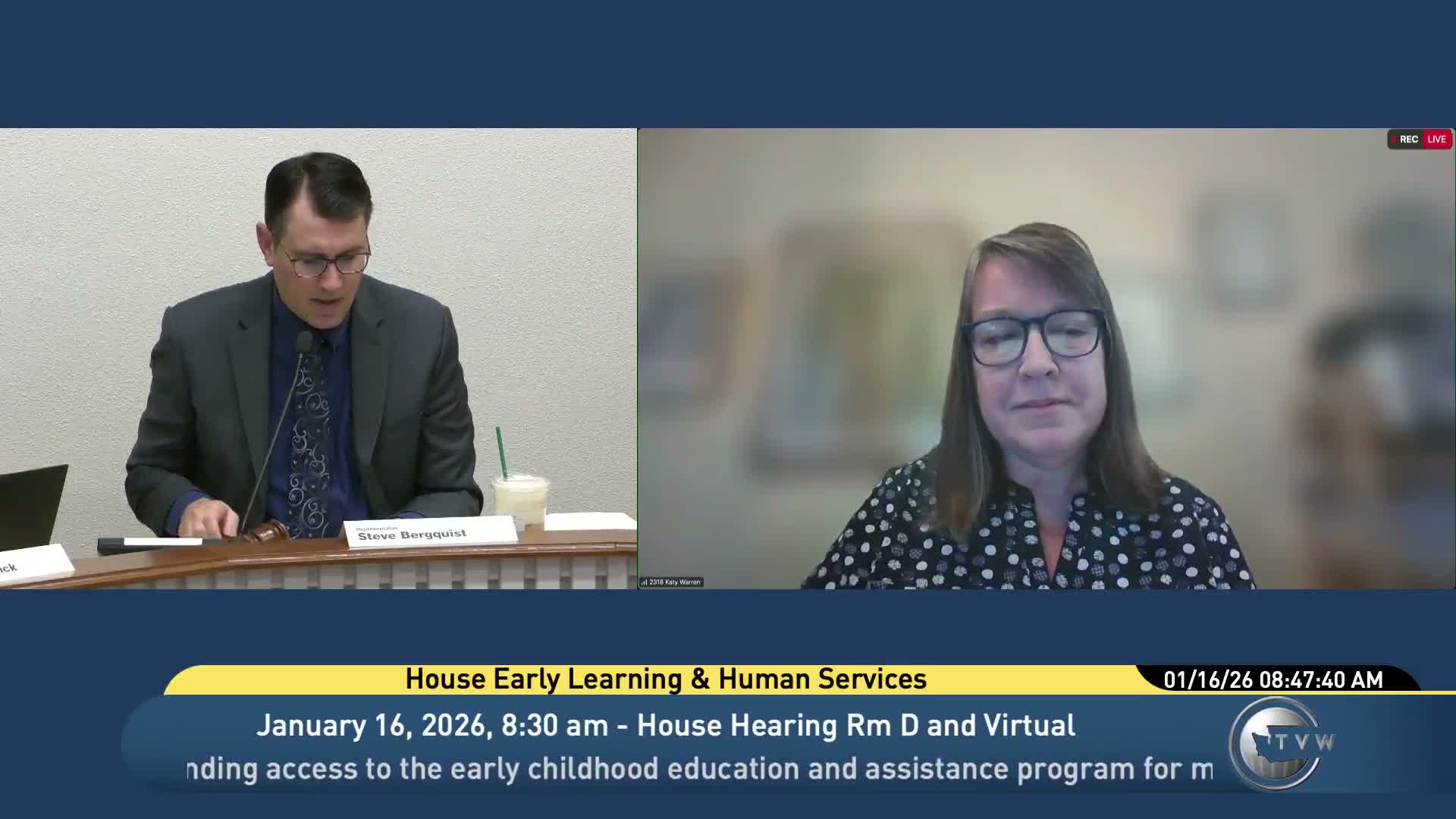
Providers and regional partners emphasized capacity and workforce questions tied to a planned expansion. Laurie Pittman of Puget Sound Educational Service District said the ESD operates just under 4,000 ECAP slots regionally and serves military families on base but cautioned that workforce shortages remain a constraint to rapid expansion; she offered to follow up with committee staff on capacity projections. Joel Ryan and Katie Warren, representing the Washington State Association of Head Start and ECAP, urged the committee to pass the bill to reduce enrollment instability for military families and noted the bill was designed to be cost neutral to the state by prioritizing existing funded slots.
Maria Tobin of the South Sound Military & Communities Partnership emphasized local impact at Joint Base Lewis‑McChord and estimated more than 40% of JBLM households fall into an affordability gap the bill would address.
The committee closed the public hearing on HB 20-99; no vote was taken. Staff and sponsors signaled further follow‑up on capacity and technical language as implementation planning continues.