Get Full Government Meeting Transcripts, Videos, & Alerts Forever!
Get email alerts on the Early Learning Licensing topic
No spam. Unsubscribe anytime.
Bill to Exempt ECAP, Head Start from DCYF Licensing in School Settings Advances to Hearing
Summary
Proponents told the Early Learning & Human Services Committee HB 23-17 would remove duplicative DCYF licensing requirements for ECAP and Head Start programs operating part‑day or school‑day in public school buildings, easing expansion tied to a Ballmer Group gift; providers described months‑long licensing delays and substantial upgrade costs.
Omera Harrington, counsel to the Early Learning & Human Services Committee, told lawmakers that House Bill 23-17 would exempt the early childhood education and assistance program (ECAP) and federally funded Head Start programs from Department of Children, Youth and Families (DCYF) licensing when they run part‑day or school‑day sessions located in public school buildings or on public school property. Harrington said ECAP and Head Start already follow performance standards and are subject to oversight and background checks.
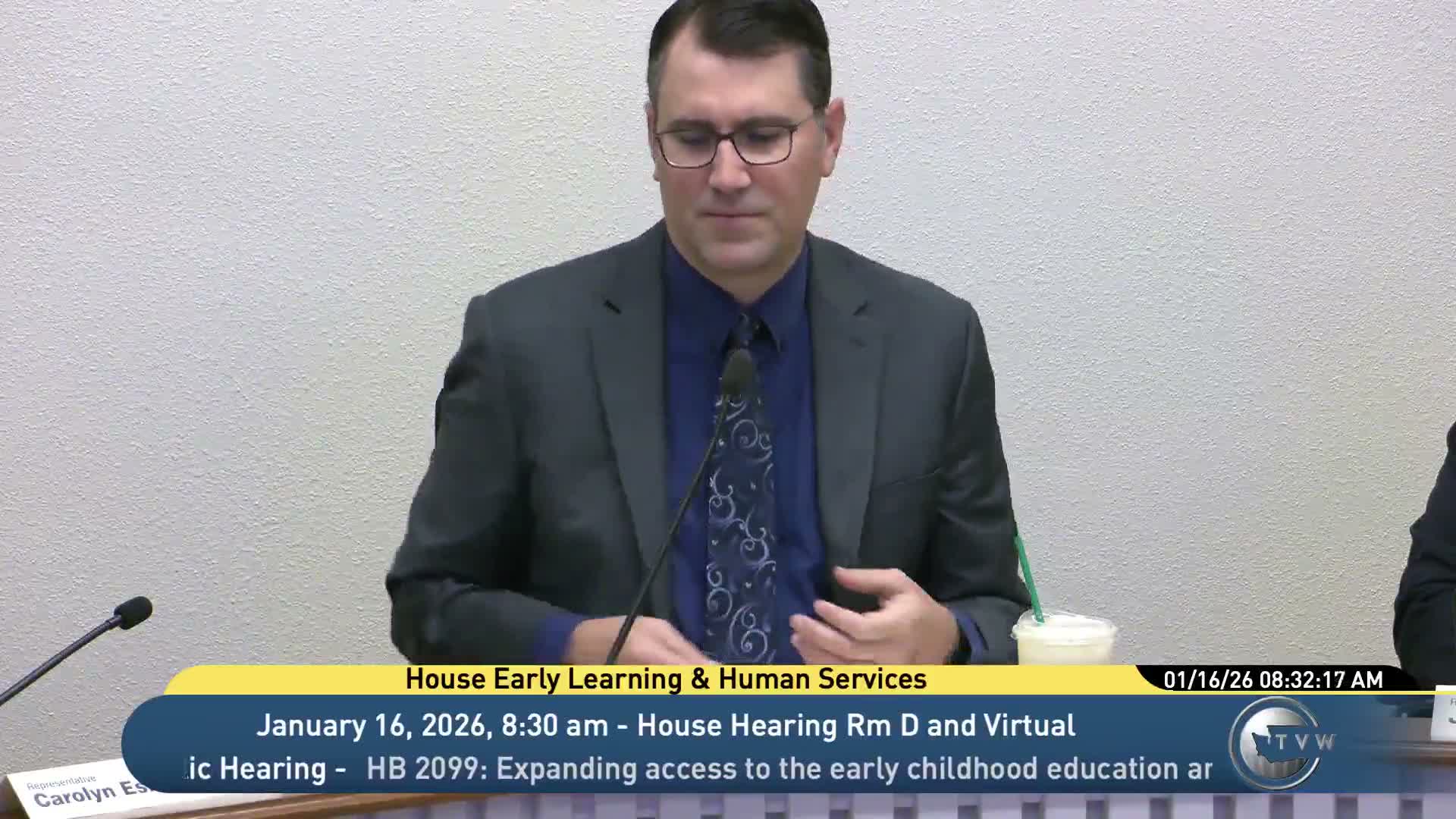
Representative Carolyn Eslick (39th District), the bill’s prime sponsor, said the change is intended to remove a licensing barrier tied to a recent Ballmer Group grant that will expand ECAP seats. "We are really making sure that 2026, we're gonna start the expansion of these 10,000 seats," Eslick said, urging the committee to consider the bill so the state can accept and deploy the funding.
Supporters from nonprofit and school‑based providers described delays and costs associated with the current licensing process. Nancy Trevina, chief strategy officer at Educational Opportunities for Children and Families, said converting a site to a school‑day program can take three to six months and impose significant capital expenses: "Despite starting the licensing process immediately in June, it was 6 months and $75,000 in playground and fencing later that we were finally received the licensing and the permission to increase from 4 hours a day to 6 hours a day." Trevina argued that ECAP and Head Start performance standards and DCYF check‑ins already address health and safety concerns, making duplicate licensing costly and inequitable.
Jeanette Wade, educational coordinator at Opportunity Council Early Learning, described losing families when programs were limited to 4‑hour days during licensing transitions and cited site limitations (playground safety, kitchen upgrades) that prolonged approvals. "Almost everything about childcare licensing for ECAP and Head Start is redundant," Wade said, noting daily and monthly safety checklists already in use.
Susie Hanson of the Washington Federation of Independent Schools asked the committee to consider language that would extend similar consistency to private elementary schools offering pre‑K. Katie Warren, deputy director of the Washington State Association of Head Start and ECAP, emphasized that part‑day classrooms historically have not been licensed and that the bill would remove a long‑standing administrative "glitch" without cost to the state.
The committee closed the public hearing on HB 23-17 after testimony. No committee vote was taken during the hearing; staff indicated additional related bills addressing other barriers will follow.
The next procedural step is for bill sponsors and staff to pursue any technical amendments and for the committee to schedule further consideration; the hearing record includes multiple provider offers to supply draft statutory language and data on capacity and costs.