Get Full Government Meeting Transcripts, Videos, & Alerts Forever!
Get email alerts on the Medical Records Fee Cap topic
No spam. Unsubscribe anytime.
Washington bill would cap third-party charges for electronic medical records at $50
Summary
Supporters told the House committee that third-party retrieval firms are charging patients and their representatives thousands of dollars for electronic medical records; hospitals and release-of-information vendors warned a $50 cap could shift costs to small providers and raise privacy/compliance burdens.
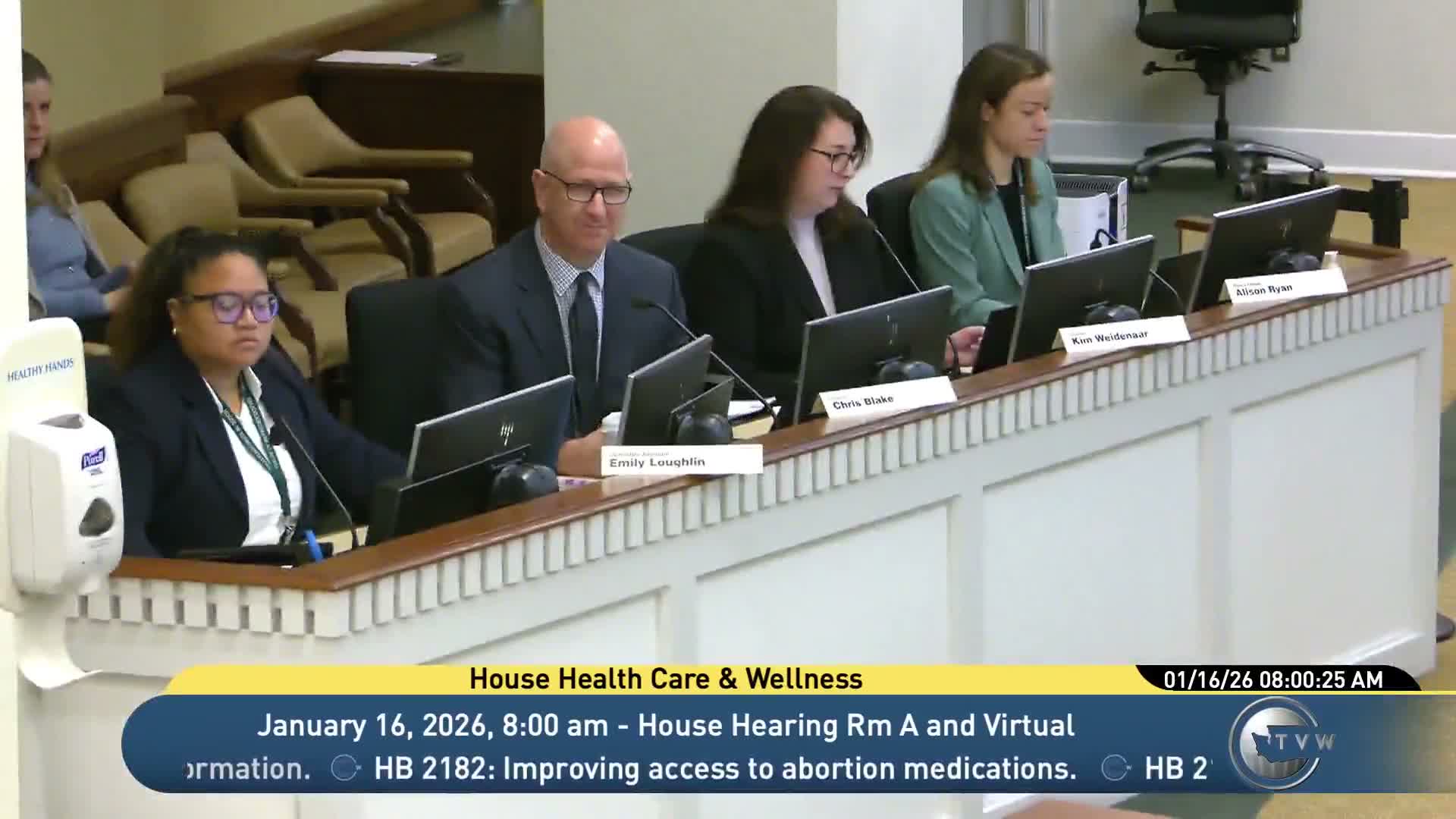
A bill that would limit how much health care providers or their contractors can charge for electronically stored medical records drew sharply opposing testimony before the House Health Care & Wellness Committee on Jan. 16.
Committee staff told lawmakers that the substitute for House Bill 1496 would cap fees for certain recipients at $50 for electronically stored healthcare information and would alter who may recover attorneys’ fees under the Uniform Healthcare Information Act to a “prevailing patient.” Chris Blake, staff to the committee, said current state law permits a clerical/search charge (previously described in statute and adjusted by CPI) and that the proposal would cap certain electronic requests at $50.
Supporters including attorney Elizabeth Hanley and paralegal Pamela Wells described cases in which patients or their representatives were billed thousands — Hanley recounted a former client charged more than $2,000 to obtain records, and Wells described a case billed at $18,700 — and said high charges can block access to justice and vital care documentation. Daniel Henkel of the American Association for Justice said other states have capped third-party fees (examples cited: Nevada $40; New Jersey/New Hampshire/Ohio $50) and argued that market players have extracted “rents” from patients by applying paper-era per-page rates to largely electronic records.
Opponents, including representatives of hospitals and release-of-information firms, said routine third-party requests can be labor intensive, especially for long retention periods and legacy systems. Lisa Thatcher of the Washington State Hospital Association and several health information management professionals told the committee that hospitals frequently must search multiple electronic records systems, retrieve older paper files or microfiche, perform required HIPAA redactions, and validate each third-party disclosure — tasks they described as staff intensive and not covered by a $50 flat cap. Leslie Emmerich and Julianne Ferguson, representing small home-care and private-duty agencies, said a low cap could force small providers to absorb significant administrative costs.
Committee members asked whether the bill expands who may request records; staff answered that it does not change who can request records but narrows which recipients are subject to the $50 cap (i.e., it affects who pays). Members also raised whether the bill could be narrowed to address only certain classes of requesters (for example, representatives with disabilities) or to exempt small providers; advocates said the intent is to protect patients and their authorized representatives from excessive charges.
The committee heard calls for technical fixes: several witnesses asked the legislature to refine lists of authorized recipients, clarify interactions with HIPAA and third-party disclosures, and consider exceptions for extensive, bespoke retrievals that legitimately require higher staff time and complex redactions. No amendments or votes were recorded during the hearing; the bill’s proponents urged legislators to adopt a cap to restore reasonable access for patients and survivors who cannot afford large retrieval bills.
The committee adjourned the hearing without taking a vote.