Get Full Government Meeting Transcripts, Videos, & Alerts Forever!
Get email alerts on the Transportation Preservation topic
No spam. Unsubscribe anytime.
WSDOT tells Senate committee preservation backlog, aging fleet require major investment; governor proposes $1 billion for ferries
Summary
Washington Department of Transportation Secretary Julie Meredith and Washington State Ferries leaders told the Senate committee that decades of underfunding have left bridges, terminals and vessels in need of repair and replacement, and that Governor Ferguson’s supplemental budget proposes $1 billion for up to three hybrid electric ferries plus funding to extend older vessels’ service life.
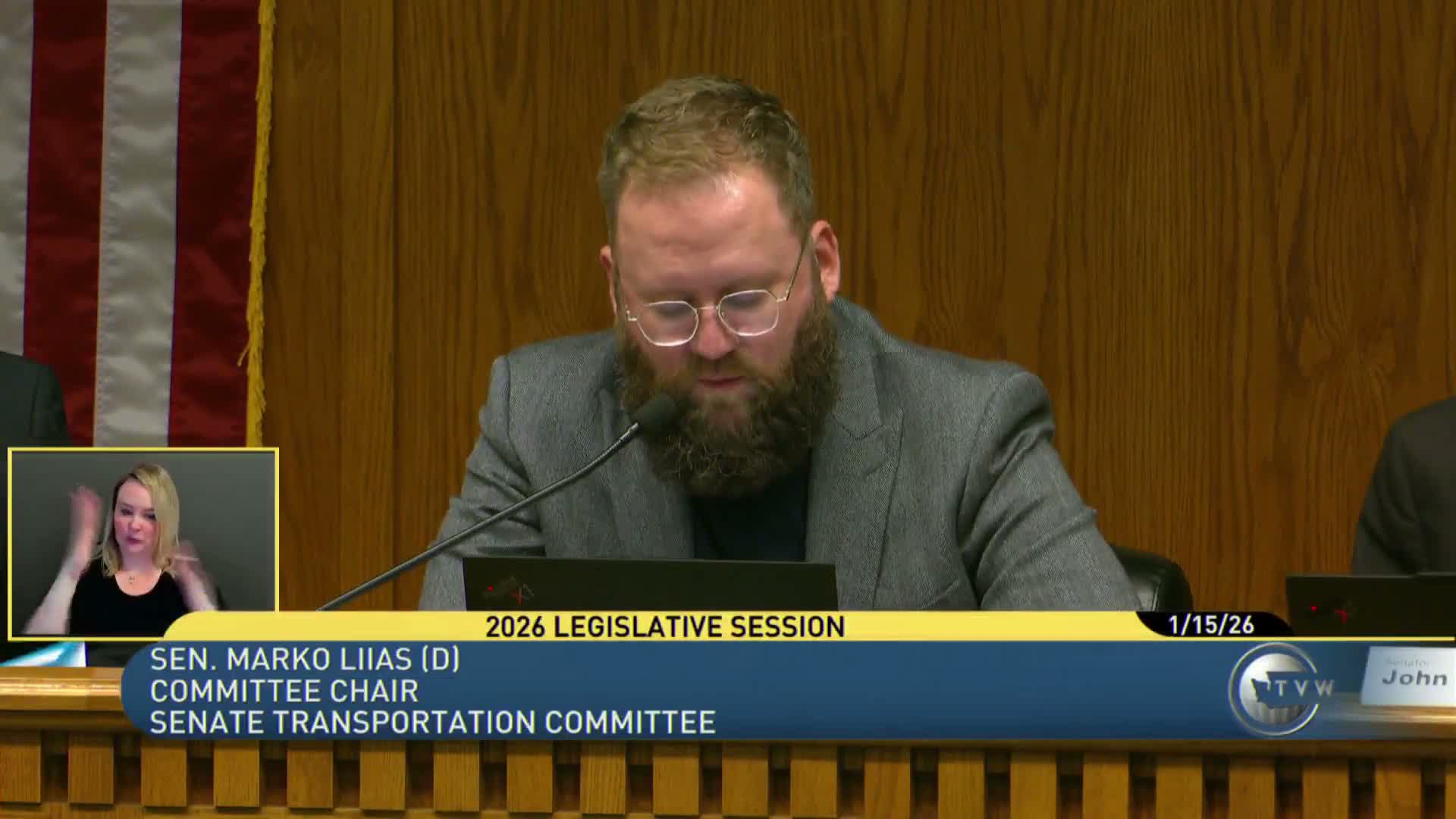
Washington State Department of Transportation leaders told the Senate Transportation Committee on Jan. 15 that preservation and maintenance shortfalls across roads, bridges, terminals and Washington State Ferries threaten reliability and that additional funding will be needed to address an aging system.
"Our mission is to provide safe, reliable, and cost‑effective transportation options," Secretary Julie Meredith said, outlining WSDOT’s priorities and warning that after decades of underfunding the system is not in the shape the public expects. She said the department manages a very large portfolio — she cited a replacement value figure and preservation needs across roads, bridges, ferries, transit and facilities — and stressed that emergency response and routine maintenance draw on the same limited preservation funds.
Meredith said WSDOT crews reopened 97 roads after a December storm and that 20 repair contracts remain active; she also flagged an uptick in bridge strikes and that many bridges are reaching or exceeding their expected service life. "More than 60% of our bridges are rated fair or poor," she said. The department has reallocated programs and elevated ferry leadership to help prepare for construction phases of major projects.
Washington State Ferries leaders quantified the fleet problem: Jenna Forte and John Bozzina said the system’s average vessel age is about 35 years, with five vessels over 50 and the oldest at 67 years. At current preservation funding levels (about $220 million per biennium, presenters said) the ferry preservation backlog is roughly $231 million today and could grow to about $390 million by 2040 if funding is not increased. Ferries staff said they contracted with Eastern Shipyard in Florida for two vessels (with an option for a third) and expect the first new hybrid‑electric vessel to be delivered as early as 2030.
Ferries officials also described terminal vulnerabilities, citing seismic and sea‑level risks at terminals such as Fauntleroy and Coleman Dock, and identified the Fauntleroy Terminal Replacement Project as having an estimated $170 million construction shortfall spread over several biennia.
On budget proposals, presenters said Governor Ferguson’s supplemental budget includes $1 billion to support procurement of up to three additional hybrid‑electric ferries and about $150 million to extend the life of the oldest vessels in the fleet. Ferries staff said adding new vessels reduces preservation needs and increases service reliability, but they cautioned that shipyard capacity and design timelines constrain how quickly new boats can be delivered.
Committee members asked for timelines: Secretary Meredith said the U.S. Coast Guard decision on vertical clearance for an interstate bridge replacement should come soon, and WSDOT expected updated cost estimates “in the next several weeks” once that determination is made. Ferries staff described why hybrid‑electric vessels required a new design and said that switching to a diesel design now would require a multi‑year redesign and could delay the fastest delivery path.
What’s next: The governor’s supplemental budget will move through the legislative process. Department and ferry officials said they will return with cost estimates and implementation plans as decisions — such as the Coast Guard clearance — become final.