Get Full Government Meeting Transcripts, Videos, & Alerts Forever!
Get email alerts on the Land Use topic
No spam. Unsubscribe anytime.
Sponsor says current‑use bill protects family farms from back taxes when transferring small right‑of‑way parcels
Summary
Senate Bill 5,983 would prevent back taxes, interest and penalties when current‑use land is transferred to a government entity for permitting conditions, provided the combined acreage removed does not exceed 20% of the previously classified parcel; sponsor cited Thomas Family Farm and agritourism as motivating examples.
Senate Bill 5,983 would bar additional taxes, interest and penalties when land classified under current use is sold or transferred to a government entity for the limited purpose of meeting permit conditions — for example, transferring right‑of‑way — so long as the combined acreage removed does not exceed 20% of the total classified acreage.
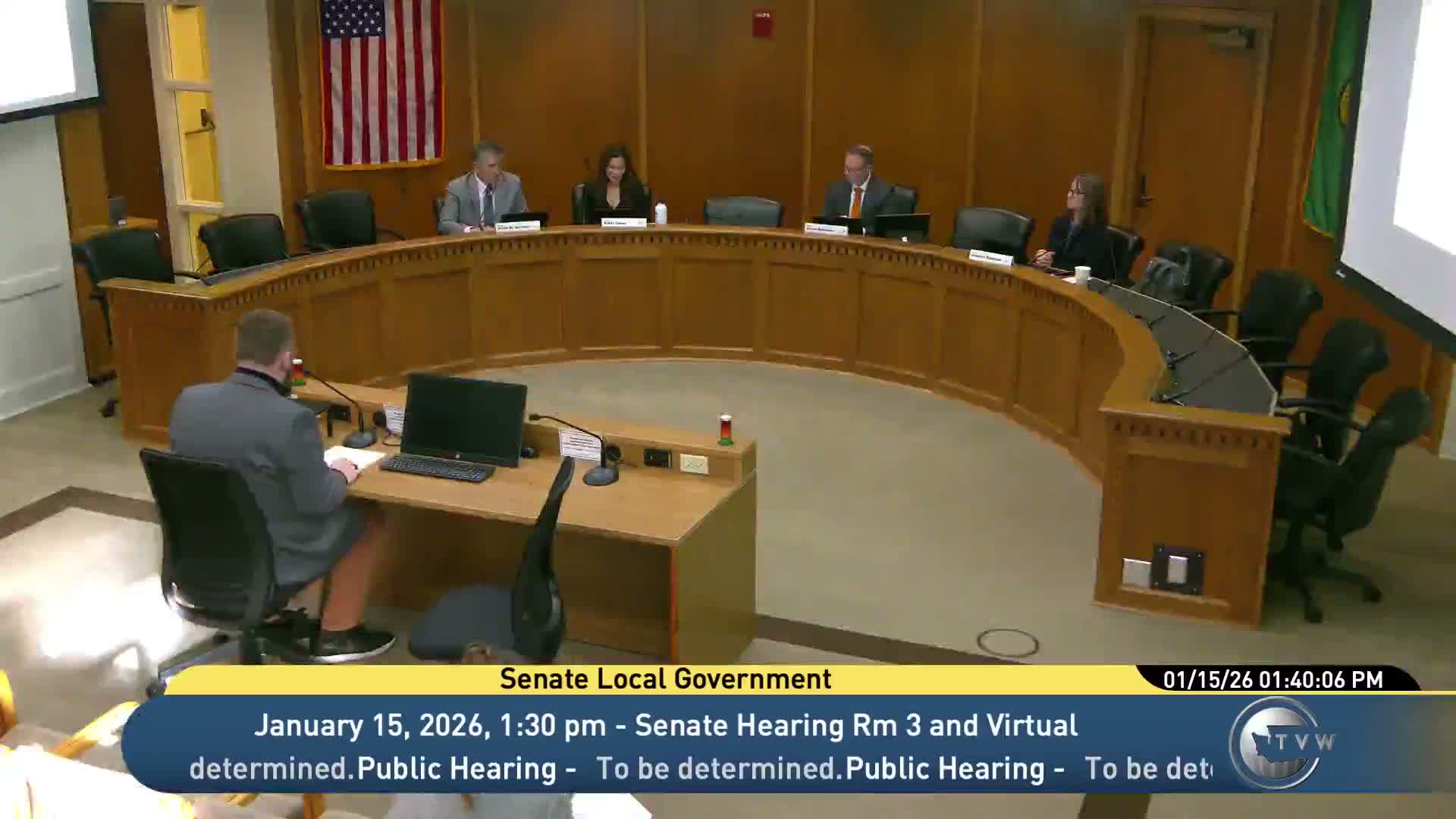
Jacob Ewing, committee staff, explained the current‑use framework and the bill’s limit that the combined acreage removed by development and by transfer to a government entity not exceed 20% of classified land prior to the change. The staff presentation emphasized how current use valuation differs from market valuation and that back taxes are typically collected if classification is removed.
Senator Elias, sponsor of SB 5,983, framed the bill as a fix to avoid unfairly penalizing small family farms required by permit conditions to convey narrow strips of land to counties for future road improvements. "It feels a little unfair to the farm that to satisfy the permit condition, they're giving the county this right of way and now they would have to pay back taxes," Elias said, using Thomas Family Farm in Snohomish Valley as an example.
Committee members raised questions about the bill’s relationship to broader land‑use goals (preventing conversion of farm or forest land to development). Supporters and a cosponsor emphasized that the bill contains sideboards (the 20% cap) to address those concerns.
There was no in‑person testimony listed for this item and the chair closed the SB 5,983 portion of the hearing.