Get Full Government Meeting Transcripts, Videos, & Alerts Forever!
Get email alerts on the Elections topic
No spam. Unsubscribe anytime.
Senate committee hears bill to skip ballot when only one cemetery district candidate files
Summary
Senate Bill 5,903 would deem a sole cemetery district candidate elected and omit that office from the ballot, a change sponsors say would save local governments printing and election costs; staff laid out district structure and filing rules during the committee hearing.
Senate Bill 5,903 would allow a cemetery district commissioner position to be removed from the general election ballot if only one qualified candidate files, effectively deeming that person elected.
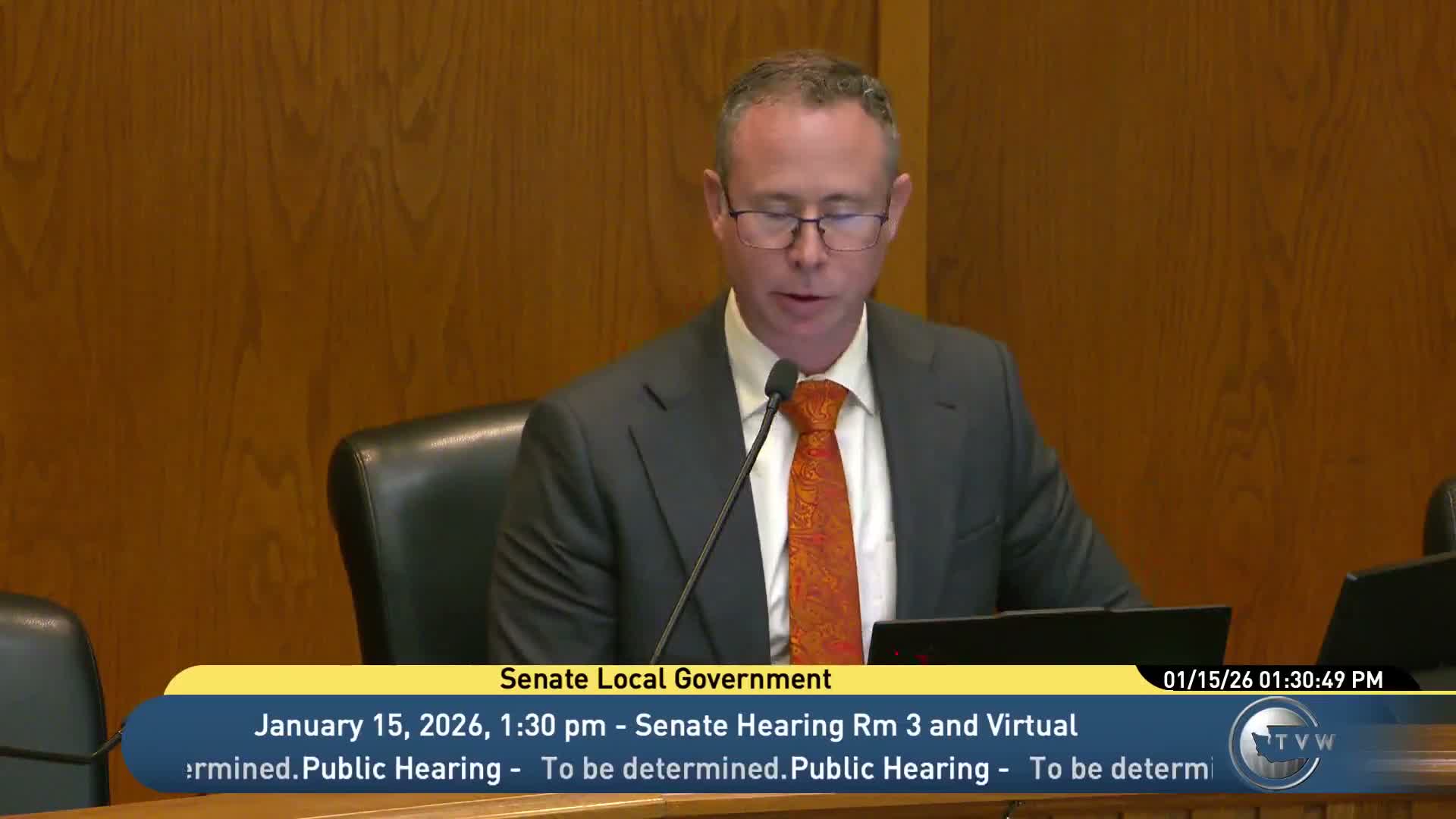
Jacob Ewing, staff to the Senate Local Government and State Parks Committee, told the panel the measure applies to cemetery districts, which are special purpose districts that may levy property tax and assess burial fees and are governed by three elected commissioners serving staggered six‑year terms. "If only one person files and qualifies as a candidate for a specific cemetery district commissioner position, then that person is deemed elected and the commissioner position does not appear on the ballot," Ewing said.
Sponsor Senator Adrian Cortez described the bill as a taxpayer‑savings measure intended to reduce the cost and administrative burden of printing and mailing ballots for races that attract little public interest. "It is really about saving taxpayers money," Cortez said, adding that the change is practical where small, lesser‑known offices draw few candidates.
The committee opened the public portion for SB 5,903 but heard no in‑person testimony; the chair reported one person had signed in opposition. The hearing record was brief and the committee proceeded to other bills on its agenda.
If advanced by the committee, the bill would change how small, local election contests for cemetery district commissioners are handled, leaving voters with fewer contested races but preserving the eligibility and qualification process for candidates.