Get Full Government Meeting Transcripts, Videos, & Alerts Forever!
Get email alerts on the Law Enforcement Leadership topic
No spam. Unsubscribe anytime.
Law‑and‑justice hearing on SB 5,974 draws packed testimony over eligibility and local control
Summary
Senate Bill 5,974 — which would set uniform eligibility and decertification standards for sheriffs, chiefs and marshals and restrict certain volunteer and specially commissioned duties — drew lengthy pro and con testimony. Advocates said it will modernize standards and build trust; many elected sheriffs and local officials warned it would erode local control and risk constitutional issues.
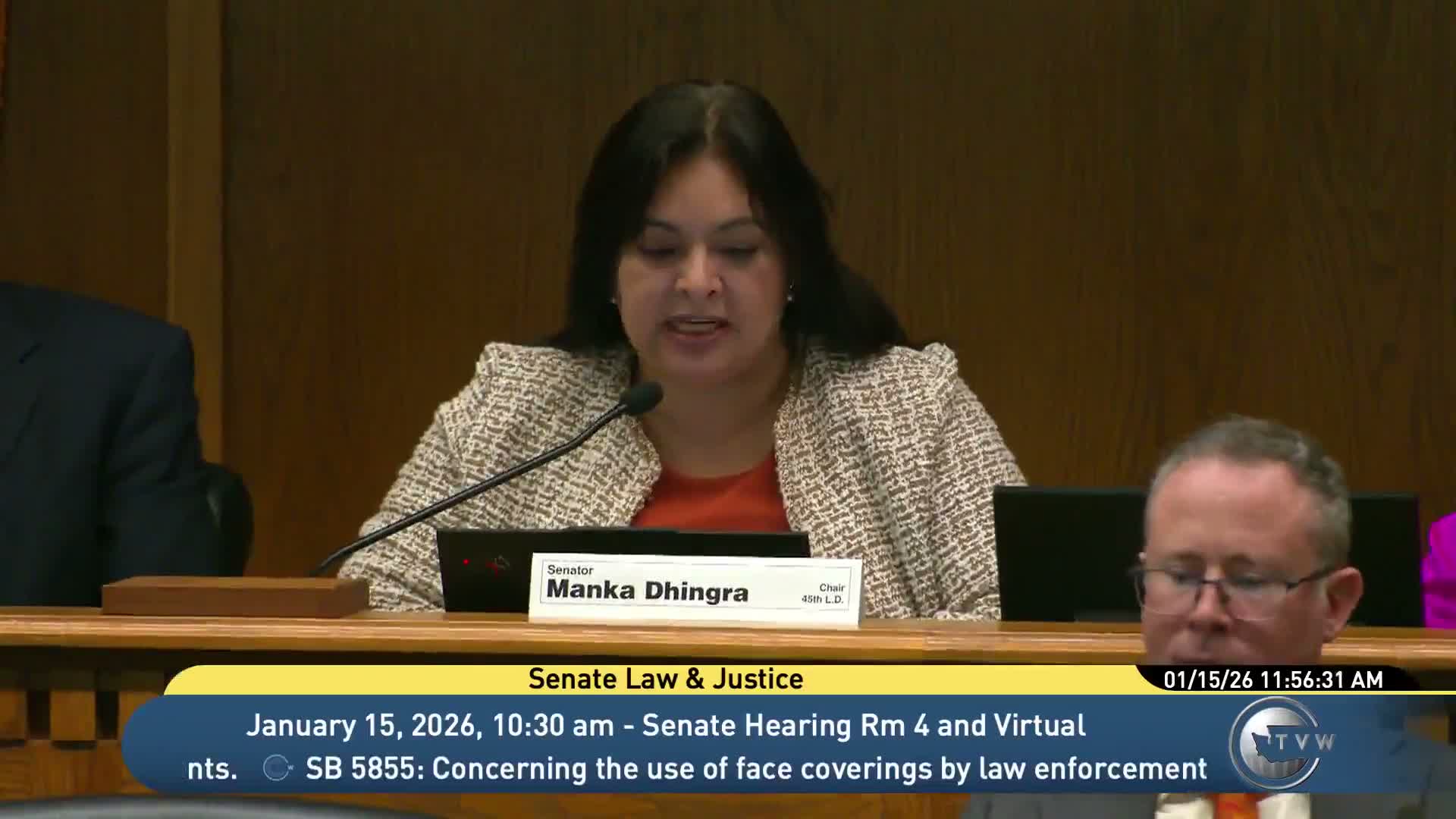
The Senate Law and Justice Committee on Jan. 15 heard hours of testimony on SB 5,974, a package of changes that would update eligibility standards and accountability for sheriffs, police chiefs and town marshals across Washington.
Sponsor Sen. John Lubbock described the bill as a step to hold law‑enforcement leaders to the same standards expected of the officers who serve under them. “Why not hold law enforcement leaders appointed or elected to the standards of accountability and professionalism that their subordinates are held to?” he asked.
Supporters included civil‑rights and survivors’ organizations, faith groups and community advocates. Malu Chavez, executive director of the Northwest Immigrant Rights Project, testified that the bill would strengthen public trust for immigrant communities fearful of contacting police: “This bill will ensure that professional standards of law enforcement leaders are updated and strengthened,” she said. Other supporters — including the Faith Action Network, the Alliance for Gun Responsibility and victim‑service providers — urged consistent statewide eligibility requirements and limits on armed volunteers.
Elected sheriffs, local chiefs and county officials mounted a broad opposition. Pierce County Sheriff Keith Swank warned the bill would remove local accountability and threatened political mobilization; several elected sheriffs argued the bill undermines the constitution's protections for local elected offices and would place an unelected state body in a position to remove an elected sheriff. Sheriff John Knowles of Spokane County said the measure “essentially and functionally removes the voice of the voters” by empowering state decertification processes that could affect elected officials.
Technical and fiscal concerns also arose. The Association of Washington Cities cautioned that Section 7’s restrictions on volunteers could be overly broad and limit benign volunteer functions; the Association of Counties warned that the new background‑check and investigative requirements could carry significant local costs. Multiple sheriffs said the bill could disqualify volunteer security details that currently serve at the Capitol.
The hearing closed with the committee asking those unable to testify in the time allotted to submit written testimony and amendments for consideration. No final committee vote was taken during the Jan. 15 meeting; the measure remains in committee for further review and potential amendment.
Next steps: Sponsors and committee staff will gather written testimony and technical amendment requests; Senators may propose amendments before any executive session vote.
Accuracy note: The hearing included many spoken claims about constitutional and fiscal impacts; those claims represent testifiers’ perspectives and legal claims rather than adjudicated findings.