Get Full Government Meeting Transcripts, Videos, & Alerts Forever!
Get email alerts on the Senior Independent Living Ombuds topic
No spam. Unsubscribe anytime.
House committee hears bill to create senior independent-living ombuds; supporters cite safety gaps, providers urge more stakeholdering
Summary
At a Jan. 15 public hearing, lawmakers heard testimony on House Bill 2,299 to establish a senior independent-living ombuds to assist residents of age-restricted rental communities; advocates and residents described safety and maintenance gaps, while provider groups urged further stakeholder work and clarity on funding and scope.
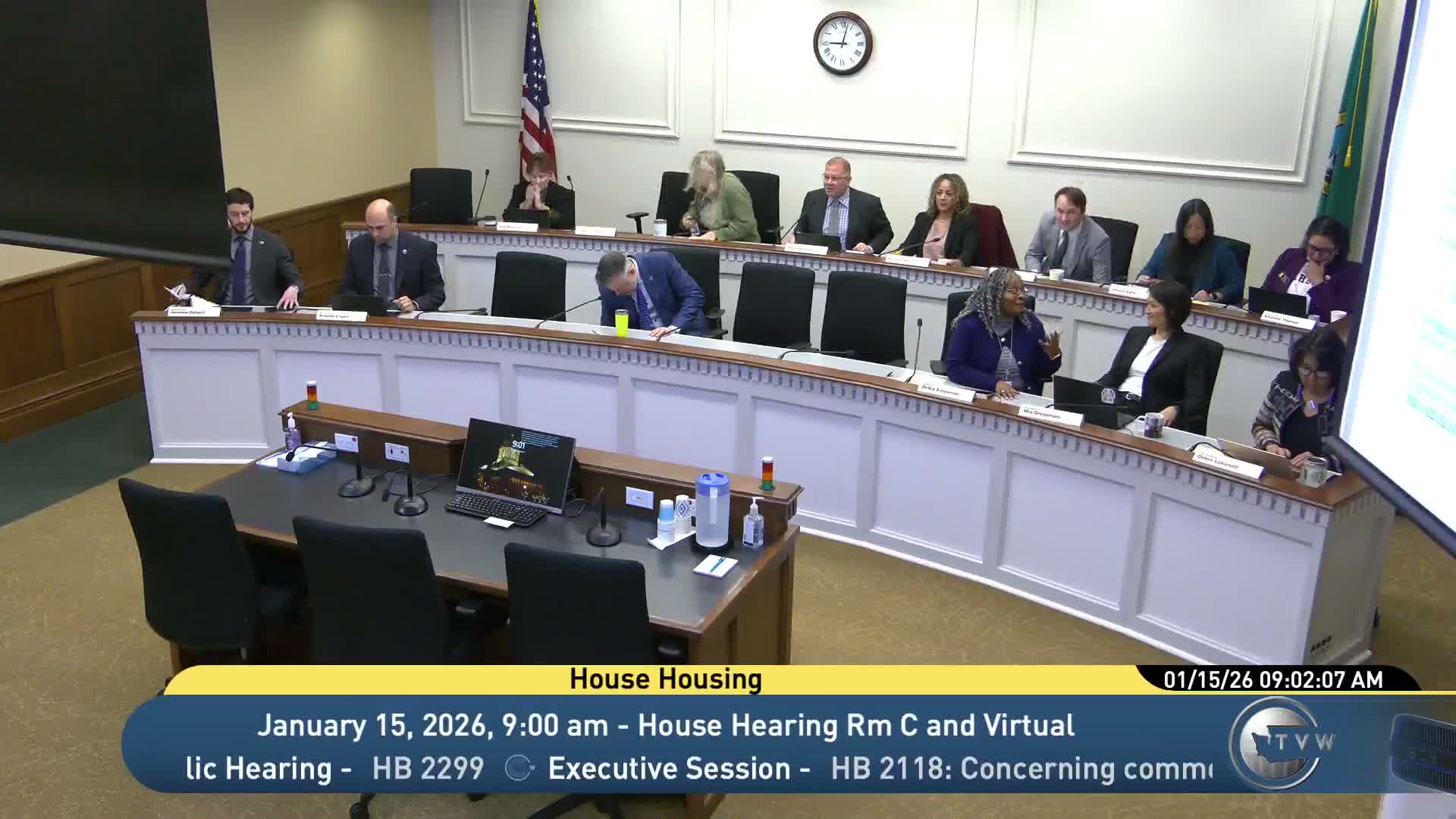
House members heard testimony Jan. 15 on House Bill 2,299, which would direct the Department of Commerce to contract with a nonprofit to provide ombuds services to residents of senior independent-living facilities.
Representative Christine Reeves, the bill’s sponsor, told the committee the measure is intended to fill a protection gap for seniors who live in independent-living units that are currently treated as multifamily housing under state law. Reeves described constituent complaints including long delays getting elevators repaired and a case in which an older resident was not found in his vehicle for a week, saying the ombuds would provide "a trusted individual and a resource that they can go to to help them navigate the system." She told members the bill does not change building codes but would create an ombuds role focused on housing expertise, consumer-protection law, landlord-tenant law or legal-system expertise.
Committee staff summarized the bill’s functions: coordinating statewide ombuds services for senior independent living, collecting and analyzing complaint and condition data, handling complaints on behalf of residents, making referrals when violations are found, setting minimum qualifications for ombuds staff, protecting ombuds from liability for good-faith performance, and requiring facilities to post conspicuous notice of ombuds services.
Provider groups and long-term care advocates generally supported the bill’s intent but urged additional stakeholder work. Jeff Gumboski of the Washington Healthcare Association said the policy goal is commendable but that mixed-use communities with both independent- and assisted-living components raise difficult legal and administrative questions; he recommended a robust stakeholder process to sort out scope, funding and how the new program would interact with existing long-term care ombuds and landlord-tenant protections.
A representative of LeadingAge Washington (name not stated in the transcript) expressed concern about how the program would be funded, warning that if costs were shifted to facilities it could produce significant registration fees that would especially burden affordable senior housing and mobile home parks. LeadingAge asked the committee to prioritize drafting an independent-living residents’ bill of rights and to pause the creation of a separate ombuds structure until stakeholder work is completed.
Melanie Smith of the Washington State Long Term Care Ombuds Program testified in support, describing the current inequity in mixed communities where some residents have access to ombuds services and neighbors do not. Smith said the program is contracted through the Department of Commerce, grounded in the federal Older Americans Act, and currently under-resourced: she told the committee the program is funded at "just over half" the recommended staffing ratio (the testimony described the recommendation as one ombuds per 2,000 residents and said current funding is roughly one per 3,700 residents). Smith said expanding scope could be considered, and that Commerce and DSHS are reviewing funding options, including the possibility of leveraging federal dollars.
Residents and advocacy groups urged passage. Vivian Alexander, a resident of Shag Celebration West in Federal Way, recounted management turnover, interruptions to community meetings and ongoing health-and-safety and maintenance concerns, and asked the committee to pass HB 2299 so residents would have an external resource to help resolve problems. Laura Saunders, president of the Washington Continuing Care Residents Association, said her organization’s 1,200 members support the bill because independent-living residents in continuing care retirement communities currently can only appeal complaints to management.
Committee members probed coverage questions raised repeatedly in the hearing: whether owner-occupied condominiums or 55-plus communities would be captured by the bill (staff said the bill’s definition requires that the housing unit be rented), how the ombuds would interact with existing long-term-care ombuds (which are federally defined and tied to licensed facilities), and whether expanding the long-term care ombuds’ statutory scope would be a viable alternative. Members also asked about a fiscal note; staff said a fiscal note had been requested but was not yet available.
The hearing closed without a committee vote, with lawmakers signaling further discussion and possible amendments ahead of future consideration.