Get Full Government Meeting Transcripts, Videos, & Alerts Forever!
Get email alerts on the School Board Elections topic
No spam. Unsubscribe anytime.
Committee hears competing views on bill to require director-district elections for larger school districts
Summary
House Bill 1683 would require larger school districts to elect some board directors by director districts or use proportional methods, with an effective date of 01/01/2027; witnesses and advocates debated representation benefits, costs and alternative voting methods.
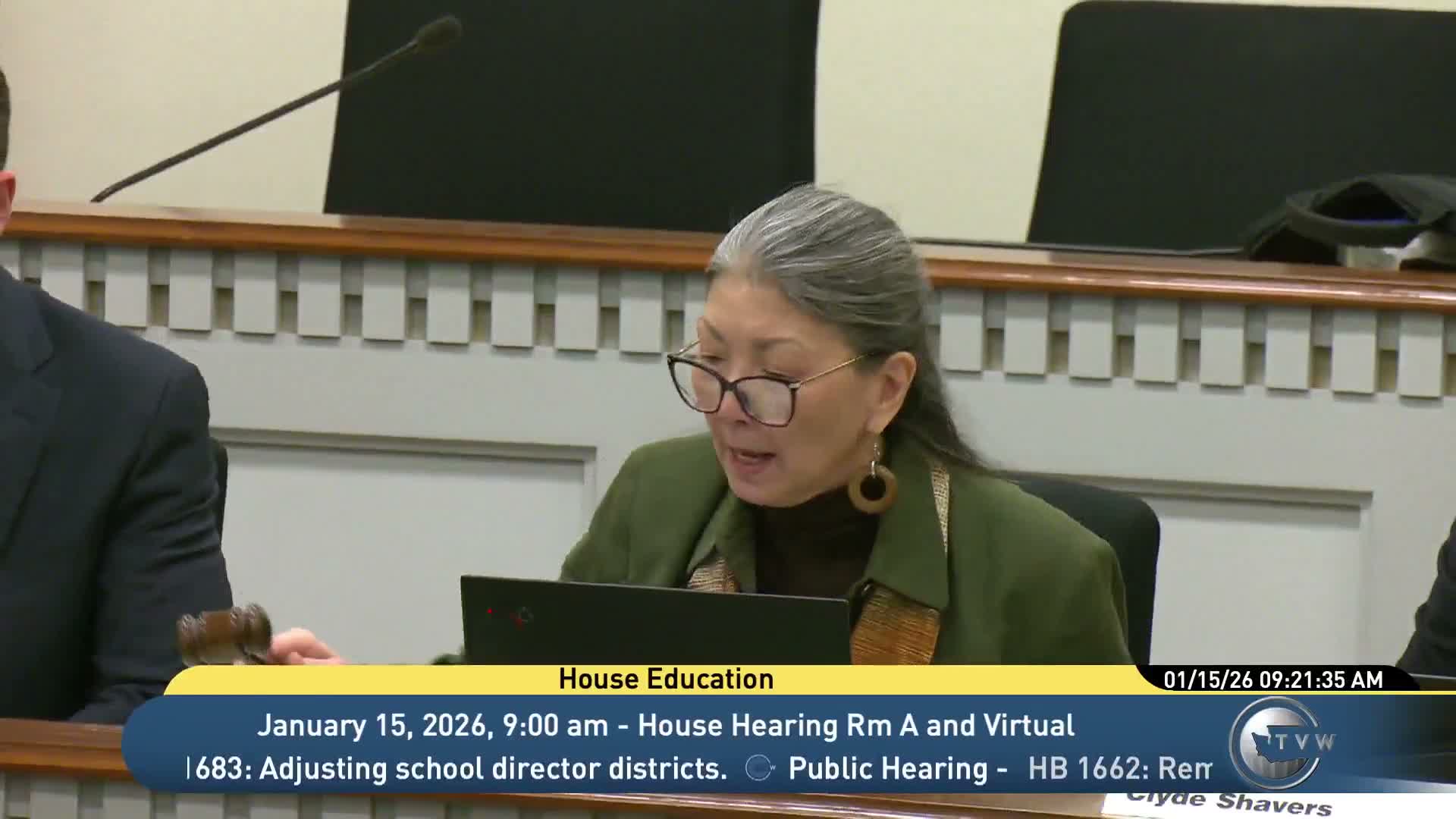
The House Education Committee heard public testimony on House Bill 16 83, a measure that would change how school board directors are elected in larger districts to improve geographic and demographic representation.
Ethan Moreno briefed the committee that the proposed substitute requires school district director elections to be conducted according to new rules by Jan. 1, 2027, and explains thresholds for how many directors must be elected by designated director districts in larger districts. Representative Lillian Ortiz Self, the prime sponsor, said the bill "ensures that every part of a school district has a fair opportunity to elect a representative" and argued that equitable representation produces better outcomes for students.
Tyler Munch representing the Office of Superintendent of Public Instruction said research from WSIPP, the University of California and the UN Electoral Knowledge Network indicates that designated member districts and proportional representation can improve representation; OSPI’s analysis found only one district currently uses the full model and that 23 districts would fall out of compliance as written. Munch said he would confirm the identity of the single compliant district and provide additional details in the bill analysis.
Supporters such as Nina Martinez of Latino Civic Alliance said director districts help ensure boards reflect community diversity and can encourage more local candidates to run. Critics warned of costs and loss of local control: Dr. Karen Bolton, a Bremerton school board director testifying for WASDA, called the proposal an "unfunded mandate," citing an example election cost of about $40,000 and concerns that some areas might have trouble recruiting candidates, which could leave vacancies.
Researchers suggested alternatives. Shannon Grimes of Sightline Institute supported the goal of greater diversity but cautioned that single-member districts do not guarantee proportional outcomes and recommended allowing proportional voting methods such as ranked-choice, multiwinner systems as an additional option.
The committee closed the public hearing on HB 16 83; no action was taken at the hearing. Staff told members the bill and other items heard this week will be on the executive session agenda next Thursday and reminded members of the amendment deadlines.