Get Full Government Meeting Transcripts, Videos, & Alerts Forever!
Get email alerts on the Wsdot Preservation topic
No spam. Unsubscribe anytime.
WSDOT secretary warns preservation backlog, aging ferries and I‑5 bridge choice will shape 2026 work
Summary
WSDOT Secretary Julie Meredith told the House Transportation Committee that decades of underfunding have left major preservation needs across bridges, pavements and ferry vessels; she said a Coast Guard decision on the Interstate Bridge Replacement will shape cost estimates and sequencing.
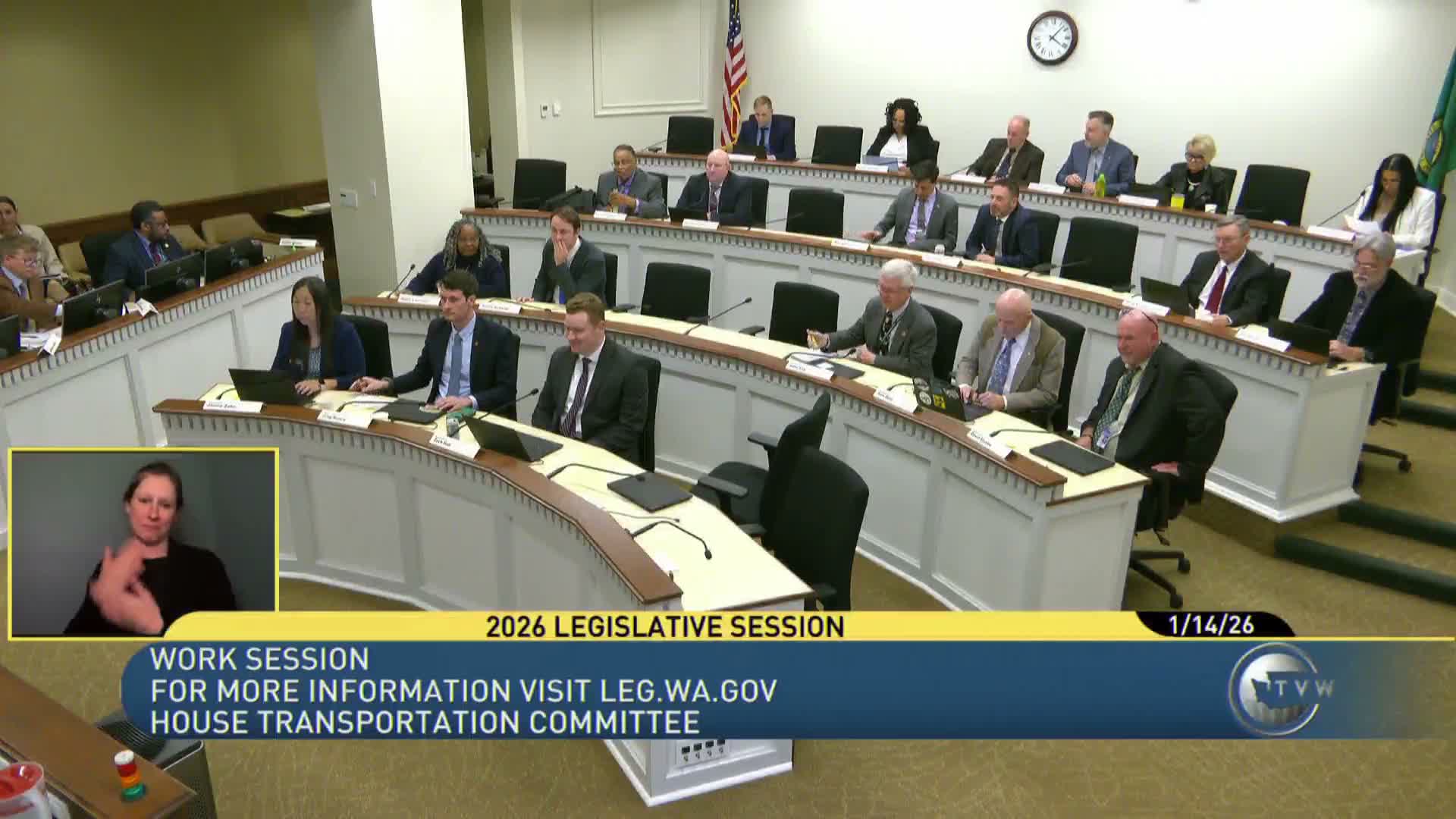
Julie Meredith, secretary of the Washington State Department of Transportation, told the House Transportation Committee on Jan. 30 that the agency faces steep preservation needs after years of underfunding and that upcoming external decisions will affect large projects’ costs and schedules.
“My North Star is ensuring the transportation system meets the needs of people today and also is ready for generations to come,” Meredith said as she reviewed WSDOT’s priorities for 2026, the agency’s workforce profile and its preservation agenda.
Why it matters: Meredith said Washington’s multimodal transportation asset has roughly a $200 billion replacement value and that preservation shortfalls are already causing operational fragility. She cited these figures in the briefing: WSDOT employs about 7,700 people; roughly 342 bridges in the state are over 80 years old; 33 bridges need replacement now, and about 80 more are projected to need replacement in the next 10 years. Meredith also said more than 40% of state striping is deficient and that many rest areas are in critical condition.
Meredith highlighted recent and ongoing projects intended to address those needs, including deck work on the Vantage Bridge on I‑90 (work begun in 2024, with completion expected in 2028) and concrete repairs on the I‑5 Ship Canal Bridge connected to the Revive I‑5 program; she said some work will pause during the World Cup to reduce traveler disruptions. On ferries, she noted the Wenatchee hybrid‑electric conversion and a contract for three new vessels while warning the fleet remains fragile because of an aging roster and limited relief vessels.
On mega programs, Meredith described the Interstate Bridge Replacement (a bi‑state program with Oregon) as “large, multibillion dollars” and said the project faces scope, schedule and budget challenges. She told the committee a Coast Guard determination on clearance requirements — which will indicate whether the replacement is fixed or movable — is imminent and will directly inform the program’s cost estimate, sequencing and finance plan. Meredith said the agency expects that determination “as soon as January 16,” after the Coast Guard closed its public comment period.
Committee members pressed for specifics. Rep. Lee asked how WSDOT would address reporting that IBR cost estimates might rise by an estimated $10–12 billion if a lift span is required; Meredith replied cost estimating remains in progress and that large programs typically proceed by phasing work to manage costs. Rep. Nance asked about staffing needs; Meredith said delivery depends on funding and timelines and that WSDOT relies heavily on contractors and consultants in addition to its workforce.
What happens next: Meredith said WSDOT will continue to develop preservation plans and coordinate with the governor’s office on options, and the committee will consider the governor’s supplemental budget in coming hearings. The Coast Guard decision on the IBR clearance requirement will narrow near‑term uncertainty for that program.