Get Full Government Meeting Transcripts, Videos, & Alerts Forever!
Get email alerts on the HB 2132 topic
No spam. Unsubscribe anytime.
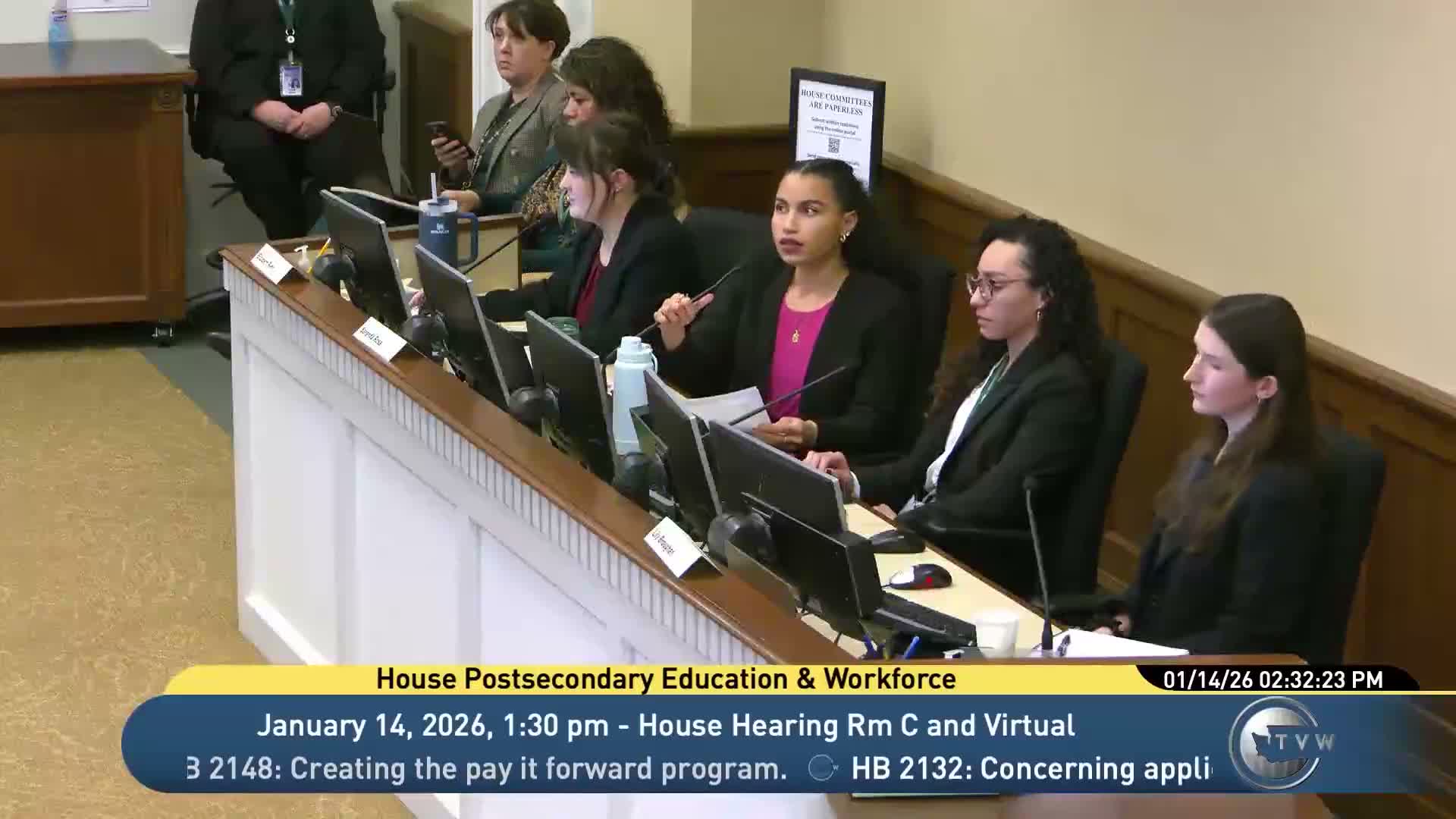
Committee hears HB 2,132 to limit retention and disclosure of WASFA applicant data
Summary
Rep. Levitt sponsored HB 2,132 to exempt personally identifying and financial WAFSA information from routine public disclosure and to limit institutional retention to one year after an academic award year (with audit exceptions). Students and advocacy groups testified strongly in support, citing immigrant and privacy concerns.
Representative Levitt presented House Bill 2,132, which would change how Washington treats application data submitted through the Washington Application for State Financial Aid (WASFA). Counsel summarized the bill as exempting personally identifiable and financial WASFA information from disclosure under the Public Records Act, prohibiting the Student Achievement Council and institutions from retaining or reproducing that information longer than one year after the end of an academic award year, except where an audit or appeal is outstanding or disclosure is required by law.
Levitt characterized the bill as establishing a reasonable retention schedule to stop institutions from keeping student financial records "for years and years" beyond need. Committee members raised practical concerns: whether shorter retention would affect audits, whether records needed for immigration or future petitions would be available, and how the bill interacts with federal audit authorities. Levitt and counsel said the bill preserves a one‑year post‑award window for audits and clarifies that the change applies to state aid records rather than federal records.
Student and advocacy testimony was predominantly pro and emphasized privacy and safety for vulnerable students. Brandon Elliott (Associated Students of the University of Washington) and Nathan Tippman (Evergreen students) described the bill as data‑minimization consistent with best practices. Representatives of Communities for Colleges and student witnesses stressed that immigrant and mixed‑status students fear sharing financial and identification information and that the bill would increase trust and access. Witnesses suggested outreach so applicants retain copies of their own records when desired.
Several members requested additional confirmation from institutions and agencies on whether records older than one year are used practically for audits or administrative purposes; the sponsor noted institutions had opportunities to review the bill and some supported the measure. The committee heard no opposing institutional testimony in the record; no vote was taken at the hearing's close.