Get Full Government Meeting Transcripts, Videos, & Alerts Forever!
Get email alerts on the Healthcare Contracts topic
No spam. Unsubscribe anytime.
Hospitals and small providers urge 90-day notice on mid-contract insurer changes; carriers warn of fragmentation
Summary
House Bill 21-06 would require health carriers to give 90 days' notice and the text of any 'significant payer contract modification' and allow providers to accept or reject such changes; hospitals and rural providers said unilateral mid-contract changes threaten sustainability, while insurers warned the bill could fragment networks and raise costs.
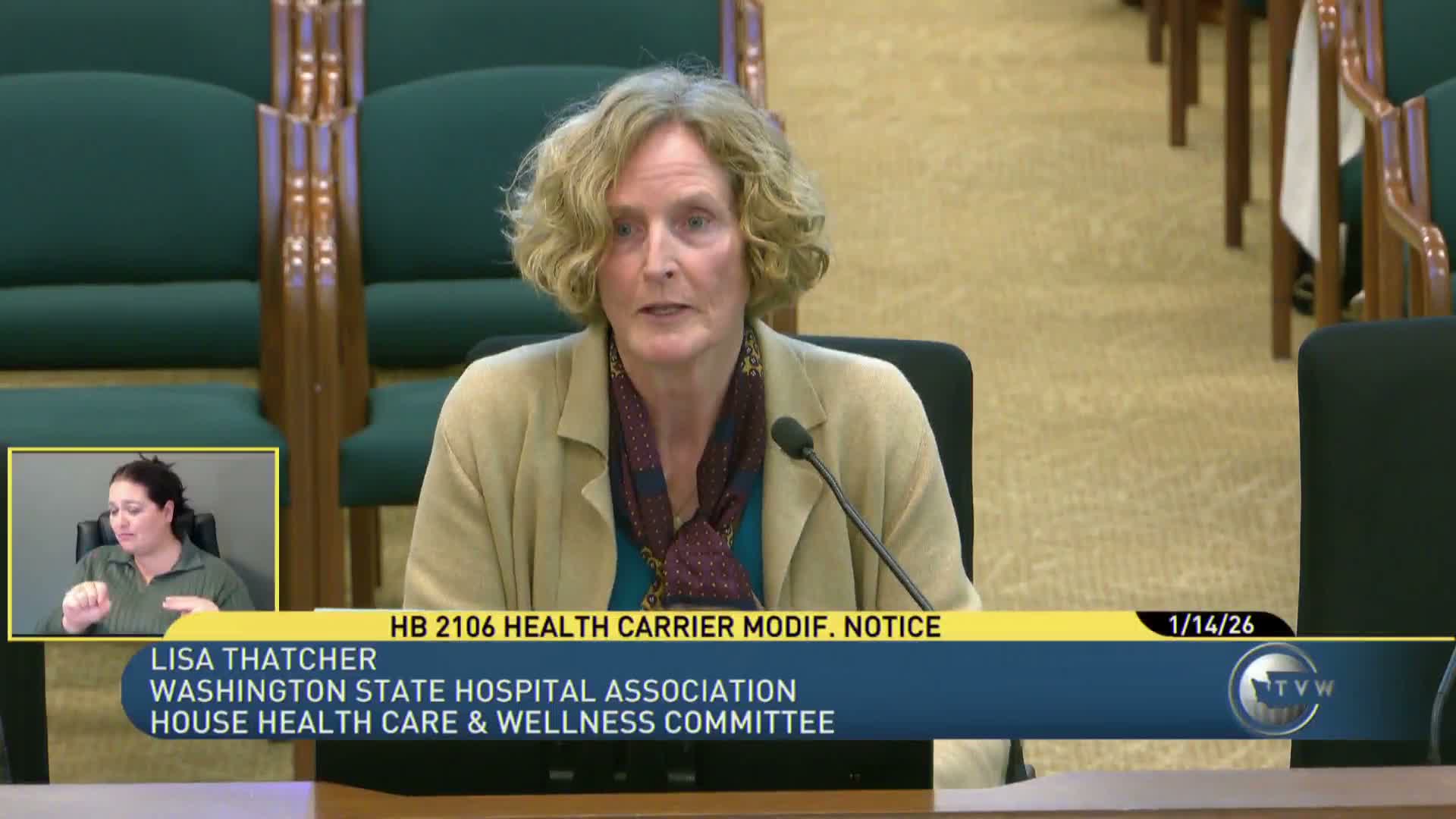
On Jan. 14 the committee heard opposing views on House Bill 21-06, which would require health carriers to provide providers and facilities 90 days' written notice, including the full modification text, before implementing a 'significant payer contract modification,' and would permit providers to accept or reject the change during the notice period. Staff described the definition of significant modifications to include fee schedule decreases, payment-method changes, site-of-service restrictions, bundling or unbundling services, and administrative changes likely to increase provider administrative costs; state- or federal-law-driven changes are excluded.
Hospitals, rural health districts and provider associations testified in favor. Matt Lund, chief contracting officer for UW Medicine, cited recent unilateral carrier changes that he said removed coverage for advanced imaging at UW facilities shortly after contract signature and described millions of dollars in lost reimbursement and care disruption; he and Cascade Medical’s CEO Diane Blake urged statutory protections so negotiated contract terms remain in effect during the contract term.
Insurers and trade associations opposed the bill. Representatives from the Association of Washington Healthcare Plans, Premera, Regence, and America's Health Insurance Plans argued routine policy updates are necessary for patient safety, to respond to clinical evidence or coding changes, and said forcing provider-by-provider acceptance of changes would fragment contracts within networks, increase costs, and impair the carriers' ability to update coverage consistent with evolving medicine. The Office of the Insurance Commissioner and the Healthcare Authority said they understand provider concerns and would engage in interim discussions; regulators urged caution about unintended effects, including network adequacy and potential spillover into Medicaid managed care if not carefully drafted.
Several small-provider witnesses described recent unilateral payment reductions that they said left them with little recourse; insurers countered that the bill, as drafted, could raise consumer costs and reduce plan flexibility. The committee adjourned without a vote.