Get Full Government Meeting Transcripts, Videos, & Alerts Forever!
Get email alerts on the Hb 2253 Licensing topic
No spam. Unsubscribe anytime.
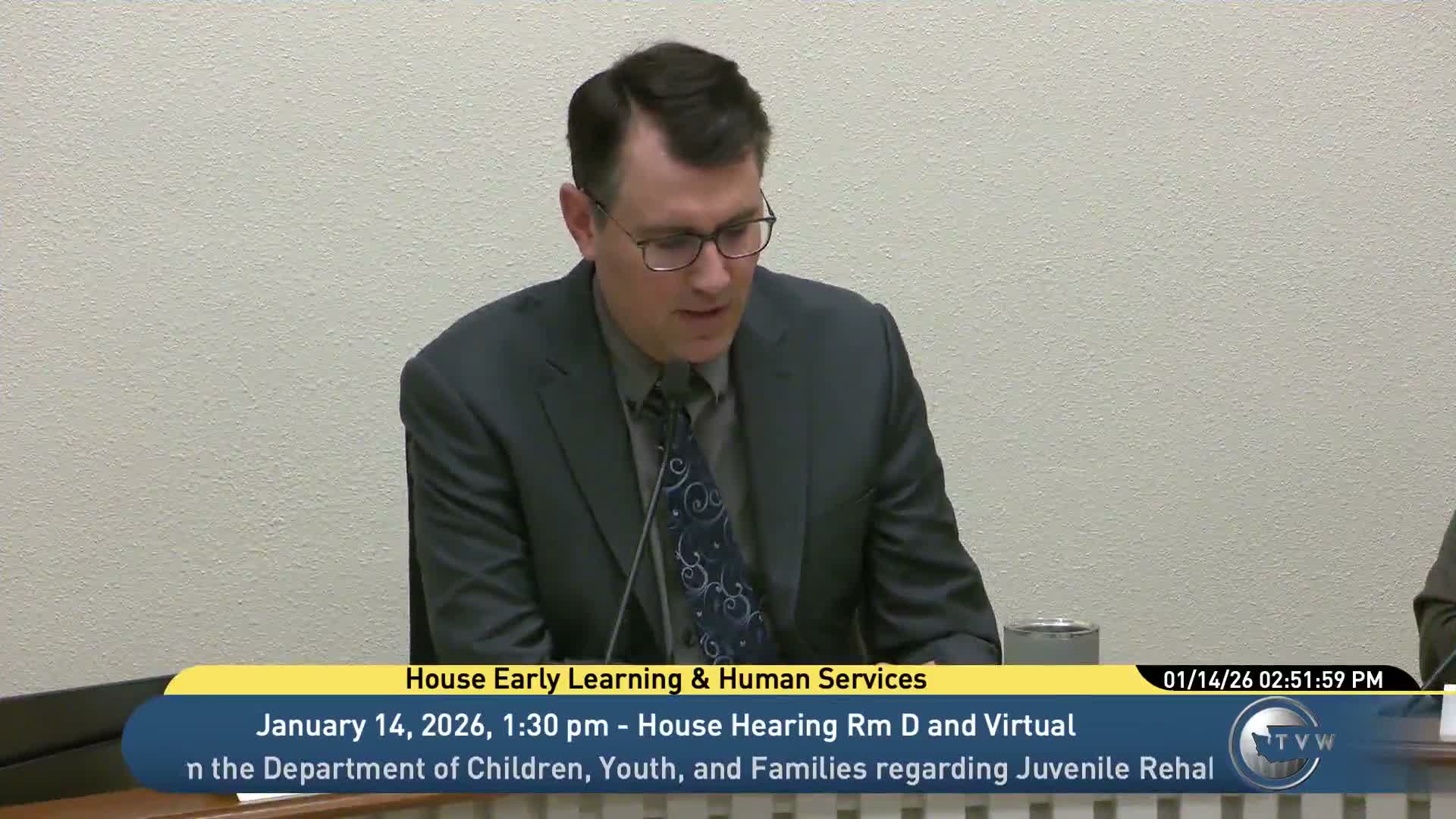
HB 2253 technical fixes would ease licensing, add kinship exceptions and adjust staffing ratios, DCYF says
Summary
House Bill 2253 would update licensing rules including child‑specific kinship licenses for interstate placements, waive certain training for kinship caregivers, adjust crisis residential center staffing ratios, and allow DCYF to designate inactive licenses; DCYF and providers largely supported the technical fixes but members sought clearer definitions for 'inactive.'
The committee heard House Bill 2253, an agency‑request bill proposing technical corrections to licensing statutes for child care, kinship placements and certain residential programs.
Committee counsel Luke Wickham said the bill lets DCYF issue child‑specific licenses to relatives for children placed from another state, exempts kinship caregivers from blood‑borne pathogen training, adjusts staffing ratios for crisis residential centers (1 staff per 4 children during working hours and 1 per 6 during sleeping hours), and removes some monitoring requirements for the Washington School for the Deaf.
Representative Burton Palm, the sponsor, described the bill as a technical corrections package that updates authority and staffing ratios and said he would work with members on concerns about how the department will define and manage an ‘inactive’ license status. DCYF Deputy Director Julie Watts said the bill would make it easier for kinship caregivers to obtain child‑specific licenses and would align licensing practice with current operations for crisis residential centers.
Members raised questions about the department’s authority to terminate licenses for inactivity, how inactivity would be defined and verified (database vs. physical inspection), and whether removing some monitoring would change fiscal costs. DCYF said rule‑making with stakeholder input would define inactive status and that past biennial budget cuts reduced licensing staff by five positions, which informed the department’s intent to right‑size workloads.
Community providers including Derek Harris of Community Youth Services and Kim Justice of Partners for Our Children testified in support, noting that some changes align statute with long‑standing practice and would remove administrative burdens. The committee closed the hearing and was reminded that the bills under consideration would be up for executive session next Friday.