Get Full Government Meeting Transcripts, Videos, & Alerts Forever!
Get email alerts on the Hb 1544 Risk Assessment topic
No spam. Unsubscribe anytime.
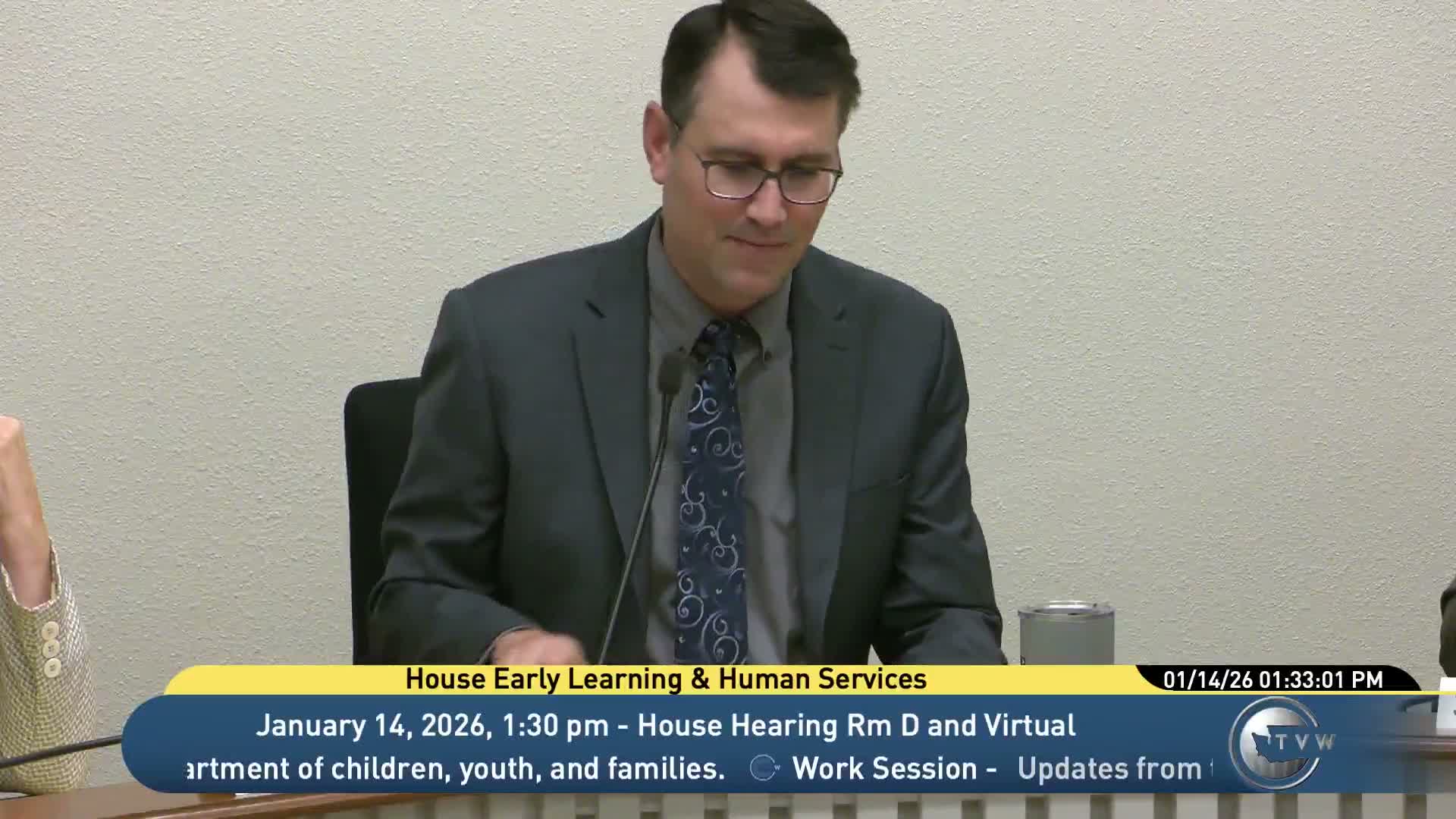
Committee hears testimony on HB 1544; members seek data and clarity on certification costs
Summary
House Bill 1544 would require DCYF to study and improve its risk/strengths/needs assessment, provide legislative reporting, and recertify the risk assessment process at least every three years; committee members questioned whether certification requires new data systems and a fiscal note.
The Early Learning & Human Services Committee took testimony on House Bill 1544, a bill that would require the Department of Children, Youth and Families to study and improve the department’s risk, strengths and needs assessment used in child abuse and neglect investigations, and to certify the risk‑assessment process at least once every three years.
Committee counsel Luke Whitcomb briefed members that HB 1544 directs DCYF to identify family risks, strengths and needs, consider substance‑use factors, determine family service needs, support caseworker access to services, and provide data to the Legislature. Whitcomb noted a substitute version had previously passed this committee but the original bill is before members now.
Representative Ruehl, the bill’s prime sponsor, told the committee the tool is research‑based and “would help social workers, caseworkers make decisions based on science,” reducing bias and distinguishing discomfort from actual child safety risk.
Representative Penner pressed agency and counsel on fiscal implications. Penner said DCYF has told him it cannot currently pull data on safety‑plan failure and asked whether certification or validation of a tool would effectively require building new tracking systems and therefore generate a fiscal note. Counsel said certification may be performed by an outside researcher or internally and offered to follow up; DCYF Deputy Director Julie Watts later acknowledged limits in the family system and said certification focuses on external validation and fidelity of use rather than requiring the department to create a comprehensive new outcomes database.
During resumed public testimony, Kim Justice of Partners for Our Children urged support, saying the bill “strengthens a core child welfare tool” by directing DCYF to consider family strengths and protective factors. Watts described piloting an evidence‑based instrument (the North Carolina Family Assessment Scale) and said community partners and caseworkers provided positive feedback during the pilot.
Committee members asked for follow‑up on the fiscal implications, data sources and how court findings might be integrated with agency decision‑making. Counsel and agency staff committed to follow‑up information for members. The committee closed the hearing on HB 1544 with requests for additional details rather than a vote.