Get Full Government Meeting Transcripts, Videos, & Alerts Forever!
Get email alerts on the Chatbot Safety topic
No spam. Unsubscribe anytime.
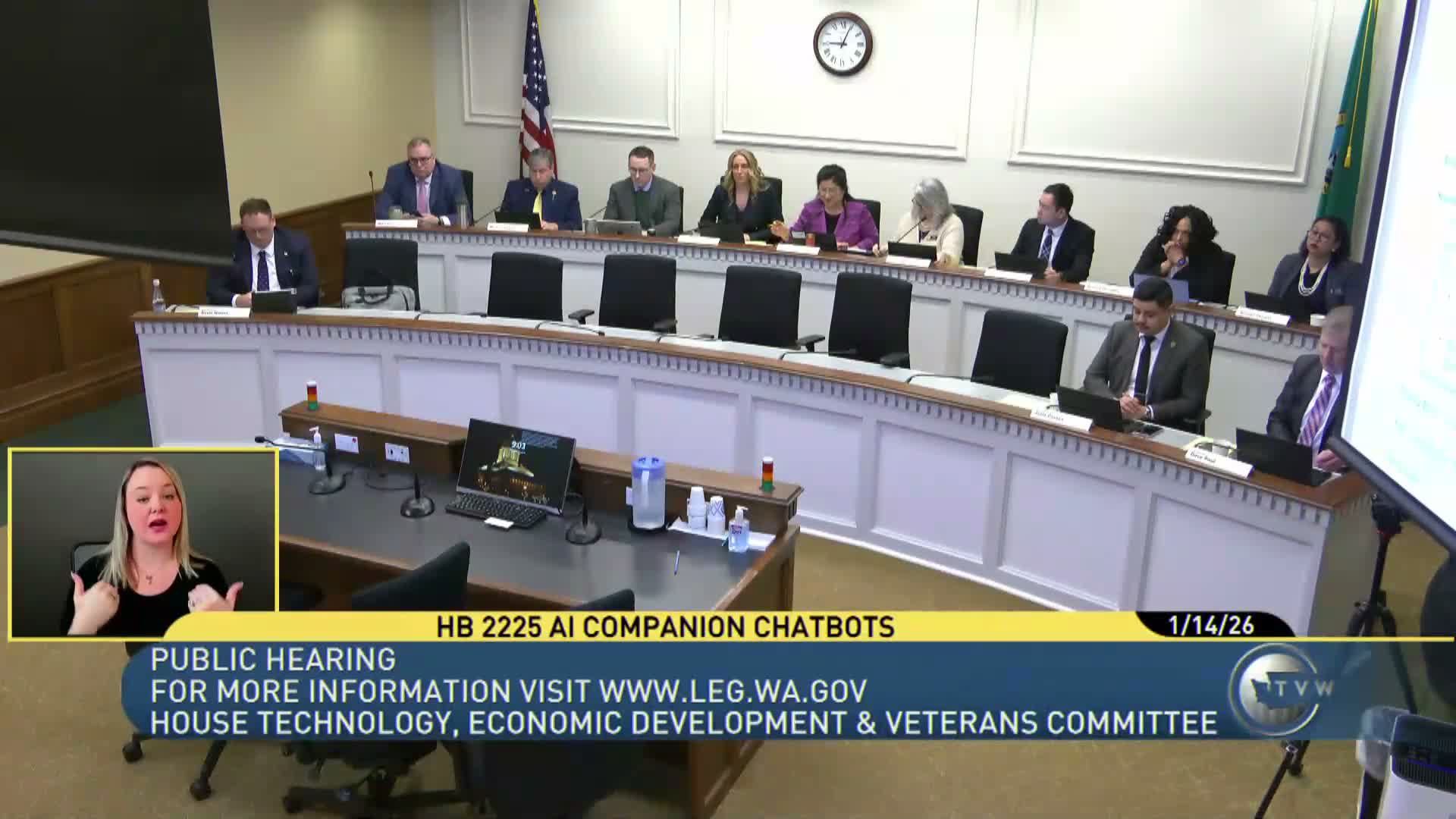
Heated hearing on companion‑chatbot bill as survivors, clinicians and industry present competing views (HB 2225)
Summary
HB 2225 would require operators of AI companion chatbots to notify users, prohibit manipulative engagement techniques, protect minors from explicit/self‑harm content, and require crisis‑referral protocols. Testimony included moving survivor accounts and clinicians urging passage, and industry groups urging narrower scope and AGO enforcement only.
Committee staff described House Bill 2225 as a package of safeguards for AI systems that simulate humanlike relationships — companion chatbots that personalize interactions, ask unprompted questions and maintain ongoing dialogue. The bill requires operators to notify users at the start of each interaction that the chatbot is artificially generated, implement protections for known minors, prohibit manipulative engagement techniques designed to prolong emotional relationships, prevent generation of explicit content for minors, and provide referrals to crisis resources when appropriate. Enforcement is through the Consumer Protection Act, giving private enforcement as well as potential AGO actions.
Prime sponsor Representative Lisa Callan emphasized harms documented in research and anecdotal cases, noting simulated conversations that encouraged risky behavior and citing state teen mental‑health data: “We know we have a severe drought of…services for youth and teens,” she said, and framed the bill as a moderate, common‑sense step to prevent design features that prioritize engagement over safety.
Many witnesses urged passage. Survivors and family members described personal losses and testified that voluntary or industry self‑regulation has not protected children. Psychologists and developmental scientists warned that chatbots can exploit adolescent vulnerabilities, normalize self‑harm, and masquerade as mental‑health professionals. The state attorney general’s office and chief privacy officer signed in as supportive with suggested technical and definitional edits; Katie Ruckle, the state chief privacy officer, argued the private right of action under the CPA is an appropriate enforcement tool and noted other laws did not produce mass litigation.
Industry groups including AWB and WTIA said they support safeguards in principle but objected to the bill’s breadth and to a private right of action that could sweep in benign educational or consumer tools; they urged sole AGO enforcement or narrowed definitions. Committee members asked about age‑verification mechanics, technology for detection and prevention, the bill’s interaction with federal and other state laws, and whether disclosures and exemptions are sufficiently precise.
The hearing produced extended emotional testimony from parents and survivor advocates, technical and clinical input from academics and clinicians, and detailed stakeholder negotiation over enforcement and definitions. The committee closed the hearing and requested written follow‑up from witnesses; no vote occurred that day.