Get Full Government Meeting Transcripts, Videos, & Alerts Forever!
Get email alerts on the Commercial Electronic Mail Act topic
No spam. Unsubscribe anytime.
Committee hears competing views on bill to limit suits over marketing subject lines
Summary
Lawmakers heard hours of testimony on HB 2274, which would narrow liability under the Washington Commercial Electronic Mail Act by raising the standard for identifying Washington recipients and removing a per se Consumer Protection Act violation; retailers and industry groups backed the change, while trial lawyers and consumer advocates opposed it.
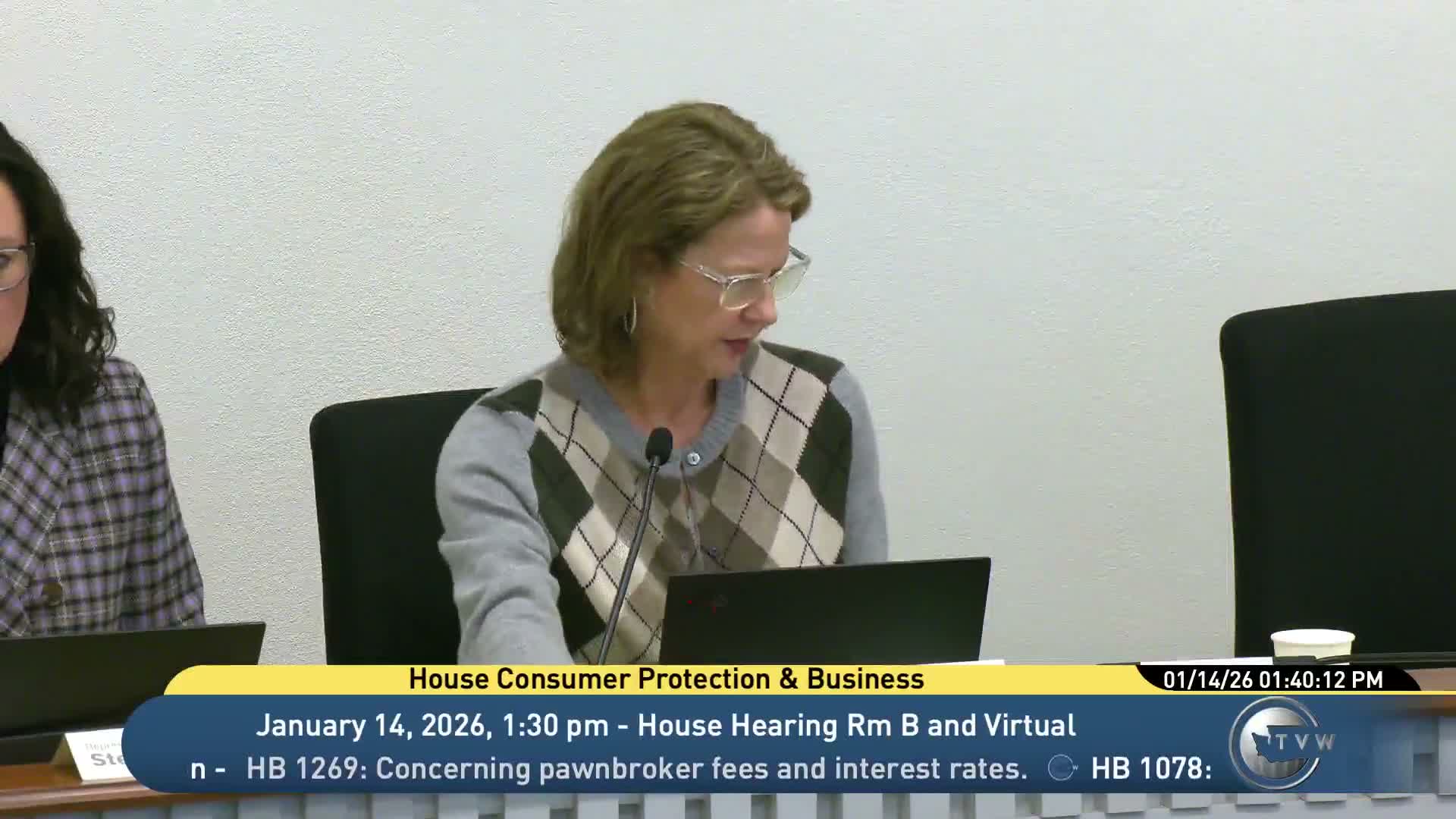
A Washington House committee on Jan. 14 heard contrasting testimony on House Bill 2274, legislation that would change how the state’s Commercial Electronic Mail Act (CEMA) is applied and limit certain statutory claims tied to email subject lines.
The bill’s sponsor, Representative Larry Springer (45th Legislative District), said the measure responds to a recent Washington Supreme Court decision he said has prompted a surge of lawsuits over routine marketing subject lines. Springer told the Consumer Protection and Business Committee the bill is intended to clarify legislative intent so ordinary promotional language does not create strict liability for large statutory damages.
Megan Mulvihill, staff to the committee, summarized key changes: replacing the statute’s existing “reason to know” standard with a “reliable basis” standard for determining whether an email address is held by a Washington resident; tightening the test for when a subject line is “likely to mislead” by requiring materiality to the recipient’s transaction; and repealing the law’s per se Consumer Protection Act (CPA) violation while preserving statutory damages and making the new standards apply to lawsuits filed on or after the bill’s effective date (Mulvihill, staff briefing).
Retail trade groups and small-business witnesses urged lawmakers to adopt HB 2274. Crystal Leatherman, director of policy and government affairs for the Washington Retail Association, said the statute is being used in ways the legislature never intended and described a rapid increase in lawsuits since the Washington Supreme Court’s Brown v. Old Navy decision. Leatherman and other industry witnesses provided examples of subject lines that have been targeted in litigation (e.g., “Up to 80% off,” “Last chance”) and warned of mounting defense costs for small firms.
Small-business owner Mary Anne Sanbornhoft described how the litigation climate has chilled ordinary email marketing for shops that cannot afford counsel. “I send emails to my customers. Email marketing is how I survive,” she said, adding that the threat of statutory damages has left her hesitant to send normal promotions.
Attorneys for retailers, including Megan Brooks (e‑commerce practice), presented case counts and litigation dynamics, saying plaintiffs’ lawyers have filed dozens of suits and that settlements and defense costs have been onerous for defendants. Brooks said the number of suits cited in committee testimony varied as filings continued, and gave an example that her team saw 75 suits filed recently against 66 retailers.
Opponents urged caution. Blythe Chandler of the Washington State Association for Justice urged the committee to reject HB 2274, arguing the current CEMA and CPA framework protects consumers from false or misleading subject lines that can create a false sense of urgency. Chandler noted that although many cases have been filed, to her knowledge none had resulted in final financial liability against a retailer at the time of testimony.
Business and hospitality groups, including David Carter of the Ecommerce Innovation Alliance and Sean DeWitts of the Washington Hospitality Association, described narrow-margin operators exposed to staggering defense costs and urged a statutory fix to preserve ordinary marketing practices.
Several committee members asked for more precise statutory language on the meaning of “reliable basis” and whether the bill would leave consumers without a remedy for genuinely misleading or deceptive subject lines. Staff said courts would likely interpret the new standard and offered to provide legal background for the committee.
The committee did not take executive action on HB 2274 on Jan. 14; members indicated the bill requires additional drafting and stakeholder work before returning to committee.
Ending: The committee requested follow-up materials, including case history and examples of how courts might define “reliable basis.” No vote was taken and the public hearing was left open for future refinement and stakeholder negotiation.